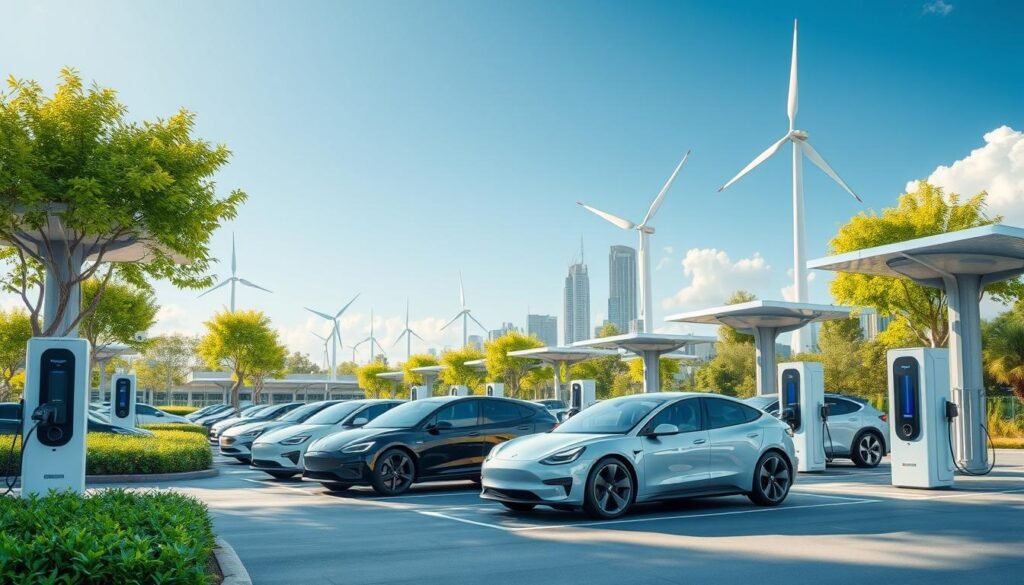
Auto insurance for electric and hybrid cars costs more than for gas cars, and the order is consistent: gas is cheapest, hybrids sit in the middle, and full electric vehicles are the priciest. EVs run roughly 20% to 50% more than a comparable gas car, with recent data averaging near 40%, while hybrids are only modestly higher than gas. The reason is repair economics, not crash risk: EVs carry expensive batteries, proprietary parts, and specialized labor. Which model you pick matters a lot, though. Mainstream EVs like the Chevy Silverado EV or Hyundai Ioniq 5 insure close to gas cars, while Teslas and luxury EVs are the most expensive. And higher premiums are often offset by real savings on fuel and maintenance.
Auto insurance for electric and hybrid cars: key facts at a glance
| Item | Detail | Source |
|---|---|---|
| Cost order | Gas cheapest, hybrid middle, EV highest | MoneyGeek |
| EV vs. gas | Roughly 20% to 50% more; recent average near 40% to 49% | Insurify |
| EV full coverage | About $3,281 a year on average | MoneyGeek |
| Hybrid full coverage | About $2,956 a year on average | MoneyGeek |
| Cheapest EVs | Chevy Silverado EV, Hyundai Ioniq 5, Nissan Leaf | MoneyGeek |
| Priciest EVs | Tesla and Audi e-tron models | MoneyGeek |
| Why it costs more | Battery, parts, and specialized repair costs | The Zebra |
| Offsetting savings | Lower fuel and maintenance costs | DriveAuthority |
The bill that surprises new EV owners
Most people research range, charging, and price before buying an electric or hybrid car. Insurance is the line item they check last, and it is usually the one that surprises them. A driver moving from a Honda CR-V to a Tesla Model Y can see their premium jump by $400 to $800 a year, even with a clean record.
That surprise is avoidable. Once you understand why these cars cost more to insure and how much the specific model matters, you can shop smart and often close most of the gap. Here is the full picture, powertrain by powertrain.
Electric vs. hybrid vs. gas: which costs more to insure?
The order almost never changes. Gas cars are cheapest to insure, hybrids cost a little more, and full electric vehicles cost the most. The gaps are what matter.
| Powertrain | Average full coverage | How it compares |
|---|---|---|
| Gas | About $2,200 to $2,700 a year | The baseline |
| Hybrid | About $2,956 a year | Modestly higher than gas |
| Electric (EV) | About $3,281 a year | The most expensive |
Those are averages, and your quote will vary. According to Insurify, EVs run about 42% to 49% more than comparable gas cars in recent data, though the gap narrows to under 30% on newer mainstream models. MoneyGeek puts the EV full-coverage average at $3,281 a year against $2,956 for hybrids. Hybrids, by contrast, are only slightly above gas, often close enough that a green-vehicle discount erases the difference. So a hybrid is the small step up in cost, while a full EV is the real jump. Plug-in hybrids are the exception, since luxury plug-ins can push the average well above a standard EV.
One clarification that answers a common question: a standard hybrid does not qualify as an EV. A hybrid pairs a gas engine with an electric motor, and a plug-in hybrid adds a chargeable battery, but only a battery-electric vehicle is a true EV. Insurers rate all three differently.
Why are electric and hybrid cars more expensive to insure?
The reason is not that these cars crash more. It is that they cost more to fix and replace. Every factor traces back to repair economics.
EVs and many hybrids carry higher sticker prices, so their replacement value is higher, and insurers price for that. Their parts are often proprietary, made only by the manufacturer, with few aftermarket options, which keeps repair costs high. Repairs also need certified technicians and specialized tools, and fewer qualified shops means less competition and higher labor rates. The battery is the big one: a full replacement can run $16,000 or more, and even minor underbody damage can push an insurer to total the car rather than risk the battery. Finally, a simple fender bender on an EV often damages cameras and sensors that need expensive recalibration, something a basic gas car never requires.
Hybrids share some of this, especially the battery and higher value, but to a smaller degree, which is why they land between gas and full EVs. The Zebra frames it simply: insurance is priced to cover the value of the car, and higher-value vehicles with pricier parts cost more to protect. Crash-test safety is not the issue here. In fact, EVs often score well on safety. The cost is all about what a repair bill looks like afterward.
Which electric cars are cheapest, and most expensive, to insure?
Model choice may be the single biggest lever you control, because the spread across EVs is enormous. The same clean-record driver can pay wildly different rates depending on the badge.
The cheapest EVs to insure are mainstream, non-luxury models with wide repair networks. The Chevrolet Silverado EV (around $1,947 a year), the Hyundai Ioniq 5 (around $1,962), and the Subaru Solterra all come in near $2,000, competitive with many gas cars. The Nissan Leaf and Chevy Bolt are also famously gentle on premiums. In general, EVs from legacy automakers like Chevy, Ford, Hyundai, and Kia run roughly 25% cheaper to insure than EV-only brands, because their parts are easier to source.
The most expensive EVs are luxury and performance models. Teslas top the list, with all five models exceeding $2,800 a year and the Model X near $4,500 to $4,800. Audi e-tron, Lucid, Rivian, and Polestar models are also costly, with one Audi SQ8 e-tron hitting over $10,000 a year. If premium matters to you, that gap is worth weighing before you buy.
Which hybrid cars are cheapest to insure?
Hybrids are the easier win, because most of them insure close to their gas equivalents. The cheapest are the mainstream, non-luxury names.
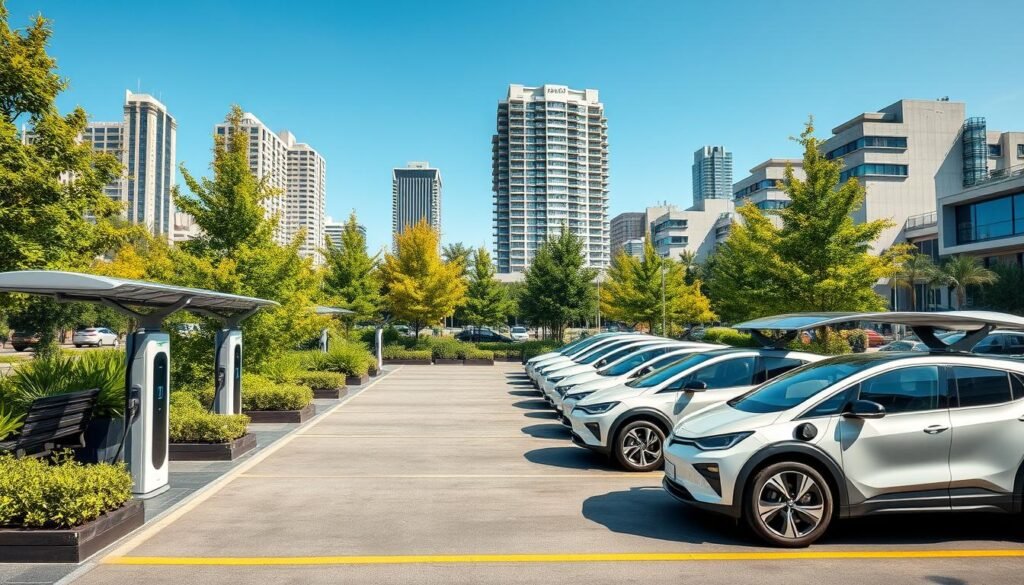
Standard hybrids from Toyota and Honda, like the Prius, Corolla Hybrid, and Camry Hybrid, tend to sit at or below the hybrid average, thanks to modest values, common parts, and strong repair networks. The pricier end is luxury and plug-in hybrids. Plug-in hybrids in particular can run higher, since some are premium models with bigger batteries and more complex systems. So if low insurance cost is a priority, a mainstream standard hybrid is usually the sweet spot: better fuel economy than gas, without the full EV premium.
Why is Tesla insurance so expensive, and when is it cheap?
This one comes up constantly, often phrased as “why is Tesla insurance so cheap.” The honest answer flips the premise: Teslas are usually among the most expensive cars to insure, not the cheapest.
Through traditional carriers, a Tesla averages about $4,512 a year, well above the roughly $3,037 all-vehicle average, per Insurance.com. Repairs are the cause. One data set put average Tesla repair estimates at $3,914 versus $1,629 for a Honda, and Tesla batteries are not modular, so even small damage can mean a full pack. Where the “cheap” idea comes from is Tesla’s own insurance program, offered in about 13 states, which prices using a real-time Safety Score based on how you actually drive. For a genuinely safe driver, that can undercut traditional quotes. But Tesla Insurance also draws a high volume of NAIC complaints about claims and service, so it is not automatically the best deal. The real lesson is to shop: for one Model Y, rates ranged from $1,889 at State Farm to $4,563 at Allstate.
Does an EV or hybrid raise your homeowners insurance?
Owning the car itself does not change your homeowners insurance. The car is covered by your auto policy, not your home policy. But there is one wrinkle worth knowing.
If you install a home charging station, especially a hardwired Level 2 charger, you are adding a permanent fixture and some electrical work to your home. That is generally covered under your homeowners policy as part of the dwelling, but it is smart to tell your insurer, confirm the charger is covered, and make sure your dwelling limit still reflects your home’s value. It is a minor point, not a reason for concern, but worth a quick call when you install one.
How to lower insurance on an electric or hybrid car
The premium gap is real, but it is not fixed. Several levers can bring an EV or hybrid quote down, sometimes below what you expected.
Ask specifically about a green-vehicle, alternative-fuel, or fuel-efficient discount, which some carriers, including Travelers and Lemonade, offer for electric and hybrid cars. Enroll in a usage-based or telematics program if you drive safely and not many miles, since low mileage and smooth driving earn real discounts. Favor a legacy-brand EV over an EV-only brand if you are still choosing a car. Raise your deductible if you can cover it, park in a garage rather than on the street, and bundle with home or renters insurance. Above all, get quotes from at least three carriers, because, as the Tesla example shows, the same car can vary by thousands between insurers.
The total cost of ownership reframe
Here is the part that puts the higher premium in perspective. Insurance is only one line in the cost of owning a car, and EVs win on the others.
An EV driver typically saves a few hundred dollars a year on fuel compared with gas, sometimes $500 to $800 for higher-mileage drivers, plus another $300 to $500 a year on maintenance, since there are no oil changes and fewer wearing parts. Those savings often offset much or all of the extra insurance cost. So while an EV or hybrid costs more to insure, the honest full-ownership math can still favor it, especially if you drive a lot. Do not judge the decision on the premium alone. Judge it on fuel, maintenance, depreciation, and insurance together.
The honest read: should insurance stop you from buying an EV or hybrid?
For a hybrid, no. The insurance premium is only modestly above a comparable gas car, and a green-vehicle discount often narrows it further. Combined with better fuel economy, a mainstream hybrid is one of the easiest money decisions in this whole comparison.
For an EV, it depends on the model. A mainstream EV like an Ioniq 5 or Silverado EV insures close to a gas car, so the premium is a non-issue. A Tesla or luxury EV carries a real, ongoing insurance premium you should budget for, though fuel and maintenance savings and diligent shopping can soften it.
Insurance should inform your choice, not decide it. Pick the model wisely, shop at least three carriers, claim every discount, and weigh the full cost of ownership. Do that, and an electric or hybrid car can make financial sense even with a higher premium.
Conclusion
Auto insurance for electric and hybrid cars follows a clear pattern: gas is cheapest, hybrids cost a bit more, and EVs cost the most, mostly because of battery and repair costs rather than crash risk. The model you choose matters enormously, from mainstream EVs that insure like gas cars to Teslas and luxury EVs that carry a steep premium. Shop at least three carriers, ask for green-vehicle and telematics discounts, and weigh the premium against real savings on fuel and maintenance. Done right, the insurance gap is manageable, and often smaller than the money an EV or hybrid saves you elsewhere.
FAQs
Are EVs more expensive to insure than hybrids?
Yes. Full electric vehicles average about $3,281 a year for full coverage, versus about $2,956 for a hybrid, according to MoneyGeek. EVs carry higher values, pricier proprietary parts, and costlier battery repairs, which push their premiums above hybrids. Hybrids sit between gas cars and full EVs on insurance cost.
Does a hybrid car have higher insurance than a gas car?
Usually slightly, yes, but the difference is small, often far less than the gap for a full EV. Hybrids cost a bit more to repair because of their battery and added value, but a green-vehicle discount can offset much of that. A mainstream hybrid insures close to its gas equivalent.
Does a hybrid qualify as an electric vehicle?
No. A standard hybrid pairs a gas engine with an electric motor, and a plug-in hybrid adds a chargeable battery, but neither is a true EV. Only a battery-electric vehicle, which runs solely on electricity, is a full EV. Insurers rate hybrids, plug-in hybrids, and EVs differently.
Which EV is the cheapest to insure?
Mainstream, non-luxury EVs are cheapest. The Chevrolet Silverado EV (about $1,947 a year) and Hyundai Ioniq 5 (about $1,962) lead, with the Subaru Solterra, Nissan Leaf, and Chevy Bolt also low. EVs from legacy automakers generally insure about 25% cheaper than EV-only brands like Tesla.
Which hybrid car is the cheapest to insure?
Mainstream standard hybrids from Toyota and Honda, such as the Prius, Corolla Hybrid, and Camry Hybrid, are typically the cheapest, thanks to modest values and common parts. Luxury and plug-in hybrids cost more. If low insurance cost matters, a standard non-luxury hybrid is usually the best value.
Do electric cars make your insurance go up?
An electric car generally costs more to insure than a comparable gas car, by roughly 20% to 50%, so switching to one usually raises your premium. But the increase depends heavily on the model, and mainstream EVs insure close to gas cars. Discounts and shopping around can reduce the gap.
Why is Tesla car insurance so cheap?
It usually is not. Teslas are among the most expensive cars to insure, averaging around $4,512 a year through traditional carriers due to high repair costs. The “cheap” idea comes from Tesla’s own insurance program in about 13 states, which prices by your real-time Safety Score and can be cheaper for safe drivers.
Does owning an electric car increase homeowners insurance?
No, the car itself is covered by your auto policy, not your home policy. However, installing a home charging station adds a fixture and wiring to your house. That is generally covered under your homeowners policy, but tell your insurer and confirm your dwelling limit still reflects the added value.
What is the biggest disadvantage of electric cars?
Beyond charging time and range, the biggest financial drawbacks are a higher purchase price and higher insurance and repair costs, driven by expensive batteries and specialized labor. These are partly offset by fuel and maintenance savings. For many drivers the trade-off works out, but it depends on the model and how much you drive.
Is it worth buying a hybrid car in 2026?
For most drivers, yes. A hybrid costs a bit more upfront and insures slightly higher than a gas car, but it makes that back through better fuel economy and lower maintenance. The insurance premium is only modestly above gas, and a green-vehicle discount often narrows it. If you drive a lot, the total-ownership math usually favors a hybrid.
How much does it cost to insure an electric car per year?
EV full coverage averages about $3,281 a year, but the range is wide. Mainstream models can be under $2,000, while Teslas and luxury EVs run $3,000 to $4,800 or more. Your actual cost depends on the model, your ZIP code, driving record, and coverage, so get quotes for your specific car.
Is EV and hybrid insurance more expensive in California?
California is a high-cost insurance state, partly because it nearly doubled minimum liability limits in 2025. But the gap between EV and gas premiums is actually smaller there, around 15% to 31%, thanks to high EV adoption and infrastructure. As always, compare quotes for your exact ZIP code and vehicle.
Do you actually save money with a hybrid car?
Usually yes, over time. A hybrid’s higher insurance and purchase price are offset by real fuel savings, often several hundred dollars a year, plus lower maintenance costs. The more miles you drive, the faster those savings add up. A green-vehicle discount, offered by carriers like Travelers and Lemonade, can shrink the insurance gap further.
How can I lower my electric or hybrid car insurance?
Ask for a green-vehicle discount, enroll in a usage-based or telematics program if you drive safely, raise your deductible, park in a garage, and bundle with home or renters coverage. Most importantly, compare at least three carriers, since the same EV can vary by thousands of dollars between insurers.
Which insurance company is best for electric and hybrid cars?
There is no single best; it depends on your car and location. Insurers frequently cited for competitive EV and hybrid rates or discounts include Travelers, Lemonade, State Farm, and Nationwide. Because rates vary so much by model and ZIP code, the best approach is to compare quotes from several carriers for your exact vehicle.
About the author
Md Shahinuzzaman is an insurance and out-of-pocket healthcare cost specialist with 16 years of experience in banking and insurance. He writes practical, plain-spoken guides for InsuranceGuidances.com to help drivers and families understand their coverage and costs before they buy. He takes no payment from the companies he covers, and every figure in this article traces to a named source.
Reviewed: 2026 ·
Sources
Kelley Blue Book, EV pricing data: https://www.kbb.com/
MoneyGeek, Electric Vehicle Insurance Costs and Coverage 2026: https://www.moneygeek.com/insurance/auto/insuring-an-electric-vehicle/
The Zebra, Best Car Insurance for Hybrid and Electric Cars 2026: https://www.thezebra.com/auto-insurance/vehicles/insurance-rates-hybrid-electric-cars/
Insurify, Electric Vehicle Insurance Costs report: https://insurify.com/car-insurance/report/electric-vehicle-insurance-costs/
Insurance.com, Tesla Insurance cost 2026: https://www.insurance.com/auto-insurance/tesla-insurance
CNBC Select, Best car insurance for Teslas 2026: https://www.cnbc.com/select/best-car-insurance-for-teslas/
DriveAuthority, EV insurance vs gas car real numbers: https://driveauthority.com/ev-insurance-cost-vs-gas-car-real-numbers-explained/
Recharged, Electric car insurance cost by model 2026: https://recharged.com/articles/electric-car-insurance-cost-by-model
Starwest Insurance, Why Tesla and EV insurance is expensive 2026: https://www.starwestinsurance.com/why-is-tesla-and-ev-insurance-so-expensive-in-2026-and-how-to-lower-it/
Insurance Information Institute, auto insurance basics: https://www.iii.org/article/what-covered-basic-auto-insurance-policy