Insuring many vehicles can be hard. A multi car and van insurance policy bundles everything into one. This saves time and often lowers costs with discounts and combined No Claim Bonus.
This guide uses 15 years of insurance knowledge. It helps you compare multi car insurance and find the best deals. You’ll learn about different cover types, when a motor floater is good, and how car limits affect your choice.
We also share tips for comparing insurance online and using premium calculators. This way, you can avoid surprises when making a claim. If you’re looking for insurance near you, these tips will help find local quotes and offers.
Key Points;
- Multi vehicle insurance policy simplifies renewal, paperwork, and often lowers combined premiums.
- Compare multi car insurance online to find the best multi car insurance deals and use premium calculators for accuracy.
- Motor floater options suit households with multiple cars but review insurer caps and coverage limits first.
- Check claim handling, cashless garages, and NCB rules before choosing a provider.
- For 5-car households or small van fleets, confirm eligibility and weigh a dedicated fleet policy versus a household multi-vehicle plan.
What is multi car and van insurance and how it works
Multi car and van insurance covers two or more vehicles under one policy. This includes cars, SUVs, and vans for a household or small business. You can choose from third-party, full, and add-ons like zero depreciation and roadside help.
Definition and scope
A multi vehicle policy lists each car and its details on one document. It’s okay to mix personal and work vehicles on the same policy. Use an online quote to see how different insurers handle this.
How multi-vehicle policies differ from single-vehicle and motor floater policies
Single-vehicle policies have their own limits and renewal dates. A multi policy makes renewals easier and can save money. It also keeps your No Claim Bonus together.
Motor floater policies cover all vehicles with one sum. They offer umbrella cover and a single renewal date. But, they might not cover all vehicles well and claims can be harder to handle.
Typical policy structure and shared limits
Each vehicle gets its own IDV and add-ons like zero-dep. Some parts of the policy share limits, like for damage or personal accident cover.
Deductibles can be per vehicle or for the whole policy. Get a quote online to see how limits and deductibles work for your fleet. This helps decide if you need one policy or separate ones for high-value vehicles.
Top benefits of insuring multiple vehicles under one policy
Insuring many vehicles under one policy saves time and money. Insurers give lower rates to households with multiple cars on one account. This section explains the real benefits and how to get them when looking for affordable multi vehicle insurance.
Cost savings and multi car discounts
Companies like Progressive and GEICO offer discounts for two or more vehicles on one policy. The more vehicles you add, the more you save. This is true if all cars have similar coverage and drivers have clean records.
Look for discounts that increase with more vehicles. Ask about stacking discounts with safe-driver credits. Many families save money by combining individual premiums into one lower cost policy.
Simplified administration and single renewal date
Having one policy means one renewal date, one bill, and one reminder. This makes life easier for busy families and small business owners. It also helps avoid missed payments.
Managing multiple vehicles becomes simpler with one policy. You can make changes online in just a few clicks. This saves time and effort.
No lapse risk for a household or fleet
Insuring vehicles together reduces the risk of lapses in coverage. With one policy, all vehicles renew at the same time. This avoids gaps in protection.
Keeping vehicles on one policy helps keep No Claim Bonus intact. Make sure to choose add-ons and clear claim rules. This way, family car insurance benefits stay the same after a claim.
How insurers price multi car and van insurance
Insurers mix vehicle data, driver records, location, and coverage to set prices. This mix decides the cost for a household or small fleet. Online tools help get clear quotes and test scenarios before buying.
Key rating factors
Vehicle age, make, and model are key. Newer cars or high-performance engines increase rates. Business vans get higher rates than personal vehicles.
Driver history greatly affects prices. Accidents, tickets, and driver age all raise costs. List drivers carefully as they impact the policy.
Garaging ZIP code matters for theft and claims. Urban areas are riskier than rural ones. Insurers like State Farm and GEICO use databases to adjust risks.
Impact of number of vehicles
Adding cars often lowers the cost per vehicle. Discounts come for insuring multiple vehicles together. Many insurers cap vehicles per policy, from three to seven.
For 5 cars, check if a floater or separate policy is better. Also, see how No Claim Bonus works with multiple cars.
Role of IDV, deductibles, and add-ons
IDV multi vehicle choice sets the damage limit and affects premiums. A lower IDV means cheaper insurance but less claim payout for total loss.
Choosing a deductible lowers premiums upfront. Pick a deductible that balances savings with possible crash costs.
Add-ons like zero depreciation and roadside assistance increase costs but lower financial risk on claims. Compare total costs and coverage with different quotes.
Compare multi car insurance quotes online and save
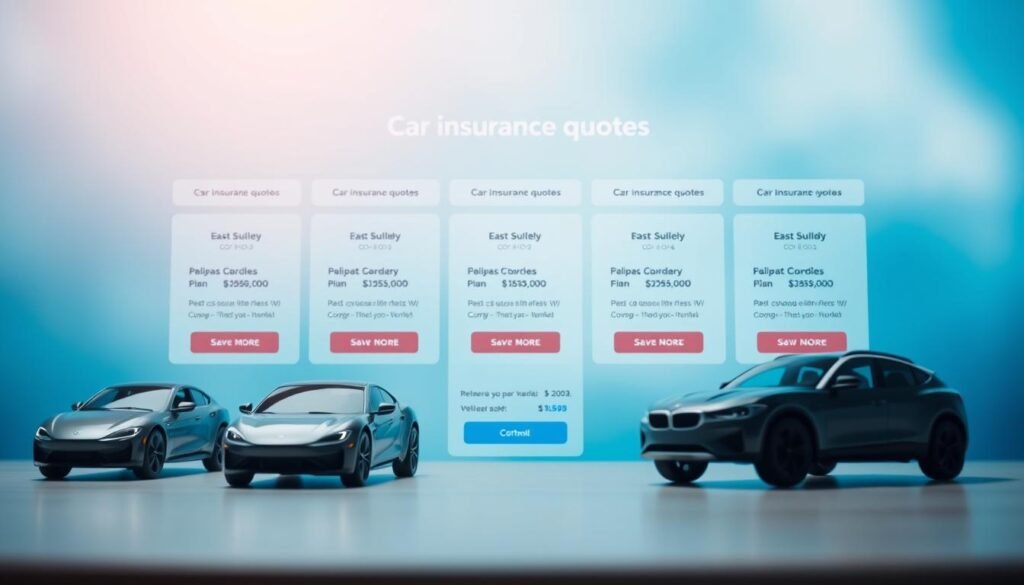
Getting quotes for several cars used to take hours. Now, you can get instant estimates in minutes. Just enter your car’s details and driver info to get a quote.
Using online quote tools and premium calculators
Check out sites like GEICO, Progressive, and State Farm. Use comparison engines too. Change your choices to see how prices change.
Best practices for side-by-side coverage comparison
Make sure coverage levels are the same before comparing prices. Check if extras like roadside help are included. Look at each company’s garage network and claim history.
See how No Claim Bonus works and if you can protect it. Also, check for discounts for multiple cars. Read what others say about claims and service.
How comparing quotes lowers cost and improves coverage choices
Compare to find the best deals. Some insurers offer more for less. Choose wisely to avoid paying for things you don’t need.
For those looking to save, search for cheap options. But, make sure you’re not sacrificing important coverage. A good comparison helps you save without losing out.
Quick checklist
- Get many multi car insurance quotes for the same coverage.
- Check each company’s garage network and claim success rate.
- Try different deductibles to see how it affects the price.
- Think about long-term value, not just the lowest price.
Multi car and van insurance claims process and tips
Filing a claim on a multi-vehicle policy is different. Start by calling your insurer or using their app or website. Give them your policy number and vehicle details. Choose between getting your car fixed at a network garage or getting reimbursed.
How to file for one vehicle
Call your insurer or use their app to report damage to one vehicle. Share driver info, vehicle details, and damage description. If you want cashless repair, ask for a network garage. For reimbursement, get an estimate and save your bills.
Documentation and timelines
- Have your policy, RC, driver’s license, and damage photos ready.
- Expect a quick claim acknowledgment from most insurers. Cashless repairs at network garages are faster and cheaper.
- Complex cases or motor floater claims may take longer. Ask for a timeline from the adjuster.
Avoid common pitfalls
- Don’t file small claims that could hurt your no-claim discount. They can raise your renewal cost.
- Make sure the driver and vehicle use match your policy. Misclassification can lead to denial.
- Check your vehicle’s IDV and coverages before repair. Motor floater claims can be complex.
How to protect No Claim Bonus
Consider an NCB protection add-on to keep your discount after a claim. Use it wisely to avoid losing years of no-claims. Weigh the cost of the add-on against the possible increase in renewal cost.
Practical tips for smoother multi car insurance claims
- Take photos and notes of damage right after the incident.
- Choose cashless repair at a certified garage for faster service.
- Keep digital copies of important documents for easy upload.
- Ask the adjuster if the claim affects your household NCB and get confirmation in writing.
Knowing how multi car insurance claims work can help avoid delays. Keep records clear, report incidents quickly, and use add-ons wisely. This improves the outcome for all vehicles on your policy.
Discounts, add-ons, and ways to reduce premiums

Insurers offer many ways to lower costs while keeping protection strong. Bundling multiple cars under one policy often unlocks a multi car discount. This discount reduces the base premium for each added vehicle.
Progressive, GEICO, State Farm, and other carriers provide structured multi car insurance discounts. These discounts stack with safe-driver reductions and home+auto bundles.
Before you commit, compare carrier offers. Some insurers apply a flat percentage per additional vehicle. Others use tiered rates that improve after two or three cars.
Shop quotes to see which multi car insurance discounts produce the largest net savings for your household.
Useful policy extras
Consider add-ons multi vehicle insurance that match your risk profile. Roadside assistance covers towing, jump starts, fuel delivery, and lockout help for the whole household.
Zero depreciation limits depreciation deductions for replaced parts on newer cars. Key cover reimburses replacement or locksmith costs for lost or damaged keys. Engine protection pays for mechanical failures and water damage not always covered by standard policies.
Each add-on increases premium. Use a cost-benefit review to weigh the extra premium against possible out-of-pocket savings after a claim. For older vehicles, skip zero depreciation if parts value is low.
For high-mileage drivers, roadside assistance often pays for itself in one tow.
Behavioral and usage discounts
Telematics programs drive behavioral discounts through pay-as-you-drive pricing. UBI devices or smartphone apps track mileage, braking, and acceleration. Low-mileage and safe driving profiles typically receive rate reductions under pay-as-you-drive plans.
Voluntary higher deductibles reduce premiums but raise claim out-of-pocket. Model premium impact using online calculators to estimate annual savings versus possible claim cost. Combine higher deductibles with telematics for the biggest reduction if you drive little and drive safely.
Practical steps to lower premium
- Get multiple quotes and compare multi car insurance discounts across carriers.
- Bundling auto and home policies when a carrier like State Farm or Allstate offers stronger savings.
- Enroll in pay-as-you-drive if annual mileage is low.
- Pick targeted add-ons multi vehicle insurance that protect major expense items, not every optional cover.
- Consider higher voluntary deductible levels and maintain clean driving records to keep NCB intact.
Use a short checklist with cost examples to present choices to family members. This approach gives a clear path to reduce premium burden while keeping coverage aligned with household needs.
Multi car insurance for 5 cars and larger household needs
Households with five or more vehicles have choices. Many carriers offer household multi vehicle coverage. This bundles vehicles under one agreement. But, rules vary, so check limits before you commit.
Eligibility and insurer limits on number of covered vehicles
Most national insurers allow three to seven private vehicles on a single policy. For multi car insurance for 5 cars, check if SUVs, older models, or commercial vans qualify. High-value vehicles or commercial vans might need separate coverage.
When a motor floater makes sense vs individual policies
A motor floater is good for cars with similar value and risk. It makes renewal easier and might lower premiums. But, if you have a mix of cars, like a luxury sedan and a work van, individual policies might be better.
Administrative tips for managing 5+ vehicles on one policy
Make a master schedule with VINs, registration details, and primary drivers. Keep renewal alerts in one place and store electronic policy copies. Use insurer portals to add or remove vehicles and file endorsements easily.
| Focus area | Recommended action | Why it matters |
|---|---|---|
| Confirm motor floater limits | Phone or portal check with carrier before purchase | Avoid mid-term surprise that forces split policies |
| Evaluate vehicle use | Segregate commercial or high-value vehicles | Prevents underinsurance and premium mispricing |
| Protect household NCB | Consider NCB protection add-on and driver training | Preserve discount level after claims |
| Central administration | Use a shared calendar and electronic document folder | Saves time and reduces missed renewals |
| Cost-benefit check | Compare floater premium to combined individual quotes | Identify the best value for multi car insurance for 5 cars |
Managing 5+ vehicles insurance needs regular review. Check cover every year to reflect changes. This keeps coverage efficient and aligned with your needs.
Van fleet insurance and commercial multi-vehicle coverage

Small businesses have different insurance needs than homes. They need the right policy for work use. This section explains how commercial policies differ from home policies and what to consider when comparing them.
Differences in cover and purpose
Home policies focus on personal driving and trips. They don’t cover business use and have lower limits. Fleet insurance, on the other hand, is for work use. It offers higher limits for accidents and goods in transit.
Key features small businesses need
Commercial policies offer special protections. They include cover for borrowed vehicles and claims handling. They also have driver monitoring and training to lower risks and costs.
Liability and risk controls
Insurers set prices based on payload, route, and mileage. Higher risks like city deliveries or hazardous cargo increase costs. Telematics data can lower costs by showing safer driving and maintenance.
Pros and cons: private policy vs fleet policy
Use a private policy for rare business use and low costs. But, it might not cover business incidents well.
Fleet policies offer full protection and proper limits for regular business. They cost more but can save money and reduce paperwork for big fleets.
Practical decision checklist
- Estimate annual commercial mileage and cargo value.
- Count drivers who operate vans during business hours.
- Request telematics and risk management options from carriers like Progressive or GEICO commercial units.
- Compare quotes for fleet insurance and private multi-vehicle plans using identical exposures.
Small fleets should review cover limits, endorsements, and loss control services. This helps decide between fleet or private policies for their needs and legal duties.
Cheap multi car insurance options and trade-offs
Finding cheap multi car insurance requires research and smart choices. Start by listing your vehicles, drivers, and how much you drive. Compare quotes from big names like GEICO, State Farm, and Progressive to see price and coverage differences.
How to find affordable options
Use online tools to get many quotes fast. Consider raising your deductible to save money if repairs are affordable. Also, get discounts by bundling auto with homeowners or renters insurance.
Choose IDV and cover limits that fit your vehicle’s value, not the highest replacement levels. Use telematics or low-mileage programs for safe driving rewards. Look for special digital discounts and instant quotes on insurer websites.
When lower premiums mean trade-offs
Lower costs might mean less coverage, missing add-ons, or fewer repair shops. Cheaper plans might have higher deductibles or limits on part and labor replacement. Always check claim ratios and repair shop networks before picking a plan.
A lower premium could mean slower claims or fewer customer service options. Make sure to understand rental, roadside, and glass coverage under each quote. This way, you won’t be surprised after an accident.
Using comparison tools and customer reviews
Use automated comparison tools and read customer reviews on forums and insurer sites. Learn about claim experiences with companies like Travelers or Allstate. A good app can make filing claims easier and faster.
Find a balance between cost and service by ranking options based on price, claim speed, and network. Look for the best deals that fit your risk level and service needs, not just the cheapest price.
Best insurance providers for multiple cars and vans — comparison of top carriers
Choosing the right carrier for multiple cars or vans is key. Look at claim settlement speed, network of garages, and digital tools. Also, check for discounts, telematics, customer support, and No Claim Bonus handling.
Criteria to rank providers
- Claim settlement: measure average payout time and fairness in disputes.
- Network garages: check cashless repair availability across service areas.
- Digital experience: evaluate a multi car insurance online quote, app claims, and e-policy issuance.
- Discounts and telematics: compare multi car insurance deals and usage-based options for savings.
- Customer support: assess agent availability for household policies and small fleets.
Profiles of leading US carriers
| Carrier | Strengths | Weaknesses | Multi-vehicle edge |
|---|---|---|---|
| Progressive | Strong digital quoting, Snapshot telematics, broad discounts | Price varies by state and driving data | Robust multi car insurance online quote and well-known multi-car discounts |
| GEICO | Low online rates, streamlined digital purchase, large network | Limited local agent support in some areas | Easy way to compare multi car insurance and access competitive multi car insurance deals |
| State Farm | Extensive agent network, consistent claims service | Online quoting less aggressive on discounts | Agent help for complex household policies and van coverage |
| Allstate | Multiple add-ons and rewards, local agents | Premiums may run higher for some drivers | Good bundle options and visible multi-vehicle discounts |
| USAA | Top-rated claims service and member benefits | Membership limits to military families | Excellent multi-vehicle handling where eligible |
| Regional carriers | Tailored local pricing and personalized service | Smaller networks and variable digital tools | Possible local multi car insurance deals and better underwriting for specific markets |
Pros and cons by carrier type
- National insurers: offer scale, broad app features, and many network garages. Tradeoff includes rate variation by state.
- Direct-to-consumer digital carriers: provide lower overhead and fast multi car insurance online quote. Tradeoff includes limited in-person support for complex claims.
- Regional carriers: deliver local underwriting and personalized service. Tradeoff includes smaller repair networks and uneven digital tools.
When comparing multi car insurance, look at pricing and services side-by-side. This helps match your needs or fleet. Get quotes from different carriers to find the best deals.
Real-world insights: community feedback and claim experiences
The internet is full of real reviews on multi car insurance. People share tips, warnings, and good experiences. This helps others make informed choices.
What forum users report:
Reddit and auto-insurance forums talk about many things. People say bundling vehicles can lower costs. They also share stories of quick digital settlements and repairs at network garages.
Common complaints:
Some users talk about unexpected exclusions and long investigations. Those with private and commercial vehicles face more issues. They also mention how slow claims can be when many vehicles are involved.
Validation steps readers use:
People suggest checking policy wordings and state insurance department advice. They say to compare forum claims with official insurer info before making a decision.
How claims feedback maps to action:
Reviews highlight common delays and praise for mobile apps. They also talk about the benefits of telematics for safe drivers. But, they warn about the risks of misclassifying vehicles.
Practical checklist from community knowledge:
- Read the full endorsement language for multi-vehicle limits.
- Document vehicle use and driver assignments to avoid disputes.
- Ask insurers for required claim documentation up front.
- Confirm network garage availability for cashless repairs.
| Feedback type | Typical content | Suggested verification |
|---|---|---|
| Discount reports | Claims of significant savings when bundling five or more cars | Check policy rate sheet and renewal quote; compare with online calculators |
| Claim timing | Fast payouts for minor claims; long probes for total loss or liability disputes | Request standard claim timeline from insurer and read state regulator guidance |
| Coverage exclusions | Surprises over excluded uses, hired drivers, or commercial vehicle activity | Review exclusions section of the policy and ask for written endorsements |
| Customer service | Praise for mobile apps and 24/7 claims lines; criticism for agent handoffs | Test digital tools with a pre-claim inquiry and read recent customer reviews |
| Telematics impact | Reports of premium drops for safe driving and tracking benefits | Confirm telematics program terms, data use, and discount mechanics |
Conclusion
Multi car and van insurance makes things easier and can save money. It’s great for families or small businesses. You can save by insuring 2–5 cars together.
It also means you only have to deal with one renewal date. This makes managing your policies simpler.
Motor floater policies are like umbrella covers. But, they might not work for all vehicles, like high-value or commercial vans.
Premiums depend on many things. This includes how old the vehicles are, their value, and the drivers’ history. Where you park them also matters.
Online tools can help you compare insurance quotes. Look at deductibles and add-ons like zero depreciation and roadside help. If you drive less, consider telematics or pay-as-you-drive insurance.
Small businesses should get quotes for their vans. They need special commercial insurance. This includes liability and goods-in-transit cover.
Don’t forget to protect your No Claim Bonus. Think carefully before making a claim. You can also add NCB protection to your policy.
To find the best deals, collect all the necessary information. Compare different quotes and make sure they offer the same coverage. Check if garages and claims services are part of their network.
Next, gather all your vehicle and driver details. Compare different insurance offers side by side. If you need help, talk to an independent agent or broker.
This way, you can find affordable insurance that really protects you. It’s all about finding the right balance between cost and coverage.
FAQ – Multi-Vehicle, Single-Vehicle & Motor Floater Insurance
How does a multi-vehicle policy differ from single-vehicle and motor floater policies?
A single-vehicle policy covers just one car with fixed terms, while a multi-vehicle policy insures multiple cars or vans under a single contract with shared discounts. A motor floater policy, on the other hand, provides flexible coverage for different vehicles (cars, bikes, scooters) that you may own, making it more versatile.
What is the typical policy structure and are limits shared between vehicles?
Each vehicle under a multi-car policy usually has its own IDV (Insured Declared Value), deductibles, and coverage terms. Liability coverage may be pooled, but vehicle-specific benefits (like collision coverage) are applied individually. This means claims on one car generally do not reduce the coverage of another.
What are the main benefits of insuring multiple vehicles under one policy?
The main benefits include premium discounts, a single renewal date, streamlined paperwork, and flexibility to add new vehicles. Families and small fleets often find multi-vehicle insurance much more convenient and cost-effective than managing separate policies.
How much can I save with multi car discounts?
Savings vary by insurer but typically range from 10% to 25% compared to buying separate policies. The more vehicles you add, the greater the cumulative discount, especially for households with three or more cars.
How does a single renewal date help my household or fleet?
A single renewal date reduces the risk of lapses, avoids juggling multiple due dates, and simplifies budgeting. It is especially useful for fleets or households with multiple vehicles insured at once.
How do insurers price multi car and van insurance?
Insurers calculate premiums based on individual vehicle risk factors (age, make, model, location, driver history) and then apply a multi-car discount. Household or fleet risk is also considered if several drivers are included.
How does adding more vehicles (for example, five cars) affect premium?
Adding more vehicles increases the total premium, but each additional car usually qualifies for an incremental discount. For example, insuring five cars may cost less per car than insuring just two, even though the total premium is higher.
What role do IDV, deductibles, and add-ons play in premium calculation?
IDV determines the vehicle’s maximum insured value, directly impacting premium. Higher deductibles lower the premium but increase out-of-pocket expenses at claim time. Add-ons like zero depreciation, roadside assistance, or engine protection add costs but enhance coverage.
How can I compare multi car insurance quotes online effectively?
Use comparison platforms to enter details for all vehicles at once. Check not only the premium but also policy terms, claim settlement ratio, network garages, and available add-ons. Always compare at least three insurers side-by-side before buying.
What are best practices for side-by-side coverage comparison?
Focus on identical IDVs, deductibles, and add-on combinations when comparing quotes. Evaluate claim settlement history, renewal benefits, and No Claim Bonus protection options. This ensures you are comparing true value instead of just price.
How does comparing quotes lower cost and improve coverage choices?
By comparing quotes, you can identify hidden fees, higher deductibles, or weak add-on offerings. Competition between insurers often results in discounts, better coverage limits, and custom add-ons tailored to your needs.
How do I file a claim for one vehicle on a multi-vehicle policy?
You file claims just like with a single-vehicle policy: report the incident, submit documents, and follow insurer instructions. Each claim applies only to the specific insured vehicle and does not affect the other vehicles in the policy.
What documentation and timelines do insurers typically require for claims?
Documents usually include the claim form, policy copy, driver’s license, RC book, FIR (if applicable), and repair bills. Claims should be reported immediately or within 24–48 hours depending on the insurer’s requirements.
What common pitfalls should I avoid and how do I protect my No Claim Bonus (NCB)?
Avoid under-insuring vehicles, missing renewal dates, or failing to transfer NCB when switching insurers. Use NCB protection add-ons to retain discounts even after minor claims.
What multi car discounts and carrier offers should I look for?
Look for discounts on each added car, loyalty rewards, long-term policy discounts, and bundled coverage (auto + home). Some insurers also offer family or fleet-specific savings.
Which add-ons provide the best value for multi-vehicle policies?
Zero depreciation, roadside assistance, engine protection, consumables cover, and NCB protection are highly recommended. For fleets, GPS-based tracking and breakdown assistance can be valuable.
How do behavioral discounts like pay-as-you-drive work?
These programs use telematics to track mileage and driving habits. If you drive fewer miles or demonstrate safe driving, insurers may reduce your premium under a usage-based model.
Are there insurer limits on the number of vehicles I can cover?
Yes. Many insurers cap household policies at 4–5 vehicles, while fleet or commercial policies may allow dozens or more. Always confirm the maximum vehicle limit with your insurer.
When does a motor floater make more sense than individual policies?
A motor floater is ideal if you own multiple types of vehicles (like a car and two-wheeler) and want flexibility under one umbrella policy. It’s also useful if you frequently replace or add vehicles.
How does van fleet insurance differ from household multi-vehicle policies?
Van fleet insurance is tailored for businesses with multiple vans or light commercial vehicles. It usually includes commercial liability, higher mileage allowances, and business-specific add-ons, unlike household multi-vehicle cover which is designed for personal use.