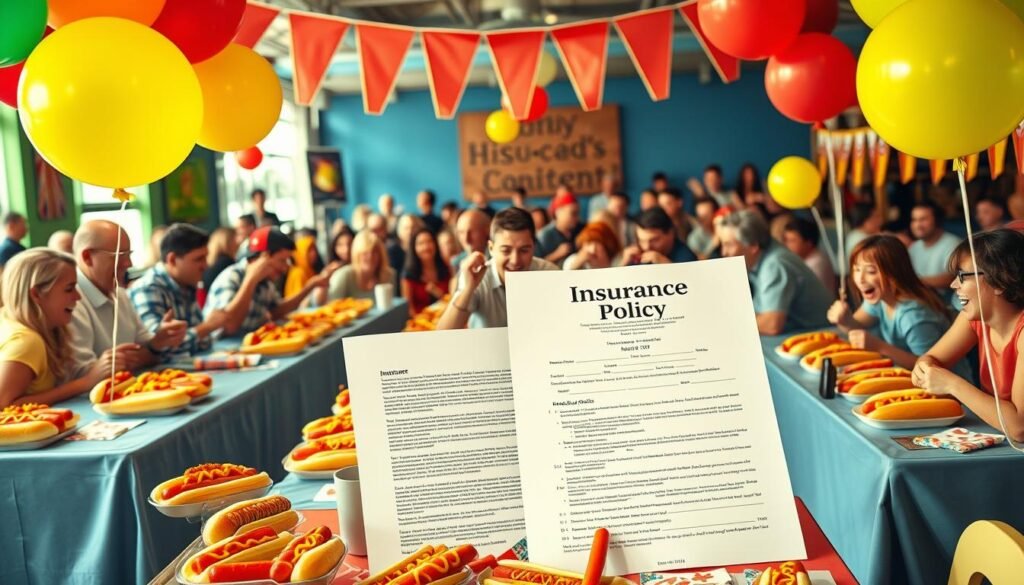
Insurance for hot dog eating contest usually means a special-event policy with three core parts: general liability (for spectators and property), participant accident or medical coverage (for the eaters, who a standard policy does not cover), and event cancellation. A one-day event liability policy typically runs about $75 to $285, with participant coverage adding roughly $50 to $1,000. If you’re a food vendor at the event rather than the organizer, you need a different policy — vendor liability like a hot dog cart plan from FLIP, starting around $299 a year.
Insurance for Hot Dog Eating Contest: Quick Reference
| What you need | Why | Typical cost |
|---|---|---|
| General liability | Covers spectator injuries and venue damage | ~$75–$285 (one-day) |
| Participant accident/medical | Standard liability excludes the eaters | +$50–$1,000 |
| Event cancellation | Weather, illness, or no-shows | Varies by event size |
| Product/food liability | Foodborne illness from the hot dogs | Often bundled |
| Vendor (hot dog cart) liability | If you sell food, not run the contest | From ~$299/year (FLIP) |
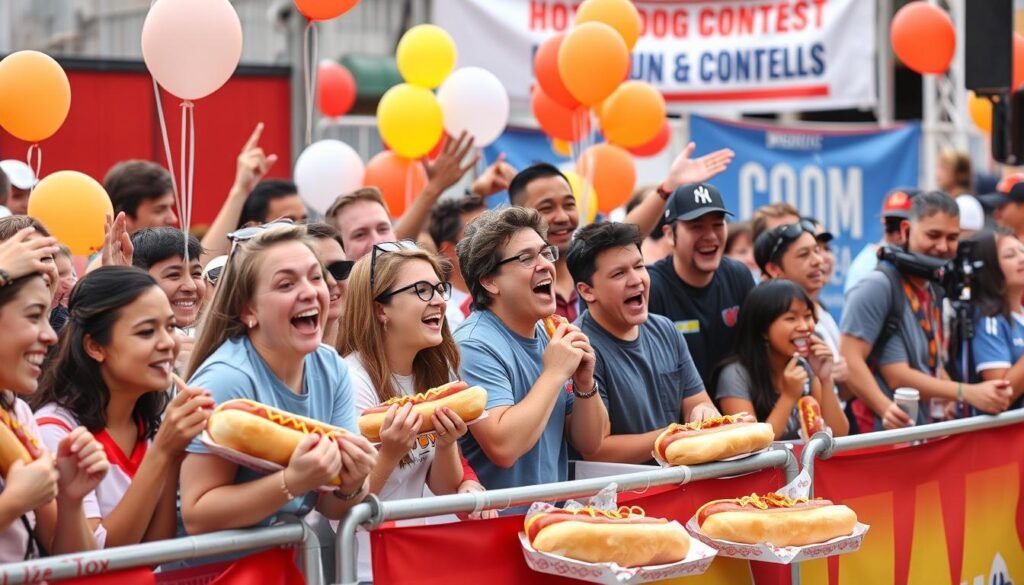
Picture a hot dog eating contest on a hot Fourth of July — the crowd counting down, mustard everywhere, someone going for their twentieth dog. It’s a great time, right up until a spectator trips over a cable, a contestant chokes, or a storm shuts the whole thing down. That’s the moment the right insurance turns a disaster into a phone call. Here’s exactly what coverage a contest needs, what it costs, and the one piece most organizers forget.
What Insurance Do You Need for a Hot Dog Eating Contest?
A hot dog eating contest needs special-event insurance built from a few pieces: general liability for spectators and property, participant accident coverage for the competitors, product liability for the food, and event cancellation for the unexpected. Most organizers buy these as one bundled special-event policy.
Here’s what each part does:
- General liability — pays if a spectator is hurt or the venue is damaged.
- Participant accident/medical — covers the eaters themselves, who a basic policy leaves out.
- Product liability — covers claims that the food made someone sick.
- Event cancellation — reimburses your non-refundable costs if you have to call it off.
- Liquor liability — only if you’re serving or selling alcohol.
- Prize indemnity — only if you’re putting up a large cash prize.
You won’t always need every piece. A small backyard-style contest needs far less than a sponsored public event with a stage, vendors, and a crowd.
How Much Does Insurance for a Hot Dog Eating Contest Cost?
A one-day special-event liability policy for a contest typically costs about $75 to $285, depending on your crowd size, location, prize, and whether alcohol is served. Adding coverage for the participants usually costs another $50 to $1,000.
What drives your price up or down:
- Crowd size — more spectators means more risk.
- The prize — a big cash prize may call for prize indemnity.
- Alcohol — serving beer adds liquor liability and cost.
- Activity risk — insurers treat competitive eating as higher-risk than a bake sale.
- Limits required — most venues and permits require at least $1 million per occurrence.
One honest note: many event insurers exclude “organized athletic competitions” as high-risk, and some may classify a competitive eating contest that way. If a standard provider won’t cover it, a specialty sports-and-event insurer (like Sadler Sports) usually will.
Are the Contestants Covered? Why You Need Participant Accident Insurance
No — and this is the mistake that catches organizers off guard. A standard event general liability policy covers spectators and the venue, but it specifically excludes the participants — meaning the people actually eating. To protect the contestants, you have to add participant accident or medical coverage.
This matters more in competitive eating than almost any other event, because the risk is concentrated in the participants, not the crowd. If a contestant chokes or gets sick and there’s no participant coverage, you could be exposed to a serious claim with no insurance behind it. Many cities make this explicit: Seattle, for example, requires participant medical coverage (often $25,000 per person) and signed waivers for competitive athletic events on city property.
General Liability Insurance for the Event
General liability is the foundation of event insurance — it pays for a spectator’s injury or damage to the venue when you’re legally responsible. For events, limits typically start at $1 million per occurrence and $2 million aggregate, and can go up to $5 million for larger gatherings.
It usually also includes a small medical-payments amount (often $5,000 to $10,000) to handle minor injuries quickly without a lawsuit. Most venues and city permits won’t let you operate without proof of at least $1 million in general liability, so this is rarely optional.
Product Liability and Food Safety
Product liability covers claims that the food itself caused harm — like foodborne illness or an allergic reaction from the hot dogs. For a food-centered event, this is essential, and it’s often bundled into your event or vendor policy.
The practical side matters too: safe food handling, proper storage, and clear allergen information reduce the odds you ever file a claim. Insurance is the backstop, not a substitute for running the food safely.
Event Cancellation Insurance
Event cancellation insurance reimburses your non-refundable costs — venue deposits, equipment rentals, vendor fees — if you have to cancel or postpone for a covered reason like severe weather, a key vendor’s bankruptcy, or illness. For an outdoor July event, weather alone makes this worth pricing.
Read the policy closely, because covered reasons vary, and note that many event premiums are fully earned (non-refundable) once purchased.
Prize Indemnity Insurance
Prize indemnity covers a large advertised prize so you don’t pay it out of pocket — the same coverage used for hole-in-one golf prizes. If your contest offers a big cash reward, prize indemnity lets you promote it without putting your own budget on the line if someone wins.
For a modest prize, you can usually skip it. For a headline-grabbing payout, it’s worth a quote.
Are You the Organizer or a Food Vendor?
This is the distinction that confuses almost everyone searching this topic, so let’s be clear. If you’re running the contest, you need special-event insurance (the coverages above). If you’re selling food at the event from a cart or truck, you need vendor liability insurance instead — a completely different policy.
Event organizers often require their food vendors to carry their own general liability and to add the organizer as an “additional insured.” So depending on your role, you’re shopping for two different things — and a lot of the “hot dog insurance” searches are really vendors looking for cart coverage, not contest organizers.
What Is FLIP (Food Liability Insurance Program), and Is It Legit?
Yes, FLIP is legitimate. The Food Liability Insurance Program (FLIP) is a real, nationwide provider specializing in coverage for food vendors — food trucks, carts, caterers, and concessionaires. Its policies are underwritten by Accelerant, which holds an A- (Excellent) rating from AM Best, and FLIP is operated by the agency Veracity Insurance Solutions.
A few things people ask:
- Who owns FLIP? It’s an insurance program (not a carrier itself), run by Veracity Insurance Solutions, with policies underwritten by a licensed, A-rated carrier.
- What does FLIP cover? General and product liability up to $2 million, plus optional add-ons like professional liability, tools and equipment, liquor liability, commercial auto, and even workers’ comp.
- What does it cost? The base food-vendor policy starts at about $25.92 a month, or $299 a year.
Important for organizers: FLIP insures food vendors, not the contest itself. If you’re running the eating contest, FLIP isn’t your event policy — but your food vendors might use it.
Hot Dog Cart and Stall Holder Insurance Cost
Hot dog cart insurance starts at around $299 a year (about $25.92 a month) through FLIP, and provides up to $2 million in general and product liability. “Stall holder” or market-vendor insurance works the same way — it’s vendor liability coverage that lets you sell at events, fairs, and markets.
Many event organizers and health departments require vendors to carry this coverage before they’ll approve a booth, so it often pays for itself in vending opportunities, not just protection.
The Real Risks: Choking, Safety, and Waivers
Competitive eating carries genuine risk — choking is the most serious, and it’s why reputable contests don’t treat safety as an afterthought. The major sanctioned events (like the Nathan’s Famous contest at Coney Island, run by Major League Eating) require on-site medical staff, signed liability waivers, adult participants only, and strict rules against practicing at home.
If you’re organizing a contest, build these in: require every contestant to sign a waiver and indemnification agreement, keep an EMT or first-aid team on site, have a clear emergency plan, and never let minors compete. Insurance protects your finances, but these steps protect people — and insurers price you better when you run a safe event.
The Honest Read
If you’re organizing a hot dog eating contest, don’t just buy a generic event policy and assume everyone’s covered — the contestants are the part a standard policy leaves out, and they’re exactly who’s most at risk. Get general liability plus participant accident coverage, add cancellation for an outdoor date, and confirm your city’s permit requirements before you buy.
And get the role right: organizers buy special-event insurance; food vendors buy cart or stall coverage like FLIP. Mixing those up is the single most common mistake here. Get quotes from a few event specialists, match your limits to what your venue and permit require, and you’ll be covered without overpaying.
Conclusion
Insurance for a hot dog eating contest comes down to a smart bundle: general liability for the crowd, participant coverage for the eaters, product liability for the food, and cancellation for the weather — typically $75 to $285 for the base policy, plus participant coverage. Run the event safely with waivers and on-site medics, match your coverage to your permit, and buy from an insurer that will actually take on a competitive eating event. Do that, and you can focus on the mustard, not the what-ifs.
FAQs
What insurance do I need for a hot dog eating contest?
You need special-event insurance: general liability for spectators and property, participant accident or medical coverage for the eaters, product liability for the food, and usually event cancellation. Add liquor liability if you serve alcohol and prize indemnity for a large cash prize.
How much does insurance for a hot dog eating contest cost?
A one-day event liability policy typically costs about $75 to $285, with participant coverage adding roughly $50 to $1,000. Your price depends on crowd size, location, prize, alcohol, and the limits your venue requires.
Are the contestants covered by event liability insurance?
No. Standard event general liability covers spectators and the venue but excludes the participants. To protect the eaters, you must add participant accident or medical coverage, which many city permits require.
How much does a $1,000,000 liability insurance policy cost?
For a one-day event, a $1 million per-occurrence policy commonly costs about $75 to $285. For an ongoing business, annual general liability often runs several hundred to over a thousand dollars, depending on the industry’s risk.
How much does $100,000 liability insurance cost?
A $100,000 limit is cheaper than a $1 million policy, but most venues and permits require at least $1 million per occurrence — so $100,000 often isn’t enough to meet event requirements, making the savings a false economy.
How much is liability insurance for a hot dog cart?
Hot dog cart insurance starts at about $299 a year, or $25.92 a month, through FLIP, with up to $2 million in general and product liability. The exact price depends on your sales, location, and any add-on coverages.
Is FLIP (Food Liability Insurance Program) legit?
Yes. FLIP is a legitimate, nationwide insurance program for food vendors, with policies underwritten by Accelerant, an A- (Excellent) rated carrier per AM Best. It’s widely used by food trucks, carts, and caterers.
Who owns FLIP insurance?
FLIP is an insurance program rather than a carrier itself. It’s operated by the agency Veracity Insurance Solutions, and its policies are underwritten by a licensed, A-rated insurer (Accelerant).
What does FLIP insurance cover?
FLIP covers general and product liability up to $2 million, protecting food vendors against third-party injury, property damage, and foodborne-illness claims. Optional add-ons include professional liability, tools and equipment, liquor liability, commercial auto, and workers’ comp.
What are the 4 types of insurance coverage?
For an event, the four core coverages are general liability, product liability, participant accident, and event cancellation. More broadly, the four main types of insurance people carry are liability, property, life, and health.
How much is public liability insurance per month?
“Public liability” is another name for general liability. For events it’s usually priced per event (around $75 to $285 for a day) rather than monthly; for ongoing businesses it may run roughly $30 to $100+ a month, depending on risk and limits.
Do I need insurance if the venue or city requires it?
Almost always, yes. Most venues and city permits require proof of at least $1 million in general liability, plus participant coverage and signed waivers for competitive events, before they’ll approve your contest.
About the Author
Md Shahinuzzaman writes about insurance and out-of-pocket costs at InsuranceGuidances.com, turning confusing coverage rules into clear, source-backed guidance. For this guide he relied on event-insurance providers and authoritative sources — Insureon, GEICO, The Event Helper, Sadler Sports, FLIP, and municipal permit rules — and cut the invented “providers,” fake quotes, and made-up limits found in much of the content on this topic. Every figure here is traceable to a named source.
Sources
- Insureon — Special event insurance cost (one-day average ~$278; $1M/$2M policy). https://www.insureon.com/small-business-insurance/special-event/cost
- The Event Helper — Event general liability and participant injury coverage. https://www.theeventhelper.com/
- GEICO — Event insurance ($75–$235; cancellation). https://www.geico.com/event-insurance/
- Sadler Sports & Recreation — Special event liability (limits, high-risk event notes). https://www.sadlersports.com/specialeventinsurance/
- Liberty/industry guides — special event coverages (medical payments, prize indemnity, participant liability). https://libertyinsurance.com/special-event-insurance-complete-guide/
- City of Seattle — Special event insurance requirements (participant medical, waivers). https://www.seattle.gov/special-events/policies-and-compliance/insurance
- FLIP (Food Liability Insurance Program) — Hot dog cart insurance ($299/yr; $2M limits; coverages). https://www.fliprogram.com/hot-dog-cart-insurance
- FLIP — FAQ (underwriter Accelerant, A- AM Best). https://www.fliprogram.com/faq
- FitSmallBusiness — FLIP Insurance Review (legitimacy, pricing). https://fitsmallbusiness.com/flip-insurance-review/
- Major League Eating — sanctioned contest safety standards. https://majorleagueeating.com
Reviewed on June 2026