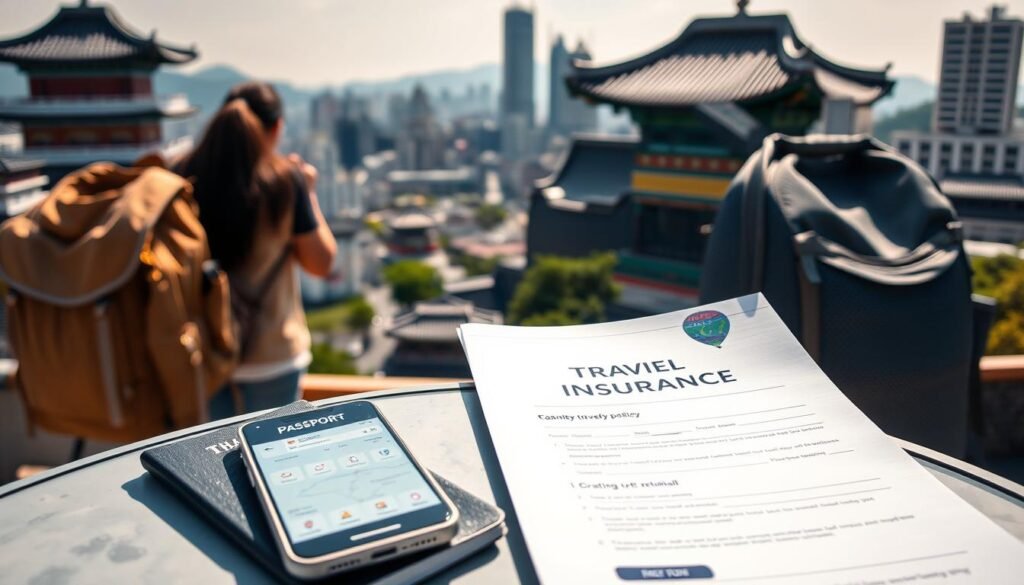
To get health insurance in Korea for travel, you buy a travel medical insurance policy before your trip, because short-term visitors can’t join Korea’s National Health Insurance (NHIS) and your home health plan usually won’t cover you there. If you’re a tourist or staying under six months, a travel medical or “inbound” plan covers emergencies, hospital care, and evacuation. If you’re moving to Korea for six months or more, the path is different: you’ll be required to enroll in and pay into the NHIS. So the right answer to how to get health insurance in Korea for travel depends on whether you’re visiting or staying long term.
How to Get Health Insurance in Korea for Travel: Visitor vs. Resident
| Short-term visitor (under 6 months) | Long-term resident (6+ months) | |
|---|---|---|
| What you use | Travel medical / inbound insurance | National Health Insurance (NHIS) |
| Required? | Recommended, not mandatory for entry | Mandatory after 6 months |
| Where to get it | Buy before travel, or at Incheon kiosks | Enroll via NHIS with your ARC |
| Typical cost | Varies by trip/age/limits | Income-based, avg ~₩70,000/mo |
| Covers | Emergencies, evacuation, sometimes trip costs | Most care, prescriptions, hospital stays |
You’re planning a trip to Korea, and somewhere between booking flights and building an itinerary comes the nagging question: what happens if I get sick or hurt over there? Korea has excellent, affordable healthcare, but as a visitor you’re not in the national system, and an emergency can still cost real money. Here’s exactly how to get covered, whether you’re going for two weeks or two years.
Travel Medical Insurance vs. Korea’s National Health Insurance: Which Do You Need?
The first thing to sort out is whether you’re a visitor or a resident, because that decides everything. Korea’s National Health Insurance Service (NHIS) is for people who live there; travel medical insurance is for people passing through.
If you’re a tourist or staying under six months, you can’t join the NHIS, so a travel medical policy is your coverage. If you’re moving to Korea for work, study, or family for six months or more, you’ll be required to enroll in the NHIS and pay monthly premiums, and you’ll get access to one of the world’s best-regarded healthcare systems at low cost. Many long-term arrivals also use a travel or expat plan to bridge the first six months before NHIS kicks in.
How to Get Health Insurance in Korea for Travel (Short-Term Visitors)
For a trip, you buy travel medical insurance before you go, and you have two solid options. The goal is to cover emergencies, hospital treatment, and medical evacuation, since those are the costs that can turn a great trip into a financial problem.
The first option is a global travel insurance plan from providers like World Nomads, SafetyWing, or Allianz, which bundles emergency medical and evacuation with trip cancellation and baggage cover. The second is a Korean “inbound” plan from insurers such as Samsung Fire, Meritz Fire & Marine, KB Insurance, or DB Insurance, which you can buy on their English websites or at kiosks in the Incheon Airport arrivals hall. Inbound plans are often the easiest for local clinics to bill directly. Whichever you choose, check the emergency medical limit, evacuation/repatriation cover, how pre-existing conditions are handled, and whether it pays the clinic directly or reimburses you later.
Does My US Health Insurance Work in Korea?
Usually not. Most US health plans provide little or no coverage outside the country, and Original Medicare generally doesn’t cover care abroad at all. That’s why a separate travel medical policy matters for American travelers.
Without it, you’d pay out of pocket as an uninsured patient and claim back later, if your plan reimburses foreign care at all. A dedicated travel medical or inbound plan closes that gap and, just as importantly, covers emergency evacuation, which a domestic US plan won’t. If you’re travelling from the USA, treat travel medical insurance as part of the trip cost, not an optional extra.
Can Foreigners Get Korea’s National Health Insurance (NHIS)?
Yes, but it’s for residents, not visitors. Since July 2019, foreigners staying in Korea for six months or more are required to enroll in the NHIS, and short-term visitors are not eligible.
Enrollment is tied to your residency. You’ll first get an Alien Registration Card (ARC) within 90 days of arrival, and after six months of continuous residence the NHIS mails a premium bill to your ARC address. Employees on work visas are typically enrolled automatically through their employer, while students and self-employed residents register at their local NHIS office. Some visa categories, such as certain students (D-2) and marriage migrants (F-6), may gain benefits sooner. You can opt out only if you hold equivalent foreign coverage that the NHIS accepts, so confirm your situation with them directly.

How Much Is Korean Health Insurance?
For NHIS members, premiums are income-based, and reports put the average for a single foreign worker around ₩70,000 a month (roughly $55) in 2025. Employees split the premium with their employer; self-employed and other residents pay a premium assessed on income and assets, with a set minimum.
The bigger savings show up when you use care. With NHIS, you pay only a regulated co-payment, often around 20% for inpatient care and 30% to 60% outpatient, which can mean ₩5,000 to ₩30,000 for a clinic visit. Without it, you pay 100% as an uninsured patient, frequently three to five times the insured rate. For visitors, travel medical insurance cost instead depends on your age, trip length, and coverage limits rather than a flat national premium.
What Korea’s Health Insurance Covers (and Pre-existing Conditions)
For enrolled NHIS residents, coverage is broad and includes chronic and serious conditions, because it’s a universal system with no pre-existing exclusion once you’re in. That covers doctor visits, hospital stays, subsidized prescriptions, and even some Eastern medicine like acupuncture.
So a condition like Parkinson’s disease is covered for an NHIS member the same as any other illness, and Korea has a registration program that further lowers copays for certain serious or rare diseases. The picture is different for travel insurance: a pre-existing condition is usually only covered if your policy includes a pre-existing condition waiver, while a sudden, new medical emergency on your trip is typically covered. Some items, such as cosmetic procedures and premium dental work, sit outside NHIS, though Korean prices for those are often still lower than in the US.
How to Pay Korean Health Insurance and Contact the NHIS
NHIS premiums are billed monthly, and the simplest way to handle them is bank auto-debit so you never miss a payment. Bills arrive around the 10th of the month and are generally due by the 25th.
You can pay and check your status through the NHIS website or its mobile app, by bank transfer, or by automatic deduction, and employees usually have premiums taken straight from their pay. For English-language help, the NHIS customer line is 1577-1000 (press 7 for English), open weekdays. Staying current matters beyond healthcare: the NHIS and Immigration share a database, and unpaid premiums above ₩500,000 can block a visa extension, so set up auto-debit early.
Healthcare in South Korea for Foreigners: What to Expect
Korea’s healthcare is among the best regarded in the world, with modern hospitals, short waits at clinics, and high-quality care at prices far below US levels. International rankings consistently place it near the top, and the country has a high density of MRI and CT machines.
For visitors, the practical points are cost and language. As an uninsured tourist, a clinic visit is modest, but an emergency room visit can start around ₩150,000 before any tests, and a surgery or hospital stay can climb from there, which is exactly what travel medical insurance is for. Large hospitals in Seoul usually have English-speaking staff or interpreters; smaller local clinics may not, so a translation app helps.
Best Travel Insurance for South Korea: How to Choose
There’s no single “best” plan, because the right choice depends on your trip, your age, and whether you want medical-only or full trip protection. Compare on the things that actually matter for Korea: a solid emergency medical limit, emergency evacuation, clear pre-existing condition terms, and whether the insurer can bill Korean clinics directly.
For a straightforward tourist trip, a Korean inbound plan from a major local insurer is easy to use on the ground. For longer or multi-country travel, or if you want trip cancellation and baggage rolled in, a global provider like World Nomads, SafetyWing, or Allianz may fit better. If you’re bridging the six-month gap before NHIS, look specifically at long-stay or expat medical plans. Get quotes from two or three, and read what’s excluded as carefully as what’s covered. For a deeper look at choosing trip coverage, see our guide on refundable tickets vs. travel insurance.
The Bottom Line
If you’re visiting Korea, buy travel medical insurance and don’t lean on your home health plan, which most likely won’t follow you there. Korea’s care is excellent and affordable by US standards, but “affordable” still isn’t free when you’re uninsured, and an evacuation or hospital stay is exactly the kind of low-odds, high-cost event insurance exists for.
If you’re moving to Korea, the NHIS is genuinely one of the perks of living there: world-class care for a modest income-based premium. The mistake newcomers make is ignoring the six-month coverage gap and the auto-debit setup, then getting caught by a surprise bill or a blocked visa renewal. Sort your ARC, set up auto-debit, and bridge the gap with a short-term plan, and you’ll have the system working for you instead of against you.
Conclusion
How you get health insurance in Korea for travel comes down to visitor versus resident. Short-term visitors buy travel medical or inbound insurance before the trip, since they can’t use the NHIS and their home plan usually won’t cover them, especially travelers from the USA whose Medicare and private plans stop at the border. Residents staying six months or more must enroll in the NHIS, pay income-based premiums, and keep them current to protect their visa status. Match your coverage to your stay, prioritize emergency medical and evacuation, and you’ll be protected either way.
Frequently Asked Questions
How do I get health insurance in Korea for travel?
Buy a travel medical insurance policy before your trip, because short-term visitors can’t join Korea’s NHIS and your home plan likely won’t cover you there. You can choose a global travel insurer or a Korean “inbound” plan, which you can buy online or at Incheon Airport kiosks.
Do I need insurance to travel to South Korea?
It’s not generally required for short-stay tourists to enter Korea, but it’s strongly recommended. An emergency room visit alone can start around ₩150,000 as an uninsured visitor, and a hospital stay or evacuation costs far more, so travel medical insurance protects you from a large surprise bill.
Can foreigners get health insurance in Korea?
Yes, but it depends on your stay. Foreigners living in Korea for six months or more must enroll in the National Health Insurance Service (NHIS) and pay premiums. Short-term visitors aren’t eligible for the NHIS and instead use travel medical or inbound insurance for their trip.
How much is Korean health insurance?
For NHIS members, premiums are income-based and averaged around ₩70,000 a month (about $55) for a single foreign worker in 2025, with employees splitting the cost with their employer. Members then pay only a regulated co-payment, often 20% to 60%, instead of the full bill.
Does my US health insurance work in Korea?
Usually not. Most US health plans offer little or no coverage abroad, and Original Medicare generally doesn’t cover overseas care. Travelers from the USA should buy a separate travel medical policy, which also adds emergency evacuation that domestic US plans don’t include.
Is Parkinson’s disease covered by health insurance in Korea?
For enrolled NHIS residents, yes. The system is universal with no pre-existing exclusion once you’re a member, and a registration program can lower copays for serious conditions. On travel insurance, a pre-existing condition like Parkinson’s is usually only covered with a pre-existing condition waiver.
How do I pay Korean health insurance online?
Pay through the NHIS website or mobile app, by bank transfer, or by setting up automatic bank deduction, which is the safest way to avoid missed payments. Bills arrive around the 10th of the month and are typically due by the 25th. Employees usually have premiums deducted from pay.
What is the NHIS contact number for foreigners?
The National Health Insurance Service English-language customer line is 1577-1000; press 7 for English. It’s open on weekdays during business hours. Use it for enrollment questions, premium issues, and help locating your local NHIS office.
What’s the best travel insurance for South Korea?
There’s no single best; it depends on your trip. Korean inbound plans from insurers like Samsung Fire or KB Insurance are easy for local clinics to bill. Global plans from World Nomads, SafetyWing, or Allianz add trip cancellation and baggage. Prioritize emergency medical and evacuation cover.
How much does healthcare cost in Korea without insurance?
Korean care is cheaper than US care, but as an uninsured visitor you pay full price. A clinic visit is modest, but an ER visit can start around ₩150,000 before tests, and prescriptions cost several times the insured rate. A surgery or hospital stay can run much higher.
How do I get health insurance in Korea for travel from the USA?
Buy a US-based travel medical plan or a global travel insurer before you leave, or a Korean inbound plan on arrival. Don’t rely on Medicare or your US health plan abroad. Make sure the policy includes emergency medical treatment and evacuation back to the US.
Do international students in Korea need health insurance?
Yes. Students (D-2) staying six months or more are generally required to enroll in the NHIS. Some universities offer or require a private group plan to cover the gap before NHIS eligibility begins, so check with your school’s international office on arrival.
About the Author
The InsuranceGuidances Editorial Team produces fact-checked guides on insurance and everyday costs, sourcing each claim from named, reputable references. This guide draws on the National Health Insurance Service of Korea, expat-healthcare resources, and major travel and inbound insurers, with care taken to separate what short-term visitors need from the rules that apply to long-term residents.
Sources
- National Health Insurance Service (NHIS), Korea — guidance for foreigners. https://www.nhis.or.kr/english/wbheaa02900m01.do
- International Insurance — South Korea healthcare system overview. https://www.internationalinsurance.com/countries/south-korea/healthcare/
- KCulture — South Korea health insurance guide for foreigners (2026). https://kculture.com/south-korea-health-insurance-the-guide-for-foreigners/
- Care in Korea — National Health Insurance (NHI) for foreigners. https://careinkorea.com/healthcare-guides/national-health-insurance-nhi-for-foreigners-in-korea/
- Foreigner Home (FOHO) — enrolling in NHIS, contact and payment. https://foreignerhome.com/blog/en/enroll-national-health-insurance-korea/
- Visas Korea — Korea health insurance for foreigners (2026). https://visaskorea.co.kr/en/blog/korea-health-insurance-foreigners-guide
- GPA — stricter NHIS criteria for foreigners (2023 amendment). https://gpa.net/blogs/emea/korea-stricter-health-insurance-criteria-for-foreigners-and-koreans-overseas
- U.S. Travel Insurance Association — travel insurance cost guidance. https://www.ustia.org/