If you drive safely, you shouldn’t pay like a risk-taker. This guide on compliant drivers program insurance explains how it can lower your bills. It helps you avoid scams and shady offers.
We’ll show you what a compliant driver insurance policy looks like. You’ll learn about telematics and usage-based systems that reward good driving. We’ll also talk about where these programs work best, including Florida.
Find out how compliant driver coverage can save you money. See which insurers offer the strongest programs. And learn how to spot red flags before you enroll.
Key Notes;
- Compliant drivers program insurance ties discounts to real driving behavior, not just demographics.
- Insurance for compliant drivers can yield meaningful savings, but results vary by insurer and driver history.
- Florida availability and rules differ; check state-specific program terms and SR-22/FR-44 impacts.
- Watch privacy, data use, and renewal rules; community threads like Reddit highlight common pitfalls.
- Compare offers from State Farm, Progressive, GEICO, Erie and others to find the best compliant driver coverage.
What compliant drivers program insurance is and how it works
Compliant drivers program insurance rewards safer driving. It links premiums to how you drive. Insurers want to lower claims by encouraging safe driving.
They use real data to adjust prices based on individual driving. This can lower costs for safe drivers. It also helps insurers predict losses better.
Definition and core concept
A driver safety insurance program checks your driving habits. It gives initial credits and then adjusts rates based on your performance. Insurers compare your past driving with your current data.
Safer drivers get lower premiums. This is thanks to safe driver discounts.
Telematics, safe driving scores, and usage-based insurance
Telematics uses data from your phone or car. It tracks things like speed and braking. This data is turned into a Safe Driving Score.
Insurers like Liberty Mutual and Progressive use these scores. They offer dynamic pricing and reports.
Usage-based insurance shows how your driving affects your costs. It gives discounts and updates on your driving. You can see how to improve and get bigger discounts later.
Why insurers prefer compliant drivers and how discounts are calculated
Insurers like drivers who don’t file many claims. This helps them stay profitable. They use data and telematics to price policies.
Discounts start with an initial credit. Then, they adjust based on your driving. Safe drivers get bigger discounts, while risky drivers might see their savings go down.
compliant drivers program insurance
The market has many telematics options that reward safe driving. These options lower premiums. Insurers use names you know, with incentives and scores that save you money.
Programs and naming conventions across insurers
Big carriers have their own labels. State Farm has Drive Safe & Save. Liberty Mutual and Safeco offer RightTrack. Progressive sells Snapshot. American Family has Know-Your-Drive.
Each brand uses similar metrics but with different weights and rewards. This is in the driver insurance program.
How enrollment methods differ
There are three ways to enroll: mobile app, plug-in OBD-II device, or direct connected-car integration. Apps use your phone’s GPS and sensors. OBD-II devices give more detailed vehicle data. Connected-car setups send data from Ford, Lincoln, General Motors, and others without extra hardware.
State Farm lets you enroll through an app or connected-car link for certain vehicles. Progressive mainly uses apps or plug-ins for most customers.
Typical eligibility requirements and minimum data collection periods
Insurers have rules for performance credits. Many need a 90-day driving period for full discounts. Liberty Mutual’s RightTrack and Safeco require at least 125 miles to score.
Some insurers offer a discount right away for joining. Then, they add more savings based on your driving. Others collect data all year and adjust at renewal.
Top compliant drivers program insurance options for 2025
Carriers update their telematics offers yearly. This guide shows top programs, how they score customers, and what to expect when looking for insurance.
Liberty Mutual RightTrack: discounts, scoring factors, and limits
Liberty Mutual offers a 10% discount for new members. Safe driving, like smooth braking and limited night driving, can earn up to 40% off. You need to drive a certain amount to get a rate adjustment.
RightTrack is great for drivers who want feedback and rewards. Those who drive safely and less often get the biggest discounts.
Progressive Snapshot: average savings, signup mechanics, and risk of rate increase
Progressive Snapshot offers a $169 sign-up bonus and about $322 in savings for many. It tracks your driving habits through an app or plug-in.
About 20% of users see their rates go up. But, it’s good for those who want to see their driving logs and get tips.
State Farm Drive Safe & Save and Safeco RightTrack: availability and discount possible
State Farm’s Drive Safe & Save can save you up to 30%. It works with other discounts and is available in most states.
Safeco’s RightTrack offers big discounts and savings. Look at state availability and renewal terms when choosing between these.
American Family Know-Your-Drive and other notable programs
American Family’s Know-Your-Drive offers a discount and up to 10% more based on your driving. It also has tools to help with travel.
USAA has SafePilot for military members with special discounts. Erie targets specific markets with its telematics plans.
When comparing, ask about behavior tracking, bonuses, and monitoring times. This helps find the best insurance for you.
Pricing details and how compliant driver coverage affects premiums
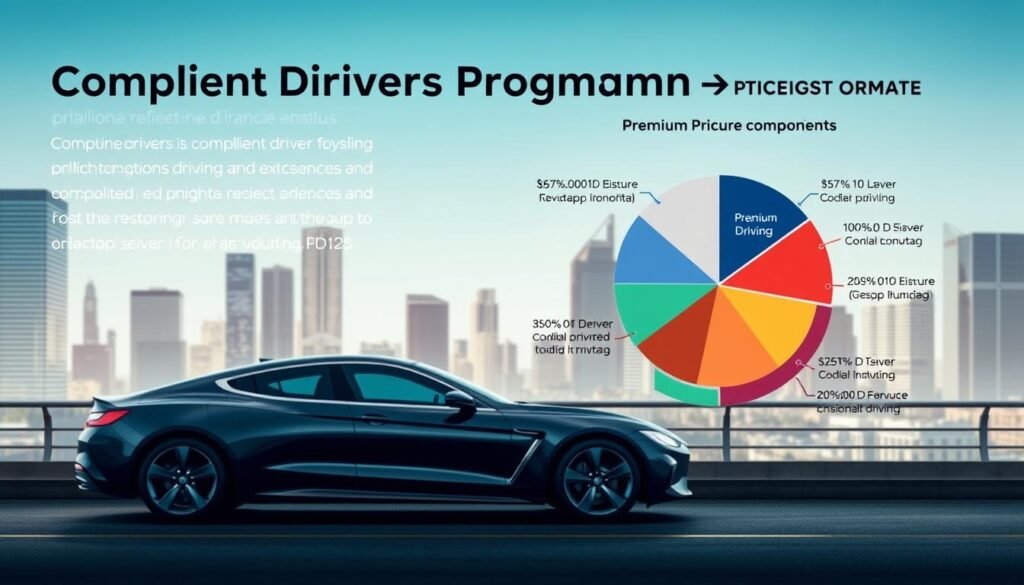
First, let’s look at the basics. A clean driving record for a 40-year-old with a 2020 Toyota Camry costs about $2,677 a year. An accident can raise this to around $3,858, a 45% increase. A DUI can make it even higher, at about $5,252.
Teen drivers and those with poor credit pay more, often between $4,700 and $5,719. These numbers help us see how compliant driver coverage compares to regular policies.
Telematics programs have two main effects on prices. Insurers often give a credit when you sign up. Then, they adjust your rates based on how well you drive. For example, Progressive Snapshot offers an average $169 credit and $322 savings at renewal for good drivers.
How and when insurers collect data affects your costs. Some programs only collect data for a short time, then change your rates at renewal. Others collect data all the time, adjusting your rates as you drive.
This means you might see a quick drop in premiums or a change at renewal based on your driving. It’s all about how the program works.
Let’s compare prices for different drivers. Below is a table showing annual premiums, typical credits, and renewal changes for common risk groups.
| Profile | Baseline Premium (annual) | Typical Enrollment Credit | Average Renewal Change |
|---|---|---|---|
| Clean record (age 40, Camry) | $2,677 | $0–$169 | -$150 to -$322 |
| After at-fault accident | $3,858 | $0–$169 | -5% to -15% if driving improves |
| After DUI | $5,252 | $0–$169 | Limited; many see little change without long clean period |
| Teen driver | $5,719 | $0–$169 | Small percent drops possible with strong telematics results |
| Poor credit | $4,700 | $0–$169 | Moderate reductions if driving behavior is excellent |
Telematics data can make insurance cheaper. Carriers look at things like hard braking and driving at night. If you drive safely, you might pay less at renewal. About 80% of people save money, while 20% might pay more if they drive poorly.
When you shop for insurance, ask about how credits work. Find out if you get the credit right away and if the discount comes at renewal. This helps you understand the costs and choose the best program for saving money.
Factors that affect compliant drivers program insurance cost
Knowing what changes prices helps drivers make smart choices. Many things affect the cost of insurance for compliant drivers. This includes whether a telematics plan saves money or costs more.
Driver history and near-term incidents
Driver history is the biggest factor in premium changes. An accident can increase rates by 40–50 percent. Speeding tickets raise rates by 20–25 percent.
DUIs cause the biggest jumps, sometimes by 60–70 percent. These can affect rates for over a decade in some states.
Demographics, credit, vehicle, mileage, and ZIP code
Insurers look at age, credit, and driving record when setting prices. Teenagers and the elderly often pay more. Bad credit means higher claims and higher rates.
Vehicle model affects repair costs and theft risk. Annual miles and ZIP code show how much you drive and claim frequency. These factors set the base price before discounts.
Program-specific scoring elements
Telematics programs rate behaviors like hard braking and phone use. Insurers weigh these differently. Some programs require minimum miles or safe driving to qualify.
This is why insurance costs vary between Liberty Mutual, Progressive, State Farm, and American Family.
How these pieces interact
A clean record with low miles in a safe area gets big discounts. But one serious violation can wipe out savings. Programs that focus on distraction and night driving penalize late shifts or phone use.
Practical takeaways for policy shoppers
- Check your driving record before signing up to guess how it will affect costs.
- See how each insurer measures behavior. Some focus on miles and speed, others on braking.
- Compare quotes after telematics scoring. See if the plan lowers your renewal rate or just offers a discount.
State-specific notes and examples, including Florida compliant drivers program insurance

Telematics programs and safe-driver discounts vary by state and carrier. Big names like State Farm, Progressive, GEICO, and USAA cover a lot of ground. But smaller firms like Erie only work in certain areas.
Erie is in Illinois, Indiana, Kentucky, Maryland, New York, North Carolina, Ohio, Pennsylvania, Tennessee, Virginia, West Virginia, Wisconsin, and Washington, D.C. Drivers there get programs that fit local laws. Even big carriers might not offer all programs in every state.
Florida has high insurance costs due to many claims and storms. Florida’s insurance is pricier than other states. The cost and availability of programs depend on local loss rates and state laws.
SR-22 FR-44 insurance is very expensive. Companies like Dairyland and First Acceptance offer these certificates. But not all insurers accept drivers who need these filings.
State laws affect how insurers handle accidents. Some states limit how much rates can go up after an accident. California and Oklahoma are examples of states with such rules.
Even national carriers have different rules for telematics programs. Some states don’t allow certain discounts or use of driving data. Always check your state’s rules before joining a program.
Florida drivers need to compare prices and check if insurers accept high-risk cases. Look at both big insurers and specialty firms. This helps find the best deal for your risk level.
It’s smart to check each insurer’s program in your state. Ask about SR-22 or FR-44 insurance and if telematics discounts apply after a claim. This makes finding insurance easier and more clear.
Legitimacy concerns and community insights about compliant drivers program insurance
People wonder if compliant drivers program insurance is real. It uses telematics to track trips. This data helps lower rates but raises privacy concerns.
Is compliant drivers program insurance legit is about being open. Big names like Progressive and State Farm share their rules. They explain how they use data to set rates.
Reddit talks about compliant drivers program insurance. Some say it saves money. Others talk about unexpected rate hikes. This shows the importance of knowing what you’re getting into.
It’s key to read the fine print. Look at terms of service and privacy policies. Make sure you know how your data is used.
Privacy is a big issue. Apps and devices need clear permission. Make sure you understand what you’re agreeing to.
Be careful of contract details. Know how to opt out and what happens to your data. Compare different companies to see their policies.
Legitimacy comes from clear rules and fair appeals. If you don’t understand your score, ask for an explanation. Keep records of your trips to spot any errors.
For those shopping around: read everything carefully. Look for real stories on Reddit. Make sure you understand your privacy and how rates are set. This way, you can save money while keeping your data safe.
Savings strategies and how to maximize compliant driver discounts
Drivers can save by using telematics smartly. Start early, follow app tips, and drive safely. This way, you can get affordable insurance.
Enroll and meet program rules
Join a telematics plan like State Farm Drive Safe & Save or Progressive Snapshot. Finish the needed miles and monitoring to get a score. Use the app to avoid hard braking and fast starts. This earns you basic rewards.
Stack discounts for bigger impact
Get more savings by bundling auto and home or renters policies. Many insurers offer over 20% off for bundling. Add credits from defensive driving courses and payment perks. Better credit means lower rates and more savings.
Shop targeted carriers and compare quotes
Look at State Farm, GEICO, Progressive, Erie, Dairyland, and First Acceptance for high-risk drivers. Each has its own rules. Get quotes from several to find the best telematics deals.
Track performance and act on data
Use app feedback to fix bad driving habits. Keep records of safe driving to show at renewal. Regularly check your insurance to stay ahead.
Cost-benefit checklist
- Enroll in telematics and meet minimum mileage windows.
- Bundle policies to stack savings.
- Complete approved safety courses for additional credits.
- Improve credit where state rules permit for lower surcharges.
- Compare specialized high-risk insurers for the best fit.
These steps help you save on insurance while keeping options open. Always test new programs, watch your scores, and shop around. This way, you keep your insurance affordable and reliable.
Pros and cons of driver compliance insurance and tips for safe enrollment
Driver compliance insurance has its ups and downs. Companies like Liberty Mutual, State Farm, and Progressive offer big discounts for safe driving. Safe drivers can save a lot through feedback, accident forgiveness, and extra perks like roadside help or car rental coverage.
Pros
- Big discounts: programs promise top savings—RightTrack up to 40%, Drive Safe & Save up to 30%, Know-Your-Drive up to 20%—for steady safe driving.
- Improved habits: feedback cuts down on hard braking, harsh acceleration, and distracted driving, which might lower claim chances.
- Long-term savings: clean records and telematics data can lead to long-term benefits and loyalty perks from big carriers.
Cons
- Privacy trade-offs: programs collect detailed trip data, GPS, and driving events; check data retention and sharing rules before signing up.
- Rate risk for poor driving: telematics can show risky driving patterns and lead to higher renewal rates; Progressive says about a 20% chance of rate increase for some.
- Limited access: some states and groups can’t join; SR-22 or FR-44 filings often keep premiums high despite joining.
Enrolling in driver compliance insurance tips are key. Try a program during its monitoring period to see how scoring affects your rate. Also, read the fine print on data retention and sharing to know what insurers keep.
Keep trip logs and check app feedback often. Work on reducing hard braking, avoiding phone use while driving, and managing night driving. Mix telematics discounts with bundling and defensive driving courses for more savings.
Get multiple quotes and compare them from Geico, Progressive, State Farm, and American Family. Use tips for safe enrollment to spot hidden fees, understand participation credits, and decide if to commit long term.
Follow compliant driver insurance tips: keep records clean, enroll only after a short test, and document improvements with screenshots or trip logs. This way, you have control and can weigh the pros and cons of compliant drivers program insurance for your family.
Conclusion
Telematics and compliant drivers program insurance show a clear path for many drivers. They can lower high-risk premiums. Carriers like State Farm and Progressive use signals to tie discounts to behavior.
Sample savings from Snapshot and RightTrack show big benefits. But, a few may see their premiums go up.
Driver compliance insurance recommendations are key. Carefully enroll and review data. Change your driving habits to lower premiums.
Use telematics as a test before relying on quotes. This helps you understand your driving better.
Insurance coverage for compliant drivers works best with other strategies. Bundle policies and take defensive driving courses. Fix your credit to save more.
After monitoring, shop for new quotes. Telematics results vary by carrier and state.
Final takeaways: enroll wisely and protect your privacy. Improve your driving habits. Compare offers after data collection.
For affordable auto insurance, use compliant drivers program insurance. It’s a practical tool when you take smart steps.