
Insurance usually will not cover Ozempic for prediabetes. Ozempic is FDA-approved only for type 2 diabetes (and to reduce heart and kidney risk in people who have it), so using it for prediabetes is “off-label” — and most private plans, Medicare, and Medicaid won’t pay for off-label use. To get Ozempic covered, insurance typically requires a documented type 2 diabetes diagnosis (usually an A1c of 6.5% or higher), plus prior authorization and proof you tried metformin first. Without coverage, Ozempic runs over $1,000 a month, though manufacturer cash prices and savings programs can lower that.
Will Insurance Cover Ozempic for Prediabetes: Quick Reference
| Situation | Likely covered? |
|---|---|
| Prediabetes (A1c 5.7–6.4%) | No — off-label use |
| Type 2 diabetes (A1c ≥6.5%) | Usually yes, with prior authorization |
| Weight loss only | Rarely — Ozempic isn’t approved for it |
| Obesity + plan covers weight drugs | Maybe Wegovy/Zepbound, not Ozempic |
| Medicare/Medicaid for prediabetes | No (but lifestyle programs are covered) |
You get a prediabetes diagnosis, your doctor mentions Ozempic, and your first thought is: will my insurance pay for it? It’s a fair hope — the drug helps blood sugar and weight, the two things prediabetes is about. But the honest answer trips most people up, because coverage hangs on a single technicality: what the FDA approved Ozempic to treat. Here’s the full picture, plus what actually works.
Will Insurance Cover Ozempic for Prediabetes?
Insurance almost never covers Ozempic for prediabetes, because the drug isn’t FDA-approved for that condition. Insurers anchor their coverage decisions to a drug’s approved uses, and Ozempic’s label covers type 2 diabetes — not prediabetes.
That makes prescribing Ozempic for prediabetes an “off-label” use. Doctors are legally allowed to do it when they judge the benefits outweigh the risks, but insurers generally aren’t willing to pay for it. So even though Ozempic can lower blood sugar and support weight loss, a prediabetes diagnosis alone usually won’t unlock coverage. You’d typically be looking at the full cash price or a manufacturer program instead.
Why Insurance Usually Won’t Cover Ozempic for Prediabetes
The core reason is FDA approval. Ozempic (semaglutide) is approved to manage blood sugar in adults with type 2 diabetes, to reduce the risk of heart attack and stroke in people with type 2 diabetes and heart disease, and to slow kidney decline in type 2 diabetes with chronic kidney disease. Prediabetes isn’t on that list.
Insurers build their formularies and coverage rules around those approved indications. When a prescription falls outside them — like Ozempic for prediabetes or for weight loss — most plans deny it automatically unless the doctor proves an approved diagnosis. It’s the same reason Ozempic is rarely covered for weight loss, even though it causes weight loss: the label doesn’t say so.
What A1c Do You Need for Insurance to Cover Ozempic?
To get Ozempic covered, you generally need an A1c of 6.5% or higher, which is the threshold for a type 2 diabetes diagnosis. Prediabetes is defined as an A1c of 5.7% to 6.4% — below that cutoff — which is exactly why it doesn’t qualify.
Plans often want more than just the number, too. Many require prior authorization and “step therapy,” meaning you must have tried metformin first (some insurers want at least 60 days of it) or show a reason you can’t take it. A few plans look for an A1c of 7.5% or higher before approving Ozempic as add-on therapy. The diagnosis has to be real and documented in your chart — a qualifying lab result, not a hopeful request.
Do I Qualify for Ozempic if I’m Prediabetic?
For insurance-covered Ozempic, prediabetes alone usually doesn’t qualify you, because coverage hinges on a type 2 diabetes diagnosis. A doctor can still prescribe it off-label if they think it’s appropriate, but you’d most likely pay out of pocket.
One honest caution: coverage requires a genuine qualifying diagnosis, and you shouldn’t try to misrepresent your health to get a drug approved — that’s insurance fraud and can backfire badly. If your real issue is excess weight, the better-covered path is a medication that’s actually approved for that purpose (more on that below), discussed openly with your doctor.
How Much Does Ozempic Cost Without Insurance?
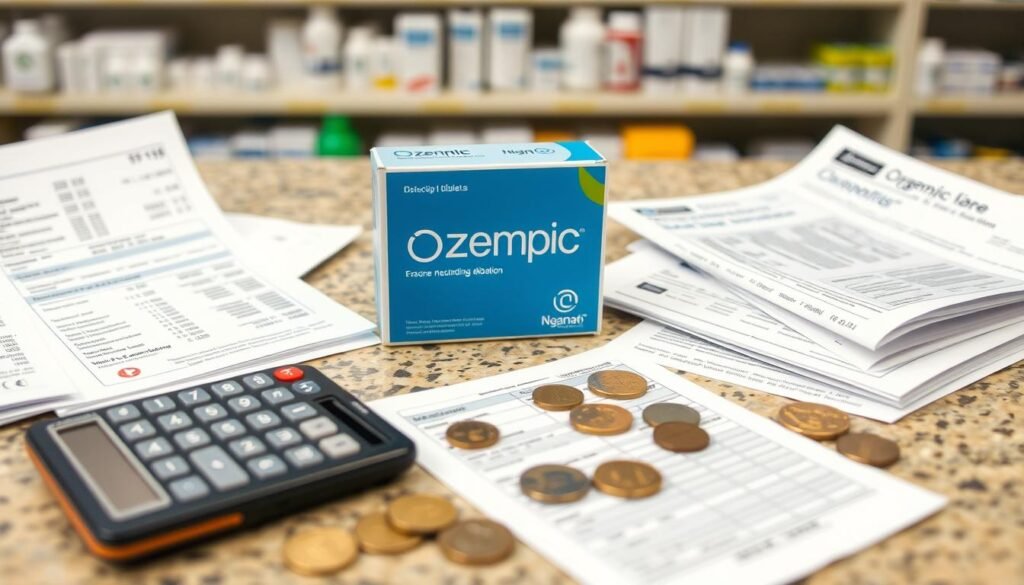
Without insurance, Ozempic’s list price is over $1,000 a month — about $1,028 per pen — which adds up to more than $12,000 a year. That’s the sticker price few people actually pay, but it’s the starting point if you have no coverage.
There are cheaper cash routes. Novo Nordisk, the maker, has lowered its self-pay price for Ozempic (recently to around $499 a month through its NovoCare pharmacy), and discount platforms like GoodRx may offer introductory or ongoing prices in the few-hundred-dollars range depending on the dose. Always compare the manufacturer’s cash price against a discount-card price before paying full retail.
How Do I Get Ozempic for $25 (or 3 Months for $25)?
The “$25” price comes from the Novo Nordisk Ozempic savings card, but it only works if you have commercial insurance that already covers Ozempic. With it, eligible patients can pay as little as $25 for a 1-, 2-, or 3-month supply, saving up to $300 on a 3-month fill.
The catch is in the requirements. You need private/commercial insurance (not Medicare, Medicaid, or other government plans), and that plan has to cover Ozempic — which loops back to needing a type 2 diabetes diagnosis. So for prediabetes alone, the $25 card usually isn’t an option, because the underlying coverage isn’t there.
Does Medicare or Medicaid Cover Ozempic for Prediabetes?
No. Medicare Part D and Medicaid both cover Ozempic for type 2 diabetes, but not for prediabetes, since that’s off-label. Medicare in particular won’t pay for it as a prevention or weight-loss drug.
There’s a meaningful alternative, though: Medicare covers the Medicare Diabetes Prevention Program (MDPP), a structured lifestyle program designed to help people with prediabetes avoid progressing to type 2 diabetes. Medicaid coverage of GLP-1 drugs varies by state and is generally limited to diagnosed diabetes, so check your specific state’s rules.
Does Blue Cross, Aetna, Cigna, or Anthem Cover Ozempic?
Major insurers like Blue Cross Blue Shield, Aetna, Cigna, and Anthem all follow a similar pattern: they cover Ozempic for type 2 diabetes with prior authorization, but not for prediabetes or weight loss. The exact criteria differ by plan, but the diabetes requirement is consistent.
Aetna, for example, typically wants a type 2 diabetes diagnosis plus either a documented metformin trial, an inadequate response or intolerance to metformin, or an A1c of 7.5% or higher for combination therapy. Cigna and Anthem similarly require a matching diagnosis and often metformin step therapy. Whatever your insurer, the surest path to coverage is a clearly documented diabetes diagnosis with recent labs — not a prediabetes request.
Better-Covered Alternatives for Prediabetes
Since Ozempic rarely gets covered for prediabetes, the alternatives are often more effective for your wallet anyway. The first-line treatments for prediabetes are lifestyle changes and metformin, both far cheaper and well supported by evidence.
A few honest options to discuss with your doctor:
- Lifestyle and prevention programs. Diet, exercise, and structured programs like the CDC’s National Diabetes Prevention Program can cut your risk substantially, and even 5–10% weight loss improves blood sugar.
- Metformin. It’s inexpensive (often a few dollars a month), commonly used for prediabetes, and widely covered.
- Wegovy or Zepbound. If your real issue is obesity (not just prediabetes), these are FDA-approved for weight management. Your plan may cover one if it includes weight-loss drug benefits, though many plans don’t.
What to Do If Your Coverage Is Denied
If your insurer denies Ozempic, you can appeal, and it’s worth doing when the medication is genuinely justified. Start by asking your doctor to submit a letter of medical necessity with your diagnosis, labs, and treatment history.
Strengthen the appeal with documentation: prior medications you’ve tried, relevant risk factors, and clinical notes. If the first internal appeal fails, you can request an external review. For a step-by-step walkthrough, see our guide on how to dispute a denied health insurance claim. Appeals don’t always succeed, but a well-documented one has a real shot.
The Honest Read
If you’re hoping insurance will cover Ozempic for prediabetes, plan for a “no” and build from there. The coverage door opens on a type 2 diabetes diagnosis, and prediabetes simply sits below that line — that’s not a loophole to game, it’s a rule that’s enforced with lab results.
The good news is that the standard prediabetes plan — lifestyle change plus metformin — is both better covered and genuinely effective, often reversing prediabetes before it becomes diabetes. If excess weight is the real driver, have an honest conversation with your doctor about FDA-approved weight-loss medications, which at least have a coverage path. Chasing Ozempic for an off-label use usually just means paying cash for something cheaper alternatives can do.
Conclusion
Insurance generally won’t cover Ozempic for prediabetes because it’s FDA-approved only for type 2 diabetes, making prediabetes use off-label. Coverage requires a documented diabetes diagnosis (A1c 6.5% or higher), prior authorization, and usually a metformin trial. Without coverage, expect to pay over $1,000 a month at list price, less through manufacturer cash prices. For prediabetes itself, lifestyle changes and metformin are the cheaper, better-covered, and clinically supported first steps.
FAQs
Will insurance cover Ozempic for prediabetes?
Usually no. Ozempic is FDA-approved only for type 2 diabetes, so using it for prediabetes is off-label, and most private plans, Medicare, and Medicaid won’t cover it. Coverage typically requires a documented type 2 diabetes diagnosis with prior authorization.
What A1c do you need for insurance to cover Ozempic?
Generally an A1c of 6.5% or higher, which is the type 2 diabetes threshold. Prediabetes is 5.7% to 6.4%, below the cutoff, so it doesn’t qualify. Some plans also require a metformin trial first or an A1c of 7.5% for add-on therapy.
Do I qualify for Ozempic if I’m prediabetic?
Not for insurance-covered Ozempic, since coverage requires a type 2 diabetes diagnosis. A doctor can prescribe it off-label, but you’d likely pay out of pocket. Don’t misrepresent your health to get approval — that’s fraud. Ask about FDA-approved alternatives instead.
How do I get 3 months of Ozempic for $25?
Through the Novo Nordisk Ozempic savings card, which lets eligible patients pay as little as $25 for a 1- to 3-month supply. It requires commercial insurance that covers Ozempic, so it’s not available with Medicare, Medicaid, or for off-label prediabetes use.
Does prediabetes qualify for Wegovy?
Not on prediabetes alone. Wegovy is FDA-approved for chronic weight management in people with obesity, or overweight plus a related condition. If you meet those weight criteria and your plan covers weight-loss drugs, Wegovy may be an option, though many plans exclude them.
Which GLP-1 is best for prediabetes?
None are FDA-approved specifically for prediabetes. If obesity is the underlying issue, Wegovy and Zepbound are approved for weight management and have a clearer coverage path. For prediabetes itself, lifestyle change and metformin remain first-line.
Which is better for prediabetes, Ozempic or metformin?
For prediabetes, metformin is usually the better practical choice: it’s cheap, widely covered, and well-studied for diabetes prevention. Ozempic may produce more weight loss but is off-label for prediabetes, expensive, and rarely covered. Discuss both with your doctor.
What disqualifies you from Ozempic?
You generally shouldn’t take Ozempic if you have a personal or family history of medullary thyroid cancer or MEN2 syndrome, a history of pancreatitis, type 1 diabetes, or if you’re pregnant. Your doctor will review your history before prescribing.
What organ is Ozempic hard on?
Ozempic can affect the pancreas (risk of pancreatitis), the gallbladder (gallstones), and the kidneys (usually from dehydration after nausea or vomiting). It also carries a thyroid-related boxed warning based on animal studies. Report severe symptoms to your doctor promptly.
Why can’t you eat pizza on Ozempic?
You can, but high-fat, greasy foods like pizza often worsen nausea and bloating because Ozempic slows digestion. It’s not a strict ban — most people just find smaller portions of rich foods more comfortable while on the medication.
Do diabetics stay on Ozempic forever?
Often, yes. Type 2 diabetes is a chronic condition, and Ozempic’s blood-sugar and weight benefits typically reverse if you stop. Whether you stay on it long-term is a decision to make with your doctor based on your response and overall plan.
Does Medicaid cover Ozempic for prediabetes?
Generally no. Medicaid coverage of Ozempic varies by state and is typically limited to diagnosed type 2 diabetes, not prediabetes. Check your state’s Medicaid formulary, since rules for GLP-1 drugs have been changing in many states.
About the Author
Md Shahinuzzaman writes about insurance and out-of-pocket healthcare costs at InsuranceGuidances.com, turning confusing coverage rules into clear, source-backed guidance. For this guide, every fact traces to a named source — the FDA label, CDC, GoodRx, and major insurer policies — and the common myths (that Ozempic is approved for weight loss, or that prediabetes meets coverage criteria) are corrected rather than repeated.
Sources
- U.S. FDA / Ozempic prescribing information — approved indications (type 2 diabetes). https://www.novomedlink.com/diabetes/products/treatments/ozempic.html
- CDC — prediabetes prevalence and prevention. https://www.cdc.gov/diabetes/prevention-type-2/prediabetes-prevent-type-2.html
- GoodRx — is Ozempic covered by insurance, list price and savings. https://www.goodrx.com/ozempic/is-ozempic-covered-by-insurance
- BuzzRx — will insurance cover Ozempic for prediabetes (off-label, A1c). https://www.buzzrx.com/blog/will-insurance-cover-ozempic-for-prediabetes
- Healthline — Ozempic and Medicare for prediabetes (Part D, MDPP). https://www.healthline.com/health/drugs/medicare-ozempic-prediabetes
- Drugs.com — will my insurance cover Ozempic (off-label, prior authorization). https://www.drugs.com/medical-answers/insurance-cover-ozempic-3575100/
- NovoCare — Ozempic savings card and self-pay pricing. https://www.novocare.com/ozempic.html
- Noom / insurer policy summaries — Medicare, Medicaid, and private plan rules. https://www.noom.com/blog/weight-management/ozempic-insurance-coverage/
This is a sensitive health and financial topic. The information here is educational; decisions about medication and coverage should be made with your doctor and insurer.
By Md Shahinuzzaman — Insurance & Out-of-Pocket Healthcare Cost Specialist Reviewed June 2026 ·