The tooth filling price without insurance in 2026 usually runs $150 to $450 per tooth. The most common type, a tooth-colored composite filling, averages about $226. A silver amalgam filling is cheaper, around $100 to $250. Ceramic and gold cost far more. But here’s the part most price guides skip: the real cost is what happens if you wait. A $200 filling put off too long can turn into a $1,000-plus crown or root canal. This guide gives you honest prices, the traps to avoid, and the real ways to pay less.
Tooth Filling Price Without Insurance: Key Facts at a Glance
| Question | Short answer |
|---|---|
| Typical price per filling | About $150 to $450, most people land near $200 to $300 |
| Cheapest material | Silver amalgam, about $100 to $250 |
| Most common material | Composite (tooth-colored), averages about $226 |
| Add-on costs | Exam and X-rays often add $50 to $250 |
| Cost of waiting | A delayed filling can become a $1,000+ crown or root canal |
| Biggest savings | Dental schools (30% to 50% off) and discount plans |
You just heard the word “cavity”
Here’s how this usually goes. You’re at a checkup, the dentist pokes around, and says the words nobody wants: “You’ve got a cavity, we should fill it.” Your next thought isn’t about your tooth. It’s about your wallet. You don’t have dental insurance, and you have no idea if this is a $150 problem or a $600 one.
That worry is fair, and this guide is built to answer it plainly. I’ll give you real 2026 prices by filling type, show you the hidden add-ons, and walk through the honest math of what happens if you delay. Most cost pages stop at a table. The truth is, the smartest money move with a cavity isn’t finding the cheapest filling, it’s not letting a small filling become a big one.
How much is a tooth filling without insurance in 2026?
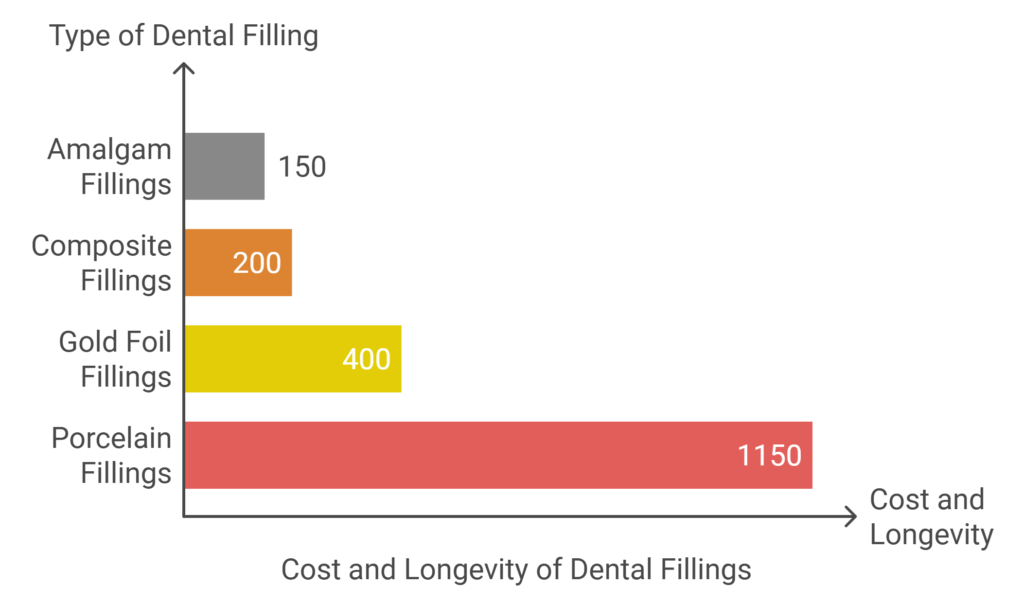
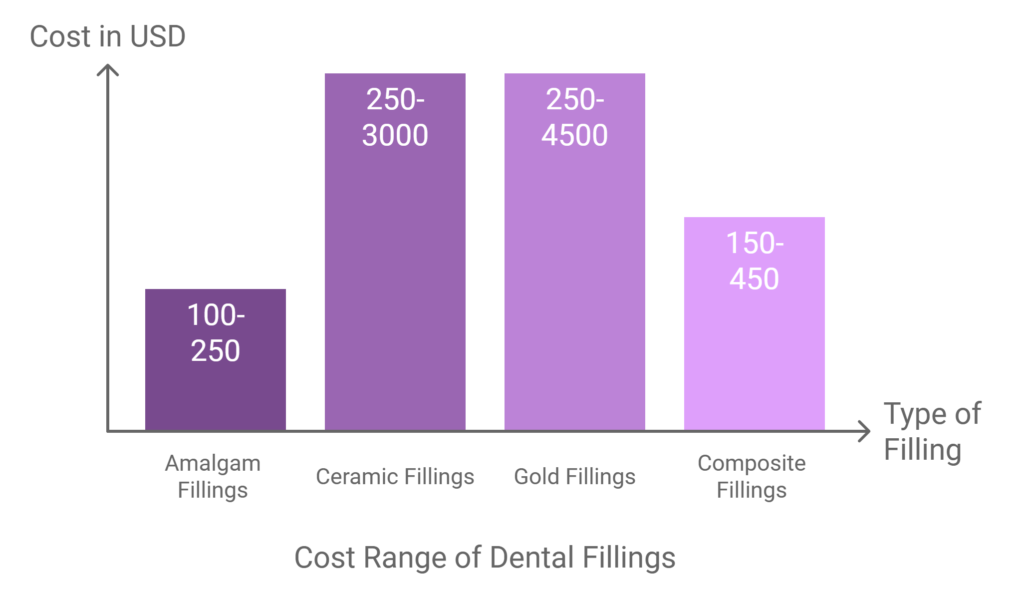
The price depends mostly on the material and how big the cavity is. Here are honest 2026 averages, pulled from dental fee data and reconciled across several sources, so you’re seeing a fair middle, not one clinic’s price.
| Filling type | Price without insurance (per tooth) | How long it lasts |
|---|---|---|
| Silver amalgam | $100 to $250 (avg ~$160) | 10 to 15 years |
| Composite (tooth-colored) | $150 to $450 (avg ~$226) | 5 to 10 years |
| Ceramic / porcelain | $250 to $1,500 | 15 years or more |
| Gold | $300 to $4,500 | 20 to 30 years |
Two things move the price inside these ranges. First, the number of surfaces: a cavity on one side of a tooth costs less than one wrapping around two or three surfaces. Second, the tooth: a back molar is trickier than a front tooth and often costs a bit more. So when a dentist quotes you, ask how many surfaces they’re filling; that’s the real driver.
Is $200 expensive for a filling? And why are fillings so costly?
No, $200 is normal, even a little low for a composite filling in many cities. If your quote is in the $150 to $300 range for a standard filling, that’s fair. Much above that usually means a large multi-surface cavity, a pricier material like ceramic, or a high-cost metro area like New York City.
Why do fillings cost what they do? You’re not just paying for a dab of material. The price covers the dentist’s time, the numbing, the equipment, and the skill to do it right so it lasts years. Composite costs more than amalgam because it takes longer: the tooth has to be kept perfectly dry and the material is built up and hardened in layers with a special light.
Watch out for the hidden add-ons
The filling itself is rarely the whole bill. Before you compare prices, know what else can appear on the invoice, especially as a new or uninsured patient.
- Exam: often $50 to $200, especially on a first visit.
- X-rays: about $25 to $150, needed to see the decay.
- Numbing (local anesthetic): sometimes bundled in, sometimes billed separately.
- Follow-up visit: possible if the tooth stays sensitive.
So a “$200 filling” can become a $350 to $450 first visit once the exam and X-rays are added. When you call around, ask for the all-in price: “What will I pay total for the exam, X-rays, and a one-surface composite filling?” That one question prevents most surprise bills.
The real cost is waiting: fill it now or pay far more later
This is the part I most want you to hear, and it’s where the honest money math lives. A cavity never gets smaller or cheaper on its own. It only grows.
Here’s the progression. A small cavity caught early is a simple $150 to $300 filling. Ignore it, and the decay reaches the nerve. Now you’re looking at a root canal (about $500 to $1,500) plus a crown to cover the tooth (about $800 to $2,000). Wait even longer and the tooth may need to be pulled ($150 to $600 for a simple extraction), and replacing it with an implant can run $3,000 to $6,000.
Put simply: a $200 problem today can become a $1,000 to $3,000 problem in a year or two. That’s why “I’ll deal with it later” is usually the most expensive choice you can make with a cavity. If money is tight right now, the next section is for you, because there are real ways to get it filled cheaply rather than skipping it.
How to lower your tooth filling price without insurance
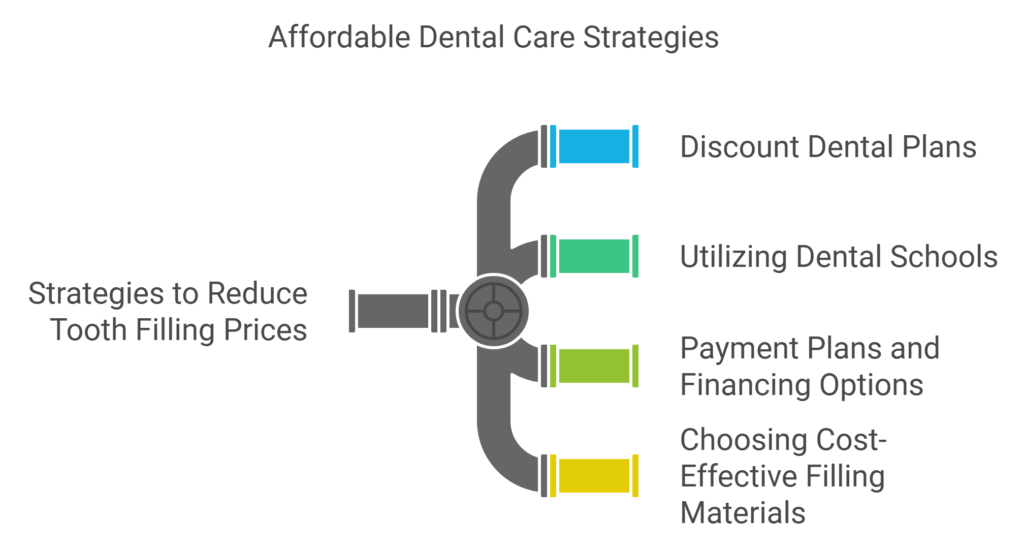
You have more options than you think. These are the ones that actually cut the bill.
- Dental schools. Supervised students do the work at 30% to 50% off standard rates. It takes longer, but the quality is checked by licensed instructors. This is the single biggest saver for many people.
- Community health centers. Many offer sliding-scale fees based on your income, so you pay what you can afford.
- Dental discount plans. Not insurance. You pay a yearly fee (often $100 to $200) for set discounts, sometimes 10% to 50% off, with no waiting period and no annual cap. Good if you need work done now.
- Cash or self-pay discount. Many private dentists quietly offer 10% to 20% off if you pay upfront. Always ask, “Is there a self-pay discount?”
- Payment plans and CareCredit. Spread the cost over months. Watch the interest on financing.
- HSA or FSA. If you have one, fillings are a qualified expense you can pay with pre-tax dollars.
- Medicaid. If you qualify, it often covers fillings fully for eligible adults and children.
Stacking two of these, say a dental discount plan plus a self-pay discount, can turn a $300 filling into something much easier to manage.
Which filling should you choose on a budget?
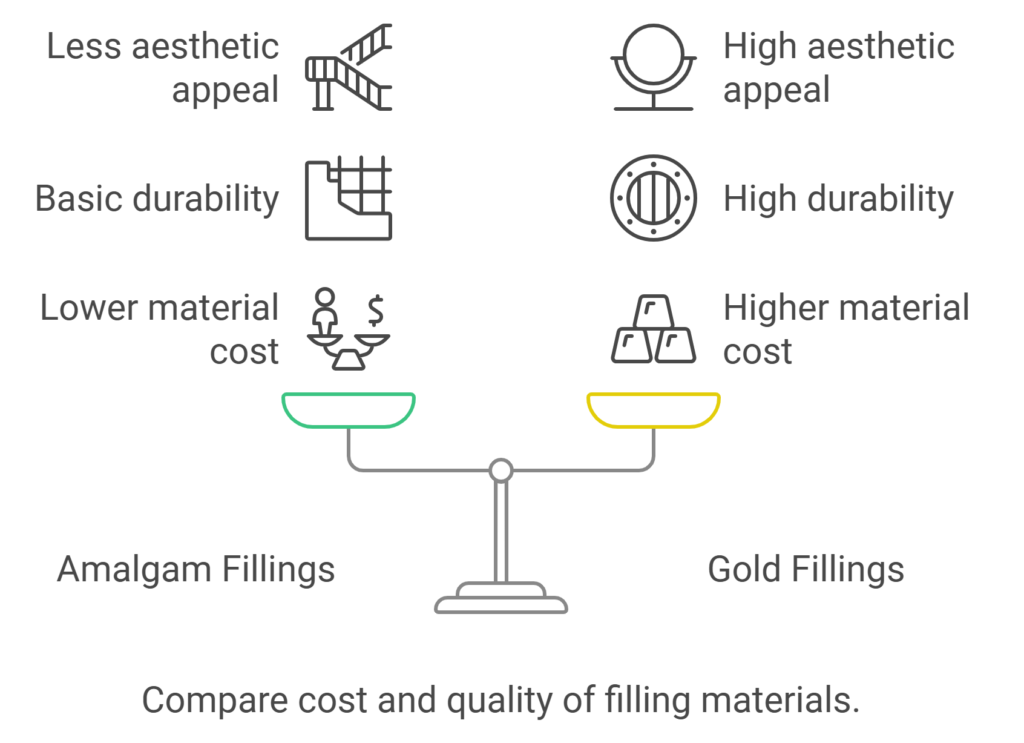
If cost is your top concern, amalgam (silver) is the cheapest and most durable, and it’s a solid choice for back teeth where nobody sees it. If appearance matters, especially for a front tooth, composite (tooth-colored) is worth the extra cost and is what most dentists use today. Ceramic and gold are premium options that last longest but cost the most, and most budget-focused patients don’t need them.
One honest catch to know about if you ever do get insurance: many plans have an “amalgam downgrade” clause. That means even if you pick a tooth-colored composite on a back tooth, the plan only pays the cheaper silver rate, and you cover the difference. It’s a common surprise, so ask before you choose.
Quick answers to the dental questions people also ask
A few things people search alongside cost, answered straight. This is general information, not dental advice.
Will an MRI pull out or damage my fillings? No. Fillings won’t be pulled out or heat up dangerously in an MRI; they’re safe. Silver amalgam can blur the image a little on a head or neck scan, while composite and ceramic don’t. You might taste metal briefly during the scan, which is harmless and stops when it ends. Tell the technologist about your dental work anyway.
Is it cheaper to fill a tooth or pull it? Pulling looks cheaper upfront (a simple extraction is often $150 to $300), but it’s usually the costlier path overall. A missing tooth often needs replacing with an implant or bridge that costs thousands, and the gap can shift your other teeth. Saving the tooth with a filling is almost always the better long-term value.
How long does one filling take? Usually about 20 minutes to an hour for a single tooth, including numbing.
How painful is it? The area is numbed, so a filling itself shouldn’t hurt. Some sensitivity for a few days after is normal. The “most painful” dental procedures people fear, like a bad abscess or a complex extraction, are usually the result of waiting on a small cavity, another reason to act early.
Does the price change by city, chain, or how many cavities you have?
A few specific searches worth answering plainly.
“Tooth filling cost without insurance near me” and by city. Location matters a lot. A filling in a high-cost metro like NYC (New York) or coastal California runs toward the top of the ranges, while Texas, Florida, and rural areas often sit lower. To find your real “near me” price, call two or three local offices and ask for the cash price on ADA code D2391 (a one-surface back-tooth composite). That code trick gets you an apples-to-apples number fast.
Chains like Aspen Dental. Large chains such as Aspen Dental often advertise free first exams and X-rays for new patients and offer in-house payment plans, which helps if cash is tight. Their filling prices are broadly in the national range, but always get the itemized quote in writing, since add-ons vary by office.
A white filling. “White filling” just means composite, the tooth-colored option covered above, averaging about $226. It costs a bit more than silver amalgam because it takes longer to place.
Fillings for kids. Children’s fillings are often a little cheaper per tooth and sometimes use a material called glass ionomer for baby teeth. If your child is uninsured, check Medicaid and CHIP, which cover dental for eligible kids, and community clinics.
What if I have several cavities, like 10? Costs add up per tooth, so ten fillings is a big bill at full price. Ask whether the dentist will do them in groups, offer a multi-tooth or self-pay discount, and prioritize the worst ones first. A dental school is especially worth it when you need a lot of work done.
The Honest Read: how to handle a filling without insurance
In my years working around out-of-pocket medical and dental costs, the most expensive pattern I see is the same one every time: someone skips a $200 filling because money is tight, then comes back a year later needing a $1,500 root canal and crown for the same tooth. The delay didn’t save money; it multiplied the bill. Dental decay is one of the few costs that punishes waiting this harshly.
So here’s the plain verdict.
If you have a cavity and no insurance: get it filled soon, and use the savings routes above to afford it, a dental school, a discount plan, a sliding-scale clinic, or a self-pay discount. Choose amalgam for a cheap back-tooth fix or composite for a visible one. Ask for the all-in price including exam and X-rays.
Don’t let cost scare you into waiting. The filling is the cheap version of this problem. Everything that comes after a delay, root canal, crown, extraction, implant, costs far more. Acting early is the real money-saver here.
Conclusion
The honest tooth filling price without insurance in 2026 is about $150 to $450 for most people, with composite averaging near $226 and amalgam cheaper. But the number that should guide you isn’t the filling price, it’s the cost of waiting. A small filling now beats a root canal, crown, or extraction later, every time. Get a written all-in quote, use a dental school or discount plan if money is tight, and treat the cavity while it’s still small. That’s how you protect both your tooth and your budget.
FAQs
How much does one tooth filling cost without insurance?
In 2026, a single tooth filling without insurance typically costs $150 to $450, with most people paying $200 to $300. The exact price depends on the material, the number of tooth surfaces, and where you live. A basic exam and X-rays can add $50 to $250 to a first visit.
Is $200 expensive for a filling?
No, $200 is a normal, even slightly low, price for a standard composite filling in many areas. Prices above that usually reflect a large multi-surface cavity, a pricier material like ceramic, or a high-cost city. If you’re quoted much more, ask how many surfaces are being filled and get a second quote.
What is the cheapest way to fill a cavity?
The cheapest routes are dental schools (30% to 50% off, with supervised students), community health centers with sliding-scale fees, and choosing an amalgam (silver) filling over composite. A dental discount plan or a self-pay cash discount can also cut the price. Always ask each office about self-pay pricing.
How much is a white (composite) filling without insurance?
A white, tooth-colored composite filling averages about $226 and generally ranges from $150 to $450 per tooth, sometimes reaching $450 or more in high-cost metro areas. It costs more than silver amalgam because the material takes longer to place. It’s the most common choice, especially for visible teeth.
Why are fillings so expensive without insurance?
You’re paying for the dentist’s time and skill, the numbing, the equipment, and materials, not just the filling itself. Composite costs more than amalgam because it must be placed in layers and hardened with a special light. Without insurance, you pay the full fee-for-service price, with no plan covering a share.
What happens if I delay a filling?
The cavity keeps growing and never heals on its own. A small $200 filling can progress to needing a root canal ($500 to $1,500) and a crown ($800 to $2,000), or eventually an extraction and implant costing thousands. Delaying almost always turns a cheap problem into an expensive one.
Is it cheaper to get a tooth filled or pulled?
Filling is cheaper in the long run, even though pulling looks cheaper upfront. A simple extraction may cost $150 to $300, but replacing the missing tooth with an implant or bridge costs thousands, and the gap can shift your other teeth. Saving the natural tooth with a filling is usually the better value.
How long does a filling take, and does it hurt?
A single filling usually takes 20 minutes to an hour. Because the dentist numbs the area first, the procedure itself shouldn’t hurt, though some sensitivity for a few days afterward is normal. Larger or multiple fillings take longer.
Will an MRI pull out or affect my dental fillings?
No. Fillings won’t be pulled out or heat up dangerously during an MRI; they’re safe. Silver amalgam can slightly distort images of the head or neck, while composite and ceramic don’t. You may notice a brief metallic taste, which is harmless. Tell the MRI technologist about any dental work beforehand.
How long do tooth fillings last?
It depends on the material. Amalgam lasts about 10 to 15 years, composite about 5 to 10 years, ceramic 15 years or more, and gold 20 to 30 years. Your habits, like grinding, diet, and oral hygiene, strongly affect how long any filling lasts.
Are dental schools a good way to save on fillings?
Yes. Dental school clinics offer treatment at roughly 30% to 50% off standard prices, with students doing the work under close supervision by licensed instructors. Appointments take longer than a regular office visit, but the quality is checked and the savings are significant, making it one of the best options for uninsured patients.
Do dental discount plans help with filling costs?
They can. Discount plans aren’t insurance; you pay an annual fee (often $100 to $200) for set discounts at member dentists, sometimes 10% to 50% off, with no waiting period and no annual cap. They’re useful when you need work done now and don’t have insurance.
Does the cost of a filling change by state or city?
Yes, a lot. Fillings cost more in high-demand, high-cost cities like New York and less in many rural areas, because local overhead and living costs shape dental fees. Prices can swing 30% or more between a big metro and a small town. Always get a local quote rather than relying only on national averages.
Should I choose amalgam or composite to save money?
For a back tooth where looks don’t matter, amalgam is cheaper and very durable, a smart budget pick. For a visible front tooth, composite is worth the extra cost for its natural color. If you have insurance, watch for an “amalgam downgrade” clause that pays only the silver rate on composite fillings.
Can I prevent needing fillings at all?
Largely, yes. Regular checkups, daily brushing and flossing, limiting sugary foods, and fluoride use prevent most cavities. Catching decay early at a cleaning also means a smaller, cheaper filling if one is needed. Prevention is far cheaper than any filling, and cheaper still than what a delayed cavity becomes.
About the Author
Md Shahinuzzaman is an insurance and out-of-pocket healthcare cost specialist with 16 years of banking and insurance experience. He writes clear, honest guides for InsuranceGuidances.com to help people understand medical and dental costs and pay less. Every figure here is checked against named sources, including the ADA, FAIR Health, the FDA, and 2026 dental fee data. Reviewed July 2026.
Sources
American Dental Association, finding low-cost dental care and dental schools. https://www.ada.org/resources/community-initiatives/action-for-dental-health/find-low-cost-dental-care
American Dental Association (ADA), dental fee and procedure references. https://www.ada.org/
FAIR Health Consumer, dental cost lookup tool. https://www.fairhealthconsumer.org/
Delta Dental, tooth filling cost and coverage. https://www.deltadental.com/protect-my-smile/procedures/tooth-filling/cost-and-insurance-coverage/
Humana, how much a cavity filling costs with and without insurance. https://www.humana.com/dental-insurance/dental-resources/how-much-does-cavity-filling-cost
CareCredit, dental fillings cost and financing guide. https://www.carecredit.com/well-u/health-wellness/dental-tooth-fillings-cost-dental-fillings-financing/
NewMouth, how much a filling costs without insurance. https://www.newmouth.com/blog/filling-cost-without-insurance/
National Institute of Dental and Craniofacial Research (NIDCR), tooth decay and fillings. https://www.nidcr.nih.gov/health-info/tooth-decay
U.S. Food and Drug Administration (FDA), dental amalgam safety. https://www.fda.gov/medical-devices/dental-devices/dental-amalgam-fillings
ScienceInsights, do fillings affect MRI safety and image quality. https://scienceinsights.org/do-fillings-affect-mri-safety-and-image-quality/