For cheap car insurance for new drivers under 21, the companies that come up cheapest again and again in 2026 are National General and GEICO for the lowest bare-minimum prices, Travelers for teens, and regional insurers like Erie and Auto-Owners where they’re sold, plus USAA if your family has military ties. A 21-year-old can find minimum coverage from National General for around $89 a month, versus a national average near $140. But the cheapest company only gets you halfway. The cheapest policy comes from stacking a parent’s plan, a good-student discount, and the right car on top. This guide names the cheap insurers, explains why they’re cheap, and walks you through getting the policy step by step.
Cheap Car Insurance for New Drivers Under 21: Key Facts at a Glance
| Question | Short answer |
|---|---|
| Cheapest for bare minimum | National General and GEICO (often $89 to $135/mo at 20 to 21) |
| Cheapest widely available | GEICO, in the most states of any national brand |
| Cheapest for teens | Travelers, plus State Farm’s Steer Clear |
| Cheapest regional insurers | Erie, Auto-Owners (only in some states) |
| Cheapest if you qualify | USAA (military families only) |
| Biggest saver of all | Joining a parent’s policy (40% to 60% less) |
You’re under 21 and every quote looks like rent
Let’s be honest about why you’re here. You’re a new driver under 21, and the quotes coming back look absurd, sometimes more than your phone bill and car payment combined. You just want two things: to know which companies are actually cheap for someone your age, and to know how to get that cheap policy without getting ripped off.
That’s exactly what this page does. First I’ll name the cheapest insurers for under-21 drivers and show real 2026 prices. Then I’ll explain why those companies are cheaper than the rest, so you can spot a good deal. Finally, I’ll give you a plain, step-by-step process to get the policy, including the permit stage, the discounts to ask for, and what to do if you need an SR-22. No hype, just the cheapest honest path.
Why is car insurance so expensive under 21?
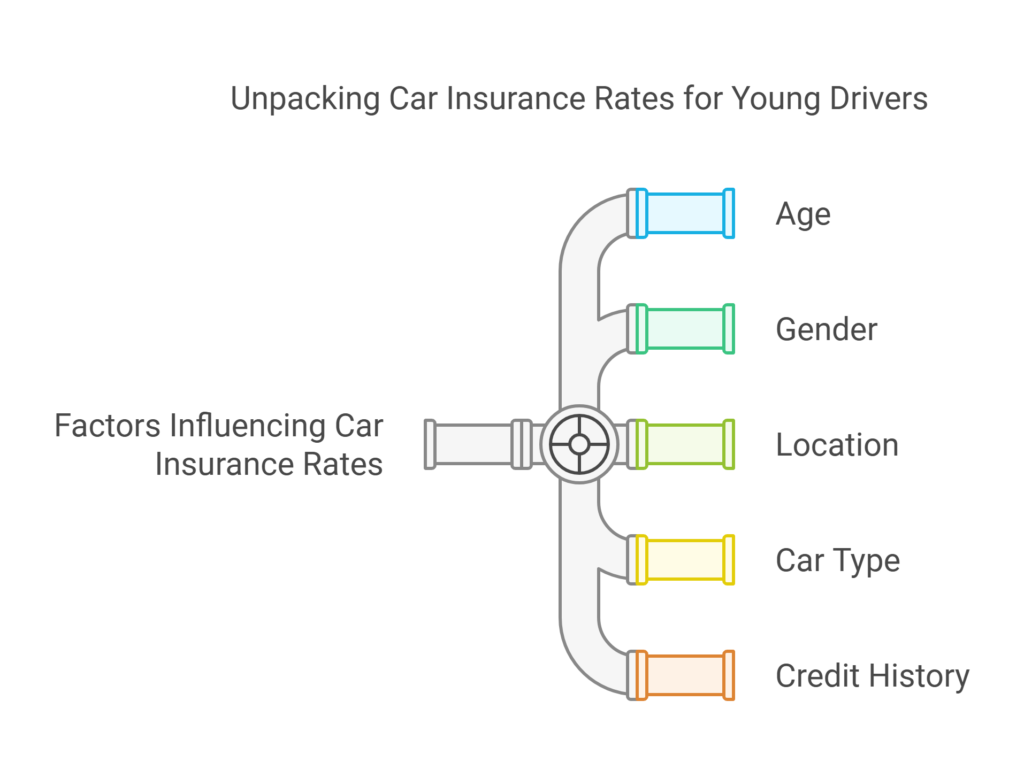
Quick background, because it explains everything below. Insurers price you on risk, and the numbers are blunt: drivers aged 16 to 19 crash at nearly three times the rate of drivers over 20, per the CDC. So companies charge young drivers more to cover that higher chance of a claim.
The good news is the price drops fast. A driver saves roughly $250 a month on average just aging from 16 to 20, with big single-year drops at 18 and again at 21. Car insurance for a new driver over 21 gets noticeably cheaper, and a 19-year-old already pays less than a 17-year-old on the same policy. Your job under 21 is to squeeze the number down now with the right company and discounts, while age and a clean record do the rest.
Which car insurance companies are cheapest for drivers under 21?
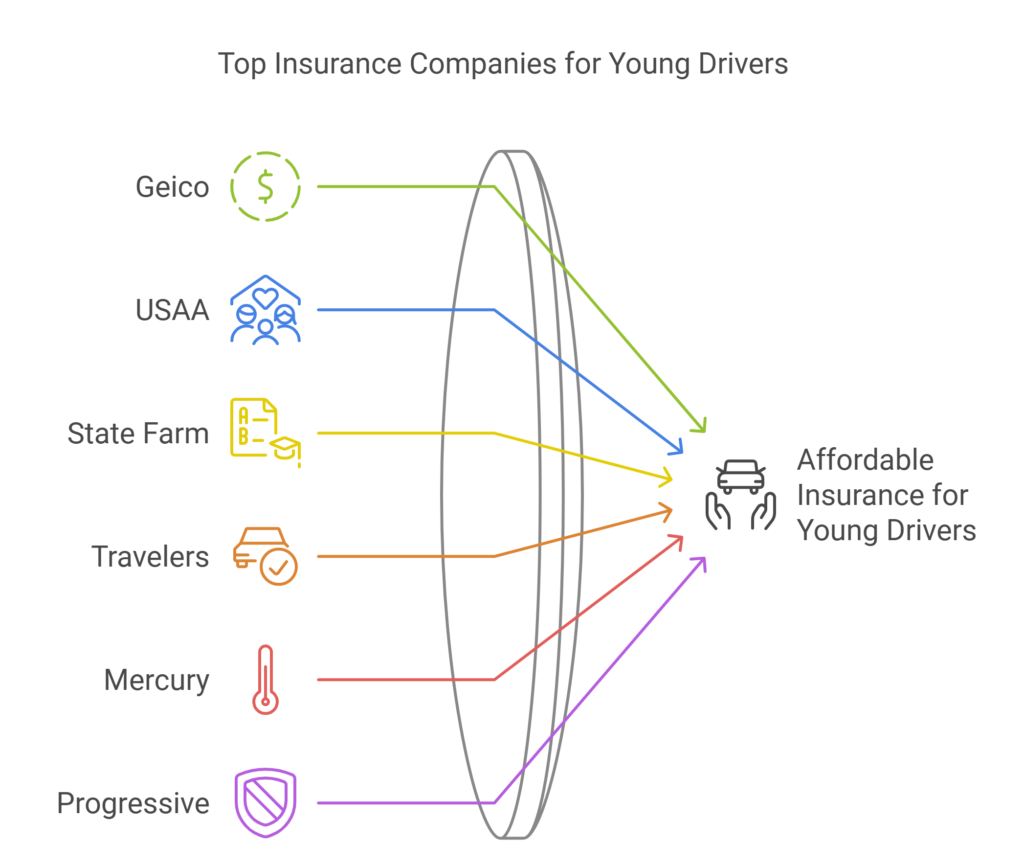
Here are the insurers that repeatedly show up cheapest for young drivers in 2026 analyses, with the honest catch on each. Prices are averages for minimum coverage on a young driver’s own policy; your quote will differ by state and car.
| Insurer | Rough monthly price (minimum) | The catch |
|---|---|---|
| National General | ~$89 to $117 at 20 to 21 | A “nonstandard” insurer; great for price, fewer frills |
| GEICO | ~$101 to $135 | Cheapest brand in the most states; strong app and discounts |
| Travelers | Often cheapest for teens | Great rates, service scores are average |
| State Farm | Competitive with Steer Clear | Better service; discount needs a training program |
| Erie | Very low where sold | Only in about a dozen states |
| Auto-Owners | Among cheapest regional | Sold through local agents, limited states |
| USAA | Frequently cheapest overall | Military members, veterans, and families only |
Two honest truths behind this table. First, regional insurers are the cheapest option in about half of all states. If you only check GEICO and State Farm, you’ll miss the lowest price in roughly 24 states. Always add one regional name that sells where you live. Second, the cheapest brand changes by your exact age, state, and car, so this table is your shortlist to quote, not a final answer.
Why are these companies so cheap for young drivers?
This is the part most price lists skip, and it helps you judge a quote. Cheap insurers aren’t cheap by magic, each has a reason, and knowing it tells you what you’re trading away.
Nonstandard insurers (like National General). These specialize in higher-risk drivers, including young and new ones, so their pricing model is built for you rather than penalizing you. The trade-off is fewer extras and sometimes a more basic claims experience. For a clean-record under-21 driver who just wants the lowest legal price, that trade is often worth it.
Regional insurers (like Erie and Auto-Owners). They keep costs low with lower overhead and tighter local risk pools, and they pass the savings on. The catch is simple: they only operate in some states, and often only through local agents, so you may have to call rather than click.
Telematics-first insurers. Companies that lean on safe-driving apps can offer a low starting price and then discount you further for good driving, up to 30% or more. For a careful young driver, this is one of the few ways to prove you’re low-risk and earn a lower rate fast.
GEICO’s scale. GEICO is cheap in the most states because its huge size and low-cost online model spread expenses thin. It’s the safest “always get a quote” pick because it’s available almost everywhere and still competitive for young drivers.
USAA’s membership base. USAA is almost always cheapest because it only insures the military community, a lower-risk, loyal group, so it can price lower. The catch is the eligibility wall: you need a military tie to get in.
The lesson: “cheap” usually means one of these, a nonstandard model, a regional footprint, a telematics bet, or a members-only base. None are bad. You just want to know which trade-off you’re accepting.
The biggest saver isn’t a company: join a parent’s policy
Before you buy your own policy, know this: for most under-21 drivers, the single biggest saving isn’t picking a cheap insurer, it’s not buying your own policy at all. Adding a new driver to a parent’s policy costs roughly 40% to 60% less than a standalone policy. One analysis put a solo 18-year-old at about $599 a month for full coverage, versus around $385 added to a parent’s plan.
Yes, your parents’ rate goes up. But the combined household bill is almost always lower than two separate policies, because you share the discounts and experience already on their plan. And if you’re under 18, this isn’t just cheaper, it’s usually required, since minors can’t sign an insurance contract alone. You can stay on a parent’s policy as long as you live at the same address, including while away at college. Buy your own only when you move out for good or the car is titled solely in your name.
How to get cheap car insurance under 21: a step-by-step process
Here’s the actual process, in order, from permit to policy. Follow it and you’ll land the lowest honest price for your situation.
Step 1: Start at the learner’s-permit stage. Most insurers let a permit holder drive under a parent’s policy at no extra charge until they’re fully licensed. Tell your insurer when your teen gets a permit, and start shopping before the full license, so there’s no gap and no surprise.
Step 2: Decide own policy vs. parent’s policy. If you live at home or are away at school, get added to a parent’s plan, it’s the biggest saver. Only price a standalone policy if you’ve moved out or must have your own.
Step 3: Pick your coverage level honestly. Minimum liability is cheapest but only covers damage you cause to others. If your car is cheap or paid off, liability-only can make sense. If it’s financed or worth real money, keep full coverage. Match coverage to the car, not to the lowest possible number.
Step 4: Build a shortlist of three to five insurers. Include GEICO or Travelers, one regional carrier that sells in your state (Erie, Auto-Owners, or similar), a nonstandard option like National General, and USAA if you qualify.
Step 5: Get quotes at the same coverage and deductible. Quote every company with identical limits and the same deductible, so you’re comparing apples to apples. Do it online where you can; online quotes are often cheaper. Have your license, car details (VIN), and any student info ready.
Step 6: Ask for every discount you qualify for. Name them out loud: good student (a B average can save 10% to 25%), a safe-driving app (up to 30%), driver’s-education, student-away-at-school, and multi-car or bundling. Discounts are where under-21 drivers leave the most money on the table.
Step 7: If you need an SR-22, ask who’s cheapest for it. If you’ve had a serious violation and your state requires an SR-22 (a form proving you carry insurance), GEICO and Progressive are often the most affordable for drivers who need one. It raises your rate, but shopping specifically for SR-22 pricing helps.
Step 8: Buy, then set a renewal reminder. Bind the lowest quote from a financially solid insurer, not just the lowest number. Then put a reminder to re-shop at your next renewal, because the cheapest company for you can change every year, especially as you age past 21.
What car should you drive to keep the price low?
The car is a bigger lever than most under-21 drivers realize, because insurers rate you on the exact vehicle you drive. The cheapest cars to insure for young drivers are safe, moderate, and inexpensive to repair, think a used Subaru, Honda, or a small SUV or minivan. The most expensive are new cars, sporty coupes, and anything with a powerful engine or a high theft rate. A safe, low-value used car can save you far more than switching brands. A flashy first car is a quiet budget killer.
The Honest Read: how to actually get the cheapest rate under 21
In my years around insurance and claims, the most common way under-21 drivers overpay is buying their own separate policy when they could have stayed on a parent’s plan, it feels independent and costs nearly double for no benefit. The second is quoting only the two brands they’ve heard of, when a regional or nonstandard insurer down the road would have quoted hundreds less.
So here’s the plain verdict.
To get the cheapest legal price under 21: stay on a parent’s policy if you possibly can, quote National General and GEICO for rock-bottom pricing plus one regional carrier and USAA if eligible, match your coverage to your car’s value, stack the good-student and safe-driving-app discounts, and drive a sensible car. Compare at least three quotes at the same coverage before you buy.
Don’t let “cheapest” mean “least protected.” The state minimum is the cheapest thing you can buy and often the worst value, because one serious crash can cost far more than it covers, leaving you or your parents to pay the rest. Buy the lowest price that still actually protects you.
Conclusion
Cheap car insurance for new drivers under 21 comes down to three moves: pick a genuinely cheap insurer for your age (National General, GEICO, Travelers, a regional carrier, or USAA if you qualify), understand why it’s cheap so you know the trade-off, and follow the process, permit stage, parent’s policy, matched coverage, three quotes, stacked discounts. Do that and you’ll get your price as low as it can honestly go, and it’ll keep dropping every year you drive clean. That beats trusting any single “cheapest” headline.
FAQs
What is the cheapest car insurance company for a driver under 21?
It varies by state, but National General and GEICO are often cheapest for minimum coverage (a 21-year-old can find rates near $89 to $101 a month), Travelers is frequently cheapest for teens, and USAA is usually cheapest if you have military ties. Regional insurers like Erie and Auto-Owners can beat them all where they operate.
Why is car insurance for drivers under 21 so expensive?
Insurers price on risk, and drivers under 21 crash far more often than older drivers, about three times the fatal-crash rate of over-20s, per the CDC. Less experience means more claims, so companies charge more. Rates drop steadily as you age and build a clean record, with a notable drop around 21.
How much is car insurance for a driver under 21?
Minimum coverage on your own policy often runs about $90 to $140 a month, while full coverage can be $250 to $600, depending on your age, state, and car. An 18-year-old pays more than a 20-year-old. Joining a parent’s policy and comparing quotes lowers these numbers a lot.
Why is National General so cheap for young drivers?
National General is a nonstandard insurer, meaning it specializes in higher-risk drivers like young and new ones, so its pricing is built for your profile rather than penalizing it. The trade-off is fewer frills and a sometimes more basic experience. For a clean-record under-21 driver who wants the lowest legal price, it’s often worth a quote.
Why is GEICO cheap and available almost everywhere?
GEICO keeps prices low through its huge scale and low-cost online model, which spreads expenses thin, and it’s sold in more states than any other national brand. That makes it the safest “always get a quote” pick for under-21 drivers, since it’s widely available and still competitive on price, with a good app and discounts.
Is it cheaper to be on a parent’s insurance under 21?
Yes, almost always. Adding an under-21 driver to a parent’s policy costs about 40% to 60% less than a separate policy, because you share the discounts and experience already on that plan. You can stay on it while you live at the same address, including at college. Moving out is usually when you need your own.
Can I get car insurance under 21 without a parent?
If you’re 18 or older, yes, you can buy your own policy, though it costs much more than joining a parent’s plan. If you’re under 18, you generally can’t sign your own insurance contract and need an adult co-signer. Either way, staying on a parent’s policy is the cheaper route when it’s possible.
What is the cheapest way to get car insurance for a teenager?
Add them to your policy rather than buying a separate one, put them on a cheap, safe car, and claim the good student discount. Add a safe-driving app for more savings, and compare at least three quotes including a regional insurer. A standalone teen policy is the most expensive path.
How do I actually get a cheap policy under 21, step by step?
Start on a parent’s policy at the permit stage, decide own-vs-parent coverage, match coverage to your car’s value, build a shortlist of three to five insurers (including a regional and a nonstandard option), quote them at the same coverage and deductible, ask for every discount, handle an SR-22 if needed, then buy the lowest quote from a solid insurer.
Should a new driver under 21 get liability-only or full coverage?
It depends on the car. If it’s worth under about $4,000 and paid off, liability-only can make sense and costs roughly half as much. If you have a loan or lease, full coverage is required. For a newer or valuable car, keep full coverage, since young drivers crash more often and you’d want the repair covered.
What discounts can a driver under 21 get?
The biggest are the good student discount (a B average, saving 10% to 25%) and a safe-driving or telematics app (up to 30%). Others include driver’s-education, student-away-at-school, defensive-driving, and multi-car or bundling discounts. Ask each insurer to list every discount you qualify for, stacking them saves the most.
What if I need an SR-22 under 21?
An SR-22 is a form your insurer files to prove you carry the required insurance, usually after a serious violation. It raises your rate, but some companies handle it more cheaply than others, GEICO and Progressive are often affordable for drivers who need one. Shop specifically for SR-22 pricing rather than accepting the first quote.
Which cars are cheapest to insure for young drivers?
Safe, moderate, low-value cars are cheapest, think a used Subaru, Honda, or a small SUV or minivan with strong safety ratings. Avoid new, luxury, sporty, or high-theft models, which cost far more to insure for an under-21 driver. Choosing the right car can save more than switching insurance companies.
Does my state change which company is cheapest under 21?
A lot. The cheapest insurer shifts by state because of local crash rates, laws, and repair costs, and regional carriers win in about half of states. States like Florida run expensive for young drivers, while a few states ban gender-based pricing, which helps young men. Always quote your own ZIP code.
How much cheaper does insurance get after 21?
Rates fall meaningfully in the early 20s, with a notable drop around 21 and another at 25. A 21-year-old often pays less than an 18-year-old for the same coverage, and by 25 most insurers stop treating you as high-risk on age alone. A clean record speeds this up; a ticket or crash slows it down.
About the Author
Md Shahinuzzaman is an insurance and out-of-pocket healthcare cost specialist with 16 years of banking and insurance experience. He writes clear, honest guides for InsuranceGuidances.com to help drivers and families pay less without sacrificing real protection. Every figure here is checked against named sources, including the CDC, IIHS, and 2026 industry rate analyses. Reviewed July 2026.
Sources
Centers for Disease Control and Prevention (CDC), teen drivers risk factors. https://www.cdc.gov/transportation-safety/teen-drivers/
MoneyGeek, cheapest car insurance companies by age (under-21 rates). https://www.moneygeek.com/insurance/auto/cheapest-car-insurance-companies/
NerdWallet, cheapest car insurance companies (2026). https://www.nerdwallet.com/insurance/auto/cheapest-car-insurance
Insurance.com, cheapest car insurance companies and regional carriers (2026). https://www.insurance.com/auto-insurance/cheapest-car-insurance-companies/
ValuePenguin, average cost of car insurance for 18-year-olds (2026). https://www.valuepenguin.com/18-year-old-car-insurance
ValuePenguin, cheapest car insurance companies and how age affects cost. https://www.valuepenguin.com/best-cheap-car-insurance
WalletHub, cheapest car insurance and SR-22 by category. https://wallethub.com/cheap-car-insurance
Insurify, cheap car insurance for drivers under 21 and cheapest cars. https://insurify.com/car-insurance/driver/age/under-21/
U.S. News, cheapest car insurance companies (2026). https://www.usnews.com/insurance/auto/cheapest-car-insurance-companies
Insurance Institute for Highway Safety (IIHS), teenage drivers. https://www.iihs.org/topics/teenagers