A standard State Farm homeowners insurance coverage policy (an HO-3) pays to repair or rebuild your home and replace your belongings after a sudden, accidental, covered event, plus liability if someone is hurt on your property. It also includes other structures like a shed, loss-of-use costs if you can’t live at home, and inflation coverage. But the word that decides most claims is “sudden.” State Farm covers a burst pipe; it does not cover a slow leak, flood, earthquake, wear and tear, or pest damage. This guide walks through exactly what’s covered, what isn’t, and the traps that get claims denied.
State Farm Homeowners Insurance Coverage: Key Facts at a Glance
| Item | The honest answer |
|---|---|
| Main coverages | Dwelling, other structures, personal property, loss of use, liability, medical payments |
| The golden rule | “Sudden and accidental” is covered; gradual or preventable is not |
| Never covered | Flood and earthquake (need separate policies) |
| Common denials | Slow leaks, wear and tear, mold from neglect, pests, termites |
| Availability note | No new policies in California, Massachusetts, or Rhode Island |
| Reputation | Around average on home complaints; mixed on claims satisfaction |
The moment this all gets real
Picture a Tuesday morning. You walk into your kitchen in socks and feel water. A pipe let go behind the wall overnight. Your first thought is your floors; your second is, “I have State Farm, so I’m covered, right?”
Maybe. It depends entirely on one thing: was the damage sudden, or did it build up slowly over weeks? That single question decides more homeowners claims than any other, and most guides skip right past it. So instead of repeating State Farm’s marketing, this page gives you the honest map: what your policy actually pays for, where the traps are, and how to avoid a denial. No hype, just the real rules.
What does State Farm homeowners insurance cover?
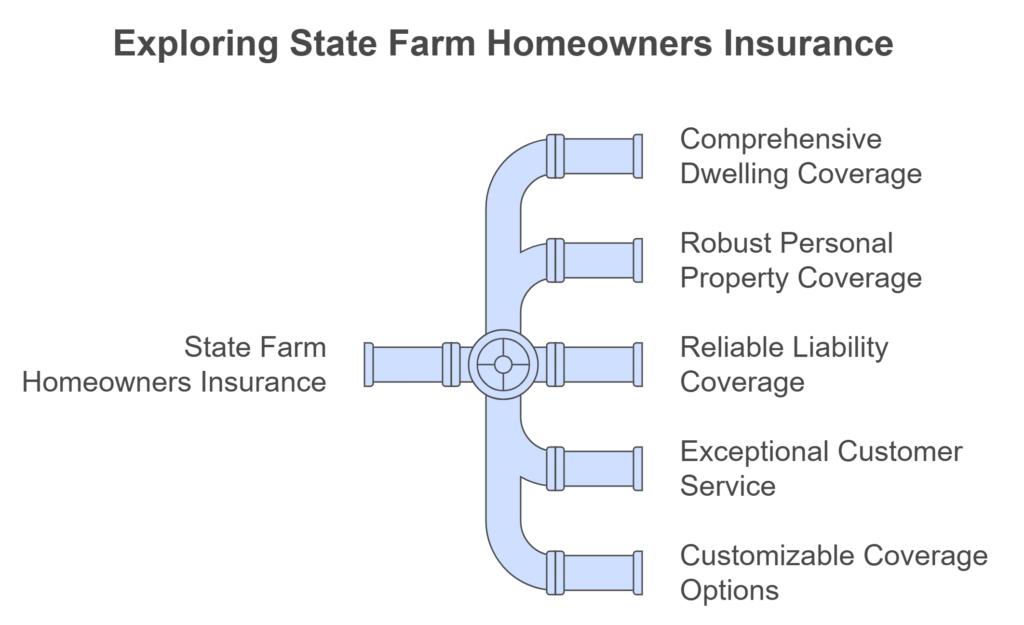
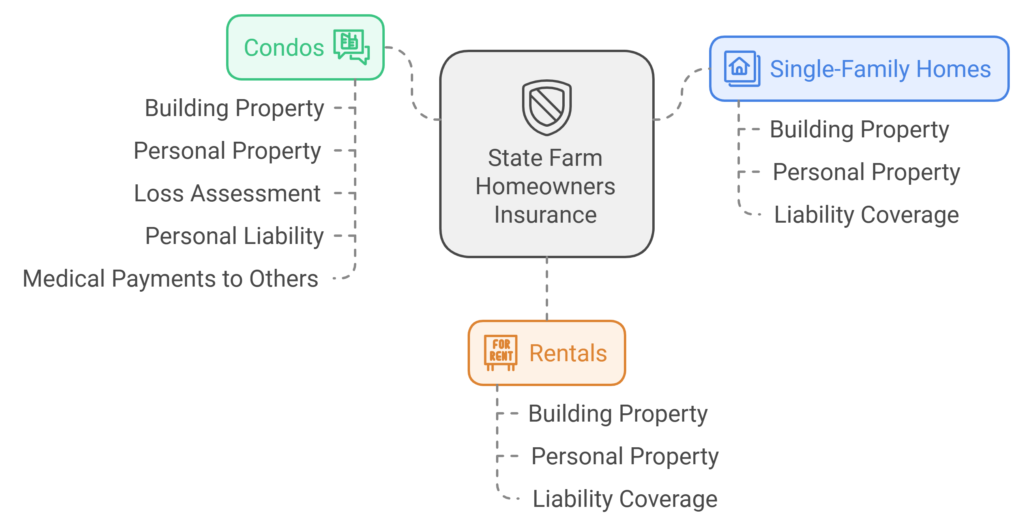
A standard State Farm homeowners policy is built from a few core parts. Together they cover your home, your stuff, and your legal exposure after a covered loss.
- Dwelling coverage. Pays to repair or rebuild the house itself, and attached structures, after a covered event like fire, wind, hail, or lightning.
- Other structures. Covers things separated from the house by clear space, like a detached garage, shed, or fence.
- Personal property. Covers your belongings (furniture, electronics, clothes) if they’re stolen or destroyed by a covered peril. This can be paid at actual cash value (value after wear) or replacement cost, depending on your policy.
- Loss of use. Also called additional living expenses. If a covered loss makes your home unlivable, this helps pay for a hotel and meals while you’re out.
- Personal liability. If you’re legally responsible for someone’s injury or property damage, this helps with legal and medical costs, usually up to a limit of $100,000 to $300,000 or more.
- Medical payments to others. Helps pay a guest’s medical bills after an injury on your property, no matter who was at fault.
State Farm also builds in inflation coverage that nudges your rebuild limit up each year to keep pace with construction costs. That’s a genuinely useful feature, since a home that cost $300,000 to build a few years ago may cost far more to rebuild today.
What is not covered by State Farm homeowners insurance?
This is where people get hurt, so read it carefully. Homeowners insurance is built to cover sudden accidents, not slow problems or things you could have prevented. State Farm’s own materials list these as not typically covered:
- Flood. Rising water from a river, storm surge, or heavy runoff. State Farm doesn’t sell flood coverage, so you’d buy a separate policy through the National Flood Insurance Program.
- Earthquake. Excluded from the standard policy, though an endorsement may be available in some states.
- Wear and tear, rot, and deterioration. Age and upkeep are your job, not the insurer’s.
- Gradual leaks and seepage. Water that drips slowly over days or weeks, even if a pipe finally bursts.
- Faulty workmanship. Bad installation or repairs.
- Pests and animals. Termites, insects, birds, rodents, and damage from your own animals.
- Sewer or drain backup, unless you add the endorsement.
The three things people are most shocked to learn aren’t covered: flood, earthquake, and slow damage from neglect. If someone asks which two big events are never in a standard policy, the classic answer is flood and earthquake.
Does State Farm cover water damage?
Yes, but only the sudden, accidental kind. A pipe that bursts, a water heater that ruptures, or an appliance hose that suddenly fails: covered. Damage from a slow, hidden leak that dripped for weeks: not covered, because it’s treated as a maintenance problem.
Two more lines matter. Flood is never covered by the home policy; you need separate flood insurance. And sewer or drain backup isn’t covered unless you add a water backup endorsement, which usually runs about $50 to $250 a year for a few thousand dollars of protection. In my experience, this is the single most common gap people don’t fix until after a basement floods, and by then it’s too late.
A hard truth worth knowing: in court, insurers have argued that even a pipe that looks like it “burst” isn’t covered if it was slowly corroding or leaking first. So report water damage fast, document everything, and don’t let a small drip sit.
Does State Farm cover mold, plumbing, and a furnace?
These three come up constantly, and the rule is the same each time: covered only if a sudden, covered event caused the problem.
Mold. Covered only when it grows from a covered peril, like a burst pipe. Mold from long-term humidity, a slow leak, or poor upkeep is excluded. Even when covered, mold cleanup is usually capped at a set limit (often in the $5,000 to $10,000 range, and it varies by state and endorsement), so it’s not unlimited.
Plumbing leaks. The sudden, accidental discharge of water is covered, meaning the resulting damage like ruined drywall. But the policy does not pay to fix the failed pipe itself; that’s considered maintenance. And a slow or corroded leak is excluded.
Furnace replacement. Here’s the one that surprises people. If your furnace dies from age or wear, that is not covered; it’s a maintenance cost. It’s only covered if a covered peril, like a fire or lightning strike, damages it. If you want protection for mechanical breakdown, you’d add an equipment or home systems endorsement.
Does State Farm cover dog bites and items in a storage unit?
Dog bites. Yes. Dog bite injuries fall under your personal liability coverage, up to your policy limit (commonly $100,000 to $300,000). State Farm is notable for not using breed bans; instead, it looks at an individual dog’s bite history. That’s a fairer approach than blanket breed lists. Keep in mind that once a dog has bitten someone, the insurer may raise your premium, exclude the dog, or choose not to renew. Dog bite claims are costly: across the industry in 2025, the average claim was about $65,450, per the Insurance Information Institute and State Farm.
Storage units. Your belongings in a storage unit are usually covered as off-premises personal property, for the same kinds of covered perils as at home (like fire or theft). But this coverage is typically limited to a portion of your personal property limit, and it still excludes flood, mold, and pests. Check your specific limit before you assume a unit full of valuables is fully protected.
How much is homeowners insurance for a $400,000 home?
First, clear up a common mix-up: your premium is based on the cost to rebuild your home, not its market or purchase price. A “$400,000 home” for insurance really means roughly $400,000 of dwelling (rebuild) coverage.
For a sense of scale, State Farm’s average homeowners premium is about $2,448 a year, just under the national average of around $2,543, according to Insure.com’s 2026 analysis. That figure is built around roughly $300,000 in dwelling coverage. Step up to $400,000 of rebuild coverage and the price rises roughly in proportion, so you might reasonably budget somewhere in the higher-$2,000s to the $4,000s per year, before discounts.
But averages hide huge swings. Your real number depends heavily on your state, your roof’s age, your claims history, and your deductible. The same home costs far more to insure in a hurricane or wildfire state than in a calm-weather one. So treat any average as a starting point, then get a real quote for your ZIP code and rebuild cost. A coverage calculator or a State Farm agent can estimate your rebuild figure, which is the number that actually drives the price.
Is State Farm a good company, and why the “bad reputation” talk?
We won’t crown State Farm the best or brand it the worst, because that’s not honest, and reputation depends on which measure you use. Here’s the fair, objective picture.
| Objective measure | What it shows for State Farm |
|---|---|
| AM Best (financial strength) | Very high (A++ range), meaning strong ability to pay claims |
| NAIC home complaint index | Around the market average (about 1.0 for home) |
| J.D. Power claims satisfaction | Below average in the most recent property claims study |
| J.D. Power overall satisfaction | Around or above average |
So the nuance is this: State Farm is financially rock-solid and draws an average number of home complaints for its size, but it scores below average on how satisfied people are with claims handling. That gap, strong company, mixed claims experience, is where the “bad reputation” chatter comes from. You’ll also see a high “3.77” complaint figure online, but that’s State Farm’s all-lines number, not its home number, so don’t let it scare you off the home product by itself.
A note on the AM Best rating and the complaint score: they answer two different questions. One asks can the company pay claims (yes, easily). The other asks how smoothly it pays them (more mixed). Both matter when you choose an insurer.
Is State Farm cancelling homeowners insurance?
You’ve probably seen headlines, so here’s the accurate version. State Farm is not cancelling homeowners policies nationwide. What’s actually happening: it has pulled back in California, non-renewing some policies in high wildfire-risk areas and pausing new policies there, driven by the cost of climate-related disasters. State Farm also generally doesn’t write new homeowners policies in California, Massachusetts, or Rhode Island right now. In higher-risk states like Florida, State Farm still writes homeowners coverage, though rates there run high across the whole market because of storm and repair costs. If you’re outside the paused states, your policy isn’t being singled out. This is a regional, disaster-cost story, not a company-wide exit.
What not to say to a homeowners claims adjuster
This is a common search, and the honest answer matters, because doing it wrong is either self-sabotage or fraud. You must always be truthful. What you should avoid is guessing and admitting fault.
Don’t say “it was my fault” or speculate about what caused the damage before you know. Don’t guess at the value of lost items or the age of a roof. Don’t agree to a recorded statement before you’ve gathered your facts and photos. Instead, stick to what you can document: when you found the damage, what you saw, and what you did to stop it from getting worse. Being careful and factual is smart. Hiding or inventing anything is fraud, and it can void your claim.
The Honest Read: is State Farm coverage right for you?
In my years around insurance and claims, the pattern I see hurt homeowners most isn’t dramatic. It’s the slow leak. Someone believes “water damage is covered,” ignores a small stain or a musty smell for a few months, and then files a big claim that gets denied as gradual damage or wear and tear. The policy did exactly what it said; the owner just misread “sudden” as “any.” The second common miss is skipping the cheap endorsements, water backup and equipment breakdown, until after the loss they would have covered.
So here’s the plain verdict.
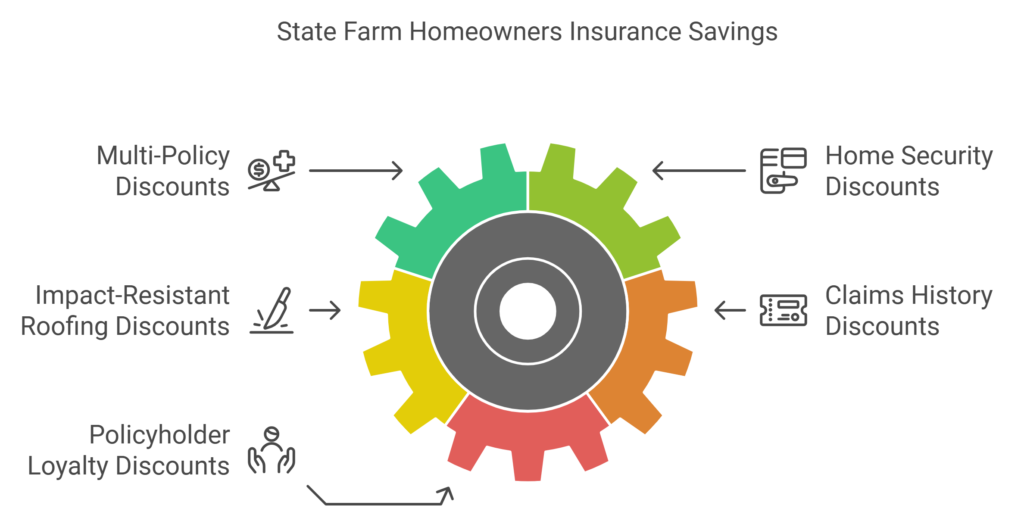
State Farm home coverage fits you if: you want a financially strong, widely available insurer with solid standard coverage, useful built-in inflation protection, and a local agent, and you’re outside the states where it’s paused new business. Bundling with auto can save real money.
Look harder or shop around if: top-tier claims-handling satisfaction is your priority, or you live in a high-risk California area where availability is shrinking. And no matter who you choose, add flood insurance separately if you’re anywhere near flood risk, because no standard home policy includes it.
The smartest move is boring but powerful: read your policy’s exclusions page before a loss, not after, add the endorsements that fit your risks, and insure your home for its rebuild cost, not its price tag.
Conclusion
Good State Farm homeowners insurance coverage comes down to one idea: it pays for sudden accidents, not slow problems. It covers your home, belongings, and liability after a covered event, but flood, earthquake, wear and tear, and pests are on you. Know the “sudden versus gradual” line, add water backup and equipment breakdown if they fit your home, buy separate flood coverage if you need it, and judge the company by objective measures rather than headlines. Do that, and you’ll know exactly where you stand before a claim, which is the whole point.
FAQs
What does State Farm homeowners insurance cover?
A standard State Farm policy covers your dwelling and attached structures, other structures like a shed, your personal belongings, loss-of-use costs if your home is unlivable, personal liability, and medical payments to guests. It pays for sudden, accidental, covered events such as fire, wind, hail, lightning, theft, and burst pipes. It also includes inflation coverage that adjusts your rebuild limit yearly.
What is not covered by State Farm homeowners insurance?
Flood, earthquake, wear and tear, gradual leaks, faulty workmanship, and pest or termite damage are not covered. Sewer or drain backup is excluded unless you add an endorsement. In short, slow, preventable, or maintenance-related problems fall outside a standard policy.
What two events are never covered by homeowners insurance?
Flood and earthquake are the two classic events excluded from nearly every standard homeowners policy, including State Farm’s. You need separate coverage for each: flood insurance through the National Flood Insurance Program, and an earthquake endorsement or policy where available.
Does State Farm homeowners insurance cover water damage?
Yes, if the water damage is sudden and accidental, such as from a burst pipe, ruptured water heater, or failed appliance hose. It does not cover flood, or slow, gradual leaks treated as maintenance. Sewer and drain backup needs a separate water backup endorsement, usually about $50 to $250 a year.
Does State Farm cover mold?
Only when mold grows from a covered peril, like a burst pipe. Mold from long-term humidity, a slow leak, or neglect is excluded. Even when it’s covered, mold remediation is usually capped at a set dollar limit, often in the $5,000 to $10,000 range, and this varies by state and endorsement.
Does State Farm cover plumbing leaks?
It covers the damage caused by a sudden, accidental plumbing discharge, like ruined drywall or flooring. It does not pay to repair or replace the failed pipe itself, which is considered maintenance. Slow or corroded leaks that develop over time are excluded.
Does State Farm cover dog bites?
Yes, dog bite injuries are covered under your personal liability coverage, typically up to $100,000 to $300,000. State Farm doesn’t ban specific breeds; it evaluates an individual dog’s bite history instead. After a bite, though, your premium may rise, or the dog may be excluded or the policy non-renewed.
Does State Farm cover furnace replacement?
Not if the furnace fails from age or normal wear, since that’s a maintenance cost. It’s only covered if a covered peril, such as a fire or lightning strike, damages it. For protection against mechanical breakdown, you’d need to add an equipment or home systems endorsement.
Does State Farm cover items in a storage unit?
Usually yes, as off-premises personal property, for the same covered perils as at home, like fire or theft. But this coverage is typically limited to a portion of your personal property limit, and it still excludes flood, mold, and pests. Check your specific off-premises limit before storing valuables.
How much is homeowners insurance for a $400,000 home?
Premiums are based on your home’s rebuild cost, not its market price, so a “$400,000 home” means about $400,000 of dwelling coverage. State Farm’s average premium is around $2,448 a year for roughly $300,000 of coverage, so a $400,000 rebuild would run higher, often in the higher-$2,000s to $4,000s, before discounts. Your state, roof, and claims history change this a lot.
Why does State Farm have a bad reputation?
Much of it comes from claims-handling satisfaction, where State Farm scores below average in J.D. Power’s recent property claims study, even though it draws an average number of home complaints and is financially very strong. Online you’ll also see a high all-lines complaint number that isn’t specific to home insurance. Judge it by objective measures for the product you’re buying.
Is State Farm cancelling homeowners insurance?
Not nationwide. State Farm has non-renewed some policies in high wildfire-risk parts of California and generally isn’t writing new home policies in California, Massachusetts, or Rhode Island. This is a regional response to disaster costs, not a company-wide cancellation, so policies elsewhere aren’t being singled out.
Is State Farm a good homeowners insurance company?
It’s a reasonable, financially strong choice with solid standard coverage, built-in inflation protection, and local agents, but it’s not the best on every measure. It rates highly on financial strength and average on home complaints, while scoring below average on claims satisfaction. Compare it against a couple of insurers using objective ratings and your own quote.
What should I not say to a homeowners claims adjuster?
Never lie, but also don’t guess or admit fault. Avoid speculating about what caused the damage, don’t estimate values you’re unsure of, and don’t give a recorded statement before you’ve gathered your facts and photos. Stick to documented facts: when you found the damage, what you saw, and how you limited it.
Is homeowners insurance required, and where’s the State Farm policy booklet?
It isn’t legally required by the state, but home insurance is a standard lender requirement, so your mortgage company will require it as a condition of your loan. For the exact terms, read your policy documents and Declarations page, available through your State Farm online account, the app, or your agent; that’s where the official coverage booklet and your specific limits live.
About the Author
Md Shahinuzzaman is an insurance and out-of-pocket healthcare cost specialist with 16 years of banking and insurance experience. He writes clear, honest guides for InsuranceGuidances.com to help homeowners understand what their coverage really does, and where it falls short. Every fact here is checked against named sources, including State Farm’s own policy materials, the NAIC, AM Best, J.D. Power, and the Insurance Information Institute. Reviewed July 2026.
Sources
Property Insurance Coverage Law Blog, State Farm water damage exclusions. https://www.propertyinsurancecoveragelaw.com/blog/state-farm-water-damage-exclusions/
State Farm, home insurance coverage options (official). https://www.statefarm.com/insurance/homeowners/home-insurance-coverage
State Farm, home and property claims, typically covered and not covered (official). https://www.statefarm.com/claims/home-and-property
U.S. News, State Farm homeowners insurance review 2026. https://www.usnews.com/insurance/homeowners-insurance/state-farm
NerdWallet, State Farm home insurance review 2026. https://www.nerdwallet.com/insurance/homeowners/state-farm-home-insurance-review
Insure.com, State Farm home insurance ratings and cost 2026. https://www.insure.com/companies/state-farm-homeowners-insurance.html
Compare.com, State Farm home insurance review (cost and California non-renewals). https://www.compare.com/homeowners-insurance/reviews/state-farm
Insurance Information Institute (Triple-I), spotlight on dog bite liability. https://www.iii.org/article/spotlight-on-dog-bite-liability
NAIC, Consumer Information Source (complaint index). https://content.naic.org/consumer
J.D. Power, U.S. Home Insurance Study. https://www.jdpower.com/business/press-releases/2025-us-home-insurance-study