
So, what pet insurance covers organ transplant? The direct answer: any solid accident and illness plan can, from companies like Trupanion, Healthy Paws, Nationwide, ASPCA, MetLife, or AKC. There is no special “transplant plan” to buy, a transplant is just covered like any other surgery. But here’s the catch that decides everything. For pets, an organ transplant almost always means a kidney transplant for a cat, and your plan will only help if the kidney trouble started after your policy began. If your cat was already sick when you signed up, the answer is no, at nearly every company. AKC is the one exception worth knowing about. This guide walks you through all of it, in plain English.
What Pet Insurance and Organ Transplants: Key Facts at a Glance
| Question | Short answer |
|---|---|
| Is there a special “transplant” pet insurance? | No. It’s covered (or not) by a normal accident and illness plan. |
| What transplant do pets actually get? | Almost always a cat kidney transplant. Dogs: very rare. |
| Where is it done? | A few US university animal hospitals (Penn, Wisconsin, Georgia). |
| What does it cost? | About $12,000 to $28,000, plus $1,000 to $4,000 a year after. |
| The biggest catch? | If kidney disease started before your policy, it won’t be covered. |
| One helpful exception | AKC pet insurance can cover some pre-existing conditions after 12 months. |
Your cat is sick, and you’re doing the math
Picture this. Your cat is 11 years old. The vet says the kidneys are failing. This is called chronic kidney disease, and it is very common in older cats. The vet mentions a kidney transplant as one option. Then you hear the price, and your stomach drops.
So you do what any caring owner does. You open Google and type “what pet insurance covers organ transplant.” You hope there’s a plan that pays for it. This guide gives you the real answer, not a sales pitch. Some of it is hard news. But knowing it now saves you from a much worse surprise later.
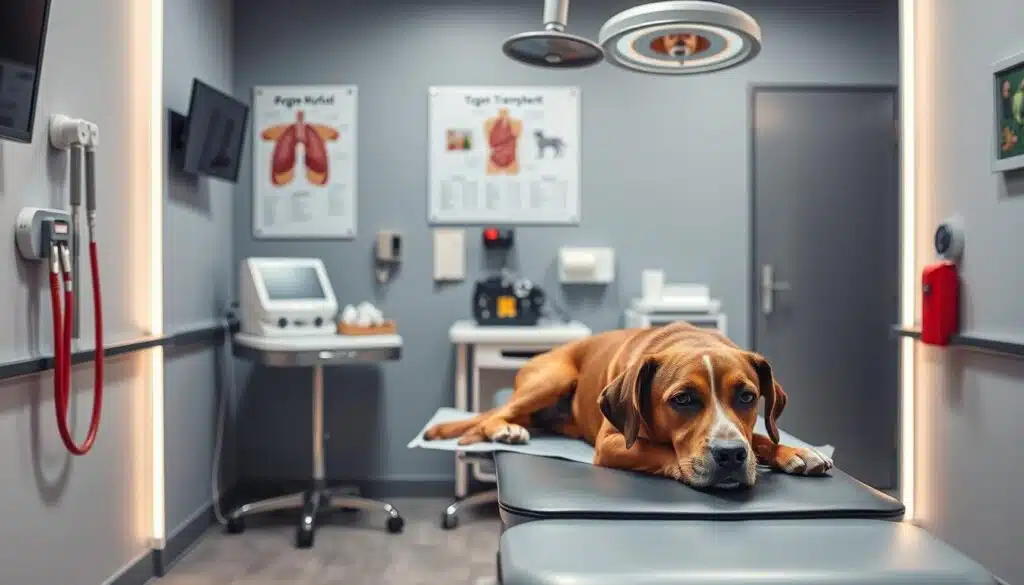
What “organ transplant” really means for a pet
First, let’s clear up a big myth. Many websites list pet transplants for the heart, liver, lung, and pancreas, as if they happen every day. They do not. In real life, those transplants are almost never done in cats and dogs.
For pets, one transplant is real and available: a kidney transplant for a cat. Vets do this to treat kidney failure. It is a treatment, not a cure. It gives a sick cat more good time, often two to three years on average, sometimes much longer.
Only a few places in the United States do this surgery. They are university animal hospitals, like Penn Vet in Philadelphia, the University of Wisconsin, and the University of Georgia. The surgery needs special training and tiny, careful stitching of blood vessels. That is why so few centers offer it.
Because there are so few, location matters. If you live in Texas or another state without a center, you may need to travel to one of these hospitals with your cat. And there is no “Texas plan” or “USA plan” for transplants, insurance works the same wherever you live. What can change by state is the pre-existing rule, since AKC’s coverage for pre-existing conditions is not offered everywhere. So always check the rules for your own state.
There is also a kind rule built into the surgery. The healthy kidney comes from a donor cat, usually a young shelter cat. In most programs, your family must adopt that donor cat afterward. So one surgery can save two cats.
What about dogs? Here the news is harder. Kidney transplants in dogs are still mostly experimental. A dog’s body rejects a new kidney very fast, and there are more problems after surgery. Most centers do not offer it. So if you searched “how much does a kidney transplant cost for a dog,” the honest answer is that it is rarely done at all, and there is no set price, because it is not a normal service.
So does pet insurance cover a transplant?
Here is the real answer, and it has two parts.
Part one: there is no special “transplant plan.” You do not buy a transplant add-on. Instead, a good accident and illness policy (the most common full pet plan) treats a transplant like any other surgery. If the surgery is for a covered illness, the plan can pay a share of the bill.
Part two: coverage depends on three things, in this order.
- Is the illness pre-existing? This is the big one. More on it below.
- Did you finish the waiting period? Every plan makes you wait a short time after you sign up before illness coverage starts. Often it’s 14 to 30 days for illness.
- What are your limits and rates? Your yearly payout limit, your deductible, and your reimbursement rate decide how much money comes back.
So the surgery itself is not usually banned. But the pre-existing rule blocks most transplant claims. Let’s look at why.

The pre-existing trap (this is the part that matters most)
A pre-existing condition is any health problem your pet showed signs of, or was diagnosed with, before your policy started (or during the waiting period). Almost no pet insurer pays for pre-existing conditions. This is the same at nearly every company.
Now think about how a transplant happens. A cat does not get a transplant out of nowhere. First the vet finds kidney disease. Then, later, a transplant is discussed. That order is the problem.
If you buy insurance after the vet finds the kidney disease, that disease is pre-existing. So the transplant to treat it will not be covered. This is the trap that catches most owners. They buy the policy once the pet is already sick, and then the claim is denied.
There is worse news too. Kidney disease is an incurable condition. It does not go away. Most insurers never cover incurable pre-existing conditions, no matter how long you wait. Some insurers may forgive a curable problem (like a past ear infection) after your pet stays healthy for 6 to 12 months. But chronic kidney disease is not curable, so that forgiveness usually does not apply.
The lesson is simple and a little sad. Pet insurance is built to be bought before your pet gets sick, while they are young and healthy. Buy it early, and a future transplant may be covered. Buy it late, after a diagnosis, and it usually will not be.
AKC and the one pre-existing exception worth knowing
There is one real exception, and it explains why “AKC pet insurance” keeps showing up in your search results.
AKC pet insurance (run by PetPartners) is unusual. It can cover both curable and incurable pre-existing conditions after your pet has been insured for 365 days in a row, in many states. Most other companies never cover incurable ones at all.
So imagine a cat with early kidney disease. With most insurers, a future transplant is a dead end. With AKC, you would pay for kidney care yourself for the first year. After 12 straight months of coverage, the plan may start helping with that condition in many states. That is a rare door, and it is worth knowing about.
Two honest warnings. First, this depends on your state, so you must check your state’s rules. Second, “may cover” is not “will cover everything,” and yearly limits still apply. Always read the current policy before you count on it.
A quick word on “no waiting period.” You may have searched for pet insurance that covers pre-existing conditions “with no waiting period.” I want to be straight with you: that’s mostly a myth. No honest insurer flips on full coverage for a known illness the day you sign up. Even AKC makes you wait a full year. So if a company promises instant coverage for a condition your pet already has, read the fine print very carefully before you trust it.
Yearly limits: why a “covered” transplant can still cost you a lot
Say you did everything right. You insured your cat while healthy. The kidney disease came later, so it is covered. Great. You still need to understand your yearly limit, because it can surprise you.
Most plans pay back only up to a set amount each year. A transplant can cost more than that whole limit. Let’s walk through real numbers.
Example. Your cat needs a kidney transplant. The bill is $24,000. Your plan has:
- A $10,000 yearly limit
- A $500 deductible (the part you pay first)
- An 80% reimbursement rate (the share they pay after the deductible)
Here is the math. The plan looks at $24,000 minus your $500 deductible, which is $23,500. It would pay 80% of that, which is $18,800. But your yearly limit is only $10,000. So the plan pays $10,000, and you pay the other $14,000.
Now change one thing. Say your plan has no yearly limit (a few insurers, like Trupanion and Healthy Paws, are known for not capping annual payouts, but confirm this yourself). Same bill. The plan pays 80% of $23,500, which is $18,800. You pay about $5,200. That is a huge difference.
The point: for a five-figure surgery, your yearly limit matters even more than your reimbursement rate. If you think your pet may ever face a big surgery, a high limit or no limit is worth paying a bit more for.
What a cat kidney transplant really costs
Let’s talk real money, because this is where most owners feel the shock. Here are honest numbers from the vet schools and animal-health groups, not made-up figures.
| Cost item | Typical range |
|---|---|
| The transplant surgery (both cats) | About $12,000 to $28,000 |
| Yearly care after (medicine, tests) | About $1,000 to $4,000 every year |
| Adopting the donor cat | Included in the deal; you keep the cat |
The wide range depends on the hospital and on any problems during surgery. Penn Vet, for example, lists about $24,000 to $28,000. Some other centers have quoted lower ranges. After surgery, your cat needs immunosuppressant medicine (drugs that stop the body from rejecting the new kidney) for life, plus regular blood tests. That is the yearly cost that never stops.
Success is good but not perfect. Around 90% of cats survive the surgery, and roughly 60% to 70% are alive one year later. Cats live about three years on average afterward, and some live far longer. Your cat also needs to be otherwise healthy to qualify. Cancer, heart disease, or active infections usually rule it out.
If you actually meant human organ transplants
Quick note, because your search results are mixed up. Google shows human questions next to this pet topic. Things like “Nulojix cost,” “the 90-minute rule for organ donation,” “the 7 organs that can be donated,” and “life expectancy after a transplant” are about people, not pets. Nulojix, for example, is a human medicine for adults who had a kidney transplant. It is not a pet drug.
If you are really asking about a human transplant, this pet-insurance page is not the right place, and your own health insurance and your transplant team are who to ask. We keep the rest of this guide focused on pets.
What to check in a policy before your pet ever needs one
We won’t crown a single “best” company, because the right plan depends on your pet, your budget, and your state. Instead, here is what to compare. Look at these features, not the ads.
| Feature to check | Why it matters for a transplant | What to look for |
|---|---|---|
| Pre-existing rules | Decides if kidney disease is covered at all | Enroll before any diagnosis; AKC for some pre-existing cases |
| Yearly payout limit | A transplant can cost more than a low limit | A high limit, or no annual cap |
| Reimbursement rate | The share paid back after your deductible | 80% to 90% is common |
| Waiting period | Illness coverage doesn’t start on day one | Shorter is better; know the exact days |
| What’s excluded | Donor costs or some after-care may be left out | Read the “exclusions” list in the sample policy |
The Honest Read: who this helps, and who it won’t
In my years around insurance and claims, the saddest and most common mistake I see is the same one every time. An owner buys pet insurance the same week the vet gives bad news. They believe the new policy will cover the illness that was just found. It will not. The condition is already pre-existing. The claim gets denied, and the owner feels tricked, even though the rule was there all along.
So here is the plain verdict.
Pet insurance can help with a transplant if: you bought a good accident and illness plan before your pet showed any sign of kidney disease, you finished the waiting period, and your yearly limit is high enough. In that case, it can cover a big share of the bill, and it can be worth a lot.
Pet insurance will not help if: the kidney disease was already known before you signed up. Then a transplant is a pre-existing claim, and it will be denied almost everywhere. AKC’s pre-existing feature is the rare, partial exception, and only after 12 months and only in some states.
If your cat is already sick and uninsured, don’t lose hope. You can still pay out of pocket, ask the hospital about payment plans, and look into veterinary charity funds. Insurance just won’t be the tool for this bill.
Conclusion
The real answer to “what pet insurance covers organ transplant” is not a company name. It’s a rule. For pets, a transplant almost always means a cat kidney transplant, and whether insurance pays comes down to timing. Insure your pet young and healthy, pick a plan with a high or unlimited yearly limit, and read the pre-existing rules before you need them. Do that, and you turn a scary, unpayable bill into a manageable one. Wait until your pet is sick, and no policy can undo that. Buy early, buy honestly, and you give yourself real choices later. Your cat is counting on you to plan ahead, and now you know how.
FAQs
Does pet insurance cover organ transplants?
There is no special transplant plan. A normal accident and illness policy can pay a share of a transplant, but only if the illness was not pre-existing, the waiting period is done, and it fits your yearly limit. For pets, this almost always means a cat kidney transplant.
What pet insurance covers an organ transplant for a cat?
No US insurer sells a “cat transplant” product. A full accident and illness plan can cover the surgery if the kidney disease started after your policy began. AKC pet insurance is the rare company that may help even with some pre-existing conditions, after 12 months of coverage, in many states.
Will pet insurance pay for a transplant if my cat already has kidney disease?
Almost never. If the kidney disease was found before your policy started, it is a pre-existing condition, and the transplant to treat it is excluded at nearly every insurer. This is the single biggest reason transplant claims get denied.
Which pet insurance covers pre-existing conditions?
Most do not cover them at all. AKC pet insurance can cover both curable and incurable pre-existing conditions after your pet is insured for 365 days in a row, in many states. Some other insurers forgive a curable condition after your pet stays symptom-free for 6 to 12 months.
How much does a cat kidney transplant cost?
About $12,000 to $28,000 for the surgery, which covers both the recipient and donor cats. After that, plan for roughly $1,000 to $4,000 every year for lifelong medicine and blood tests. Penn Vet, for example, lists around $24,000 to $28,000.
How much does a kidney transplant cost for a dog?
There is no standard price, because dog kidney transplants are still mostly experimental and rarely offered. A dog’s body rejects a new kidney very quickly, so most centers do not perform the surgery. It is not a normal option the way it is for cats.
Do insurance companies cover organ transplants for pets?
They can, through a standard accident and illness policy, if the underlying illness is eligible and not pre-existing, and if the cost fits your yearly limit. No mainstream insurer offers a separate transplant benefit. Always check your policy’s limits and exclusions first.
Can you get a pet organ transplant without insurance?
Yes. Many owners pay out of pocket. If money is tight, ask the university hospital about payment plans, and look into veterinary charity funds and nonprofit grants. Insurance is not required for the surgery, but paying the full bill yourself is hard.
What pet insurance covers surgery?
A full accident and illness policy covers most surgeries, as long as the problem is not pre-existing and the waiting period is complete. Accident-only plans are cheaper but usually cover injuries, not illness surgeries like a transplant. Read the plan type before you buy.
Does pet insurance cover surgery for pre-existing conditions?
Generally no. If your pet’s condition existed before the policy (or during the waiting period), surgery for that condition is excluded at nearly every company. AKC is the main exception for some pre-existing cases, after a 12-month wait, in many states.
What pet insurance covers pre-existing allergies?
Allergies are often treated as incurable, so most insurers will not cover them if they started before your policy. Some insurers may cover a condition seen as curable after your pet is symptom-free for 6 to 12 months. AKC may cover certain pre-existing conditions after 12 months in many states.
Is a kidney transplant a cure for my cat?
No. It is a treatment that can give a sick cat more good time, not a cure. Cats live about three years on average afterward, and some live much longer. The new kidney needs lifelong medicine and regular checkups to keep working.
Why does the waiting period matter for transplant coverage?
The waiting period is the short time after you sign up before illness coverage begins, often 14 to 30 days. If kidney disease shows up during that window, it can be treated as pre-existing and excluded. That is why signing up early, before any symptoms, is so important.
Does pet insurance cover the donor cat and the lifelong medicine?
It depends on the policy. Some plans may not cover the donor cat’s costs, and after-care can have limits. The lifelong immunosuppressant medicine may be covered as part of the ongoing illness if that illness is eligible, but check the exclusions list in your sample policy.
Why do I see human transplant questions like “Nulojix” in these results?
Because search engines mix human and pet topics that share words like “transplant.” Nulojix, the “90-minute rule,” and “organs that can be donated” are all about people, not pets. If you need human transplant help, your health insurance and transplant team are the right place to ask.
About the Author
Md Shahinuzzaman is an insurance and out-of-pocket healthcare cost specialist with 16 years of banking and insurance experience. He writes plain, honest guides for InsuranceGuidances.com to help pet owners and families understand what their coverage really does, and where it falls short. Every fact here is checked against named sources, including university veterinary hospitals, the American Animal Hospital Association, PetMD, and insurer policies. Reviewed July 2026.
Sources
GoodRx, Nulojix (belatacept) is a human kidney-transplant medicine. https://www.goodrx.com/nulojix/what-is
University of Pennsylvania School of Veterinary Medicine, feline renal transplantation program and costs. https://www.vet.upenn.edu/ryan-hospital/clinical-services/advanced-urinary-care/renal-transplantation/
University of Georgia College of Veterinary Medicine, feline renal transplants. https://vet.uga.edu/hospital-and-primary-care/hospital/our-services/dogs-cats/soft-tissue-surgery/
American Animal Hospital Association (AAHA), is a kidney transplant right for my cat. https://www.aaha.org/resources/is-a-kidney-transplant-right-for-my-cat/
Catster (veterinarian-reviewed), can cats get kidney transplants and where. https://www.catster.com/cat-health-care/can-cats-get-kidney-transplants/
PetMD, does pet insurance cover pre-existing conditions. https://www.petmd.com/general-health/does-pet-insurance-cover-pre-existing-conditions
NerdWallet, best pet insurance for pre-existing conditions (AKC 365-day rule). https://www.nerdwallet.com/insurance/pet/pet-insurance-pre-existing-conditions
State Farm, does pet insurance help cover pre-existing conditions. https://www.statefarm.com/simple-insights/family/does-pet-insurance-cover-preexisting-conditions
MetLife Pet Insurance, coverage and exclusions. https://www.metlifepetinsurance.com/coverage-exclusions/
Nationwide (petinsurance.com), what’s not covered and pre-existing conditions. https://www.petinsurance.com/whats-not-covered/