The best car insurance for teenagers isn’t a single company, it’s a decision most parents get wrong. For a teen under 18, the cheapest and often only legal option is adding them to your policy, not buying them their own. That one move saves thousands: a 16-year-old on their own policy averages about $9,825 a year, versus roughly $4,515 added to a parent’s plan. Among big national carriers, GEICO is often the cheapest for teens, with State Farm and regional insurers close behind, but your winner depends on your state and your teen’s car. This guide shows you how to get it right.
Best Car Insurance for Teenagers: Key Facts at a Glance
| Question | Short answer |
|---|---|
| Own policy or parent’s policy? | Parent’s policy, almost always. It’s far cheaper. |
| Can a teen under 18 buy their own? | No. Minors can’t sign a contract, so they need a parent’s policy. |
| Typical cost to add a 16-year-old | About $4,500 a year added to the parent’s premium. |
| Often cheapest big insurer for teens | GEICO, with State Farm and regional carriers close. |
| Biggest discounts | Good student (up to ~25%) and a safe-driving app. |
| When do rates drop? | Slowly every year, not all at once. |
The night before your teen drives alone
Here’s the moment most parents remember. Your kid passes the road test, waves the license in the air, and you’re proud, and quietly terrified. Then you call your insurance company, and the new quote makes you sit down.
You’re not being ripped off. Teens genuinely cost more to insure, because drivers aged 16 to 19 have a fatal crash rate about three times higher than drivers over 20. But here’s what the big “best of” lists bury: for a teenager, the smartest insurance decision isn’t which brand you pick. It’s how you insure them. Get that right, and you’ll cut the bill by thousands. This guide is written for you, the parent, because for a teen, this is really your policy and your call.
Own policy or parent’s policy? The decision that saves the most
If you remember one thing, remember this. For a teen, adding them to your policy is almost always far cheaper than a separate policy, and for a minor, it’s usually the only option.
The numbers are stark. A 16-year-old on their own policy averages about $9,825 a year. Add that same teen to a parent’s policy, and it averages about $4,515 a year. You’re paying roughly half. That’s because your teen gets to share the discounts you’ve already earned as an experienced driver, like your multi-car and safe-driver discounts.
There’s also a legal reason. A minor (under 18 in most states) can’t sign a binding contract, so they can’t buy their own policy without an adult co-signer. So for a 16- or 17-year-old, the parent’s policy isn’t just cheaper, it’s the practical path.
When does a separate policy make sense? Rarely. Only if your teen is financially independent, or you drive an expensive car they’ll never touch and want to keep them off it, or your insurer requires it. For nearly everyone else, add them to the family plan.
How much does it cost to add a teen by age?
Real averages, from 2026 industry data. These are the yearly amount added to a parent’s policy, and they fall steadily as your teen gains experience.
| Teen’s age | Average yearly cost added to a parent’s policy |
|---|---|
| 16 | About $4,050 to $4,500 |
| 17 | About $3,740 |
| 18 | About $3,478 |
| 19 | About $3,105 |
Two honest notes. First, adding a 16-year-old often raises a family premium by 100% or more, since a brand-new driver is the riskiest kind. Second, boys cost more than girls at these ages, because male teens are in more serious crashes. The gap shrinks as they get older.
Best car insurance for teenagers: how to compare companies
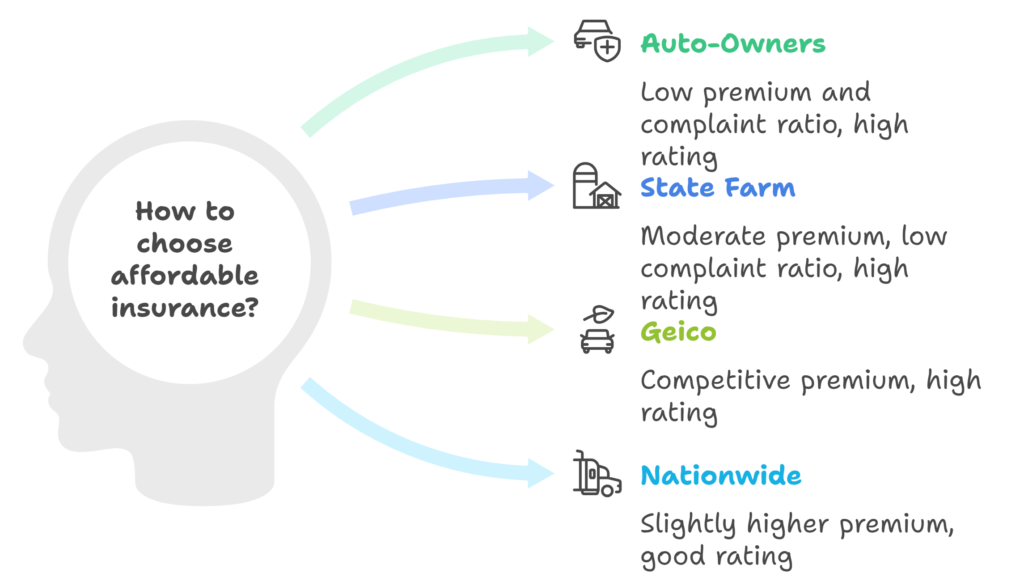
We won’t crown one company the single best, because the cheapest teen insurer changes by state and situation. But some names come up again and again for young drivers, and it helps to know who fits whom.
| Insurer | Why it’s worth a teen quote |
|---|---|
| GEICO | Often the cheapest big carrier for teens; DriveEasy safe-driving app |
| State Farm | Strong for students; Steer Clear program for drivers under 25 |
| Progressive | Snapshot app can reward a safe teen; better for high-risk records |
| Nationwide | SmartMiles pay-per-mile option for low-mileage teens |
| Erie, Auto-Owners, NJM, Wawanesa | Regional insurers often cheaper than the big names, in their states |
| USAA | Frequently cheapest, but military families only |
A few honest head-to-heads people search for. GEICO vs. Progressive: GEICO is usually cheaper for teens (one analysis found teen savings of over $2,800 a year versus Progressive), while Progressive tends to win for drivers with a ticket, accident, or DUI. AAA vs. GEICO: GEICO is typically cheaper for teens across the board, and AAA requires a paid membership (about $60 to $120 a year) just to buy a policy, though AAA adds roadside and travel perks. Is Costco auto insurance cheaper? Costco’s insurance (now under the American Family name) offers a member discount, but you need a paid membership, and it’s often not the cheapest for teens, so treat it as one quote to compare, not an automatic deal.
The real lesson: get quotes from at least three insurers, always including any regional carrier or USAA you qualify for. The cheapest name for your neighbor may not be cheapest for you.
Discounts that actually cut a teen’s rate
You can’t change your teen’s age, but you can stack discounts. These are the ones that move the number.
- Good student discount. A big one for teens. A B average or 3.0 GPA can earn up to about 25% off with some insurers (State Farm is generous here). You may need to share a report card.
- Safe-driving app (telematics). Programs like GEICO’s DriveEasy or Progressive’s Snapshot watch how your teen drives and can save 10% to 25% for safe habits. As a bonus, you get to see the driving data.
- Driver education discount. Finishing an approved driver’s-ed or defensive-driving course often saves 5% to 10%, and makes your teen safer.
- Student-away-at-school discount. If your teen goes to college more than 100 miles away without a car, you can often keep them on your policy at a lower rate.
- Multi-car and multi-policy. Insuring more than one car, or bundling with home or renters, adds more savings.
Stacking three or four of these can claw back 20% to 40% of the increase from adding a teen.

What car should your teen drive? (It changes the price a lot)
The car matters as much as the driver here. Insurers rate your teen on the specific car they mainly drive, so the vehicle choice is a real lever most families ignore.
Cheaper to insure: a safe, older, lower-value sedan or small SUV, think a used Honda CR-V, Subaru Outback, or Ford Escape. More expensive: a new car, a sporty coupe, or a truck. A base-trim used vehicle with good safety ratings and a lower value keeps both the collision cost and the premium down. Avoid putting a teen as the main driver on a financed luxury or sports car unless you’re ready for the bill.
Does car insurance go down when a teen turns 17, or 18?
Sort of, but slowly. There’s no magic drop on a single birthday. Rates come down a little each year as your teen gains experience, so a 17-year-old costs a bit less than a 16-year-old, an 18-year-old less than that, and so on. By the early 20s the price is much lower, but it gets there step by step.
And a clean record matters more than age. One ticket or at-fault crash can wipe out a year’s worth of age-based savings, since many insurers re-rate the policy at renewal and a teen violation can raise it 15% to 30%. So the fastest way to lower a teen’s rate is simple: drive clean, keep good grades, and use a safe-driving app.
Does the state change everything? (California, Texas, Florida, Michigan)
Yes, a lot. Where you live is one of the biggest price factors, because each state has its own risk levels, laws, and rules on what insurers can use to set rates.
Some states are far pricier for teens than others. Florida and Michigan, for example, tend to run high, while rates in many other states are gentler. State rules also differ: a few states limit or ban using gender to price a teen, which changes the boy-girl gap. And graduated license laws (like Texas and California limits on night driving and teen passengers) affect both safety and, if violated, your coverage. The takeaway: a national “average” is only a rough guide. Always pull quotes for your own ZIP code, and get four or five in high-cost states like California, where the gap between the cheapest and priciest teen quote can top $3,000 a year.
Teenage boys vs. teenage girls, and what people say on Reddit
Two quick things parents ask about. First, gender: in most states, teenage boys pay more than teenage girls, because male teens are involved in more serious crashes. The gap is real but shrinks with age, and a few states ban using gender to set rates at all, so it may not apply where you live. Either way, a clean record and good grades matter far more than gender to the final price.
Second, the internet. Threads on Reddit and “teenage car insurance average cost per month” searches are everywhere, and they’re useful for one thing: spotting which discounts and companies other parents found helpful. But they can’t price your teen. Every story reflects that family’s state, car, and record, not yours. Treat them as a source of questions to ask, then get your own quotes. The same goes for lists aimed at “young adults” or “drivers under 25”, they overlap with teen advice, but a 16-year-old on a permit is a different case than a 22-year-old, so use guidance built for your teen’s exact stage.
The Honest Read: how to actually insure your teen
In my years around insurance and claims, the most expensive mistake I see parents make is quietly not telling the insurer their teen is driving, hoping to avoid the rate hike. It backfires badly. If that unlisted teen has an accident, the claim can be denied and the policy canceled, turning a rate increase into a financial disaster. Add your teen properly; it’s the whole point of having coverage.
The second mistake is buying a teen their own separate policy because it feels “cleaner.” It nearly always costs far more and loses your household discounts.
So here’s the plain verdict.
The best approach for a teen driver: add them to your policy, put them on a safe, sensible car, stack the good-student and safe-driving-app discounts, and compare at least three quotes before you commit, including a regional insurer. Choose higher liability limits than the state minimum (many experts suggest 100/300/100), because a teen crash can cost more than a minimum policy covers, and that gap comes out of your pocket.
Skip the “best company” hunt and match instead. The cheapest insurer for your teen depends on your state and their car. Let your own quotes pick the winner.
Conclusion
The best car insurance for teenagers comes down to smart choices, not a brand name. Add your teen to your policy rather than buying them their own, pick a safe and affordable car, stack the good-student and telematics discounts, keep the record clean, and compare three real quotes. Do that, and you’ll turn a scary quote into a manageable one, and your teen’s rate will keep dropping every year they drive safely. That’s a far better outcome than chasing whichever company topped someone’s list.
FAQs
What is the best car insurance for teenagers?
There’s no single best, since the cheapest teen insurer depends on your state and your teen’s car. GEICO is often the cheapest big national carrier for teens, with State Farm and regional insurers close behind. The best approach is to add your teen to your policy, stack discounts, and compare at least three quotes.
Is it cheaper to add a teen to my policy or get them their own?
Adding them to your policy is almost always far cheaper. A 16-year-old on their own policy averages about $9,825 a year, versus roughly $4,515 added to a parent’s plan. Teens also share the discounts you’ve already earned. For a driver under 18, a parent’s policy is usually the only legal option anyway.
Can a 16- or 17-year-old get their own car insurance policy?
Generally no. Minors can’t sign a binding contract, so someone under 18 typically can’t buy their own policy without an adult co-signer. That’s why 16- and 17-year-olds are almost always added to a parent’s policy, which is also the cheaper route.
How much does it cost to add a teenager to car insurance?
On average, adding a 16-year-old raises a parent’s premium by about $4,050 to $4,500 a year, dropping to around $3,100 by age 19. Adding a 16-year-old often more than doubles the premium. Boys cost more than girls at these ages, and the exact amount depends heavily on your state and the car.
Who has the cheapest car insurance for teenagers?
Among big national carriers, GEICO is frequently the cheapest for teens, and USAA is often cheapest if you have military ties. But regional insurers like Erie, Auto-Owners, NJM, or Wawanesa can beat them in the states they serve. The only way to know your cheapest option is to compare several quotes.
Is GEICO or Progressive better for teen drivers?
For most teens with clean records, GEICO is usually cheaper, one analysis found teen savings of over $2,800 a year versus Progressive. Progressive tends to win for higher-risk drivers, such as those with a ticket, accident, or DUI, and its Snapshot app can reward a safe teen over time. Get quotes from both.
Is AAA cheaper than GEICO?
Usually not for teens. GEICO tends to be cheaper across driver profiles, and AAA requires a paid membership (about $60 to $120 a year) just to buy a policy. AAA’s value is its bundled roadside assistance, travel perks, and strong regional service, especially in California and the Southwest, not its teen price.
Is Costco auto insurance really cheaper?
Sometimes, but not reliably for teens. Costco’s insurance, now under the American Family name, offers a member discount and perks, but you must pay for a membership, and it’s often not the cheapest for young or higher-risk drivers. Compare it as one quote among several rather than assuming it’s a deal.
What discounts can teen drivers get?
The biggest are the good student discount (up to about 25% for a B average) and safe-driving apps like DriveEasy or Snapshot (10% to 25%). Others include driver-education discounts (5% to 10%), student-away-at-school discounts, and multi-car or bundling discounts. Ask each insurer which ones your teen qualifies for.
What is the cheapest way to insure my 17-year-old?
Add them to your existing policy, put them on the cheapest and safest car you own, and claim the good student discount if they have a B average. Add a safe-driving app for more savings, and compare three quotes. Buying a 17-year-old their own standalone policy is the most expensive path.
How much is car insurance for a 14-year-old?
You can’t insure a 14-year-old as a licensed driver, since they’re too young for a license in every state. Some teens get a learner’s permit around 15, and most insurers cover a permit holder under the parent’s policy at no extra charge until they get a full license. Your teen becomes rated (and adds cost) once licensed.
Does car insurance go down when a teenager turns 17?
A little, but not dramatically. Rates fall gradually each year as your teen gains experience, so car insurance does go down a bit when a teenager turns 17, and it keeps dropping through the late teens and early 20s. A clean driving record speeds this up, while a ticket or crash can erase a year’s savings.
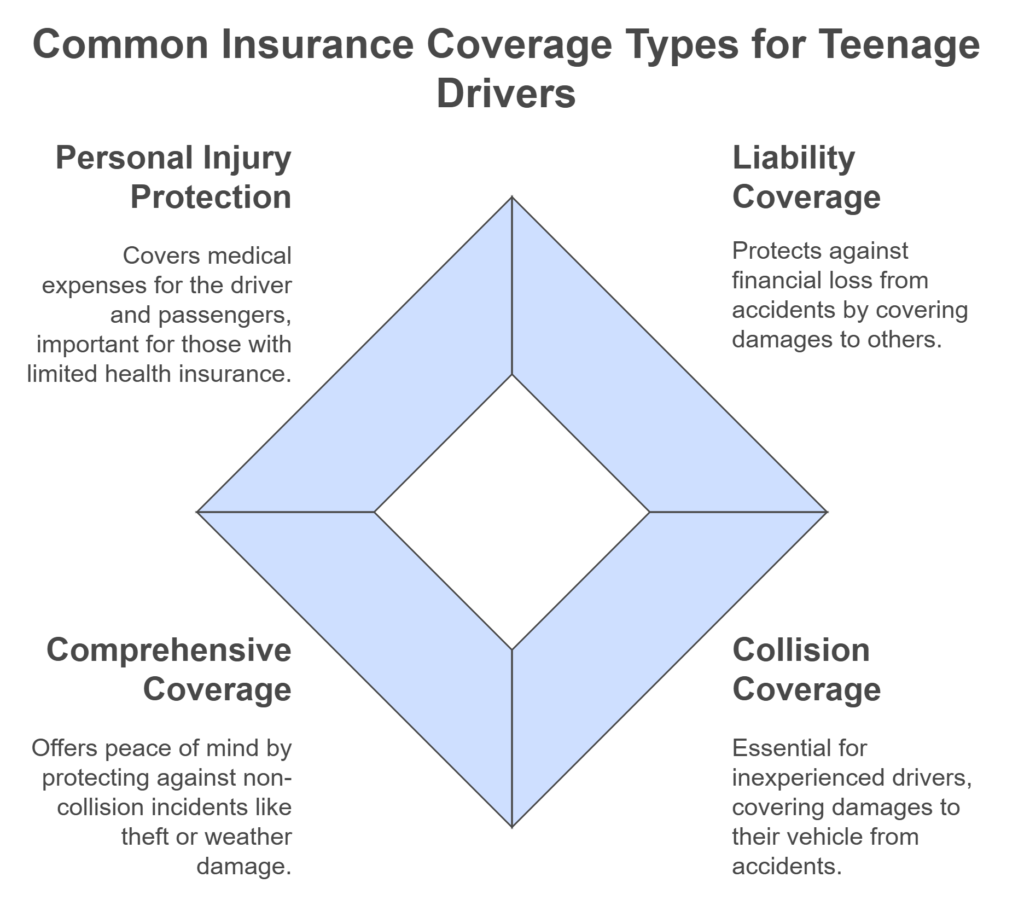
What coverage should a teen driver have?
More than the state minimum. Many experts suggest liability limits of 100/300/100, plus comprehensive and collision if the car has real value, because a teen crash can easily exceed a minimum policy. Skimping on coverage to save a little now can cost you far more if your teen causes a serious accident.
What’s the biggest mistake parents make insuring a teen?
Not telling the insurer their teen is driving, to dodge the rate hike. If an unlisted teen crashes, the claim can be denied and the policy canceled, which is far worse than the increase. Always add your teen properly, then lower the cost with discounts and smart car choices instead.
Does the state I live in change teen car insurance costs?
A lot. Your state is one of the biggest price factors, with places like Florida and Michigan often running high. State rules also differ on using gender to price teens and on graduated-license restrictions. Always get quotes for your own ZIP code, and gather four or five in expensive states like California.
About the Author
Md Shahinuzzaman is an insurance and out-of-pocket healthcare cost specialist with 16 years of banking and insurance experience. He writes clear, honest guides for InsuranceGuidances.com to help families understand their real options and pay less. Every figure here is checked against named sources, including the CDC, IIHS, and 2026 industry rate analyses. Reviewed July 2026.
Sources
Centers for Disease Control and Prevention (CDC), teen drivers risk factors. https://www.cdc.gov/transportation-safety/teen-drivers/
Insurance.com, teen car insurance calculator and average costs (2026). https://www.insurance.com/auto-insurance/car-insurance-calculator-for-teens
CarInsurance.com, cost to add a teen driver by age (2026). https://www.carinsurance.com/Articles/adding-teen-driver-cost.aspx
Insure.com, teenage car insurance rates and permit rules (2026). https://www.insure.com/car-insurance/average-teenage-car-insurance-rates/
ValuePenguin, cost of adding a young driver to a family policy. https://www.valuepenguin.com/cost-of-adding-young-driver-to-family-car-insurance
Forbes Advisor, cheap car insurance for 16-year-olds (2026). https://www.forbes.com/advisor/car-insurance/cheap-car-insurance-for-16-year-olds/
Progressive, car insurance for teens (adding a teen, discounts). https://www.progressive.com/answers/car-insurance-for-teens/
The Zebra, GEICO vs. Progressive for teen drivers (2026). https://www.thezebra.com/insurance-companies/geico-vs-progressive/
MoneyGeek, GEICO vs. AAA car insurance comparison (2026). https://www.moneygeek.com/insurance/auto/geico-vs-aaa/
Insurance Institute for Highway Safety (IIHS), teenage drivers. https://www.iihs.org/topics/teenagers